



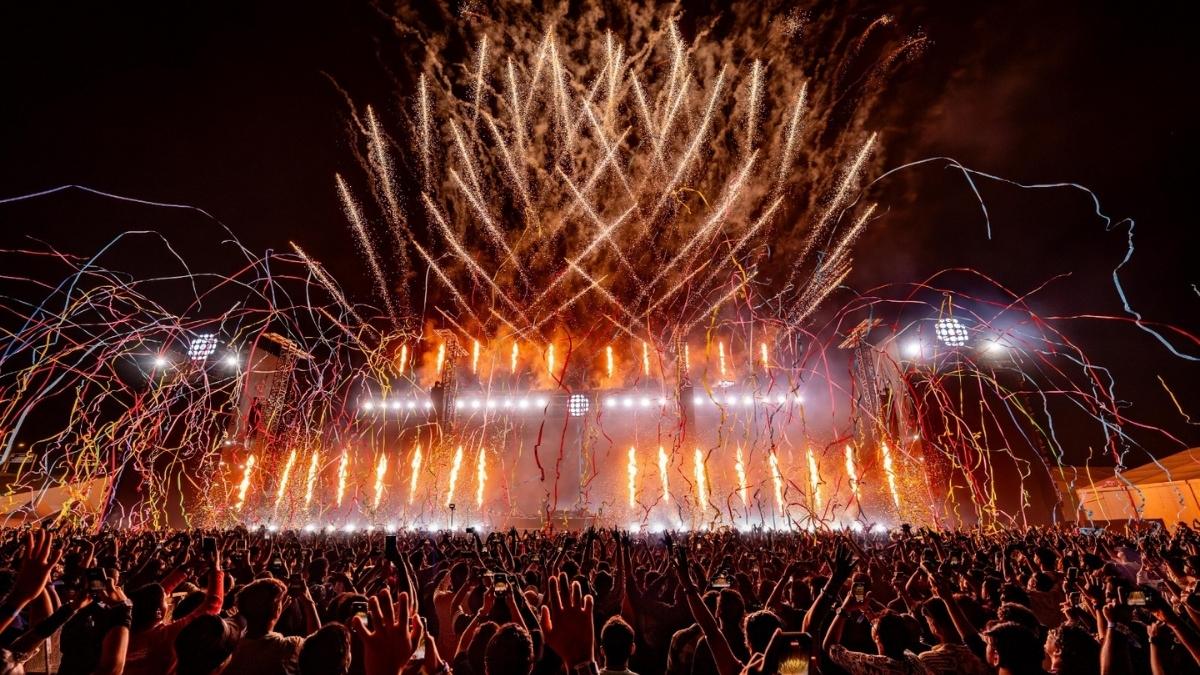
The recent cancellation of Ye’s (formerly Kanye West) inaugural concert in India might have disappointed fans but the very possibility of an artiste of his stature performing in the country would have seemed far-fetched even five years ago. Since then, India has hosted a bevy of international artistes — from Ed Sheeran to Coldplay — vouching for the rapid growth of the live experience economy.
The typical attendee, say experts, is upwardly mobile, digitally influenced and socially active — signalling live experiences have become a form of social currency. “Live events have evolved from being episodic attractions into defining lifestyle experiences for young people,” says Shoven Shah, CEO, TribeVibe. “This is no longer ‘urban youth’ spending,” writes strategy decoder Sapna Nibsaiya. “This is middle-class India allocating discretionary income to experiences.”
A recent report by EY-Parthenon and BookMyShow indicates what possibly moved the needle. A huge majority of Indian consumers say they prefer spending on experiences over products, which is also reshaping how brands build connection, loyalty and cultural relevance.
Raghav Anand, partner and leader, media & entertainment, EY-Parthenon India, cites the example of a credit card brand that went beyond conventional promotion to sponsor a major event with curated experiences for cardholders, including priority access and themed photo spaces.
Brands across BFSI, beauty and fashion, beverages, mobility and technology have been the early adopters of live events. Take RuPay and Kotak Mahindra Bank that have focused on convenience within high-demand live entertainment mom- ents. H&M, Budweiser 0.0 , Nivea, and Vicks have invested in festival ecosystems that enable community and trial, says EY’s ‘Beyond Attention. Into Immersion’ report.
For its part, beauty and lifestyle platform Nykaa has used experiential formats like its own Nykaaland as a discovery platform while brands like Diageo and Hyundai have leveraged events to reinforce their premium and youth-forward positioning.
The organised live events market now stands at roughly Rs 13,000 crore and is projected to reach Rs 19,500 crore by 2028, according to EY-Parthenon. Among the frontrunner categories are live concerts. Sunburn CEO Karan Singh says 2025 witnessed a 30% increase in the number of concerts vis-a-vis those hosted in 2024. The big ones like Coldplay’s Ahmedabad concerts and Diljit Dosanjh’s Dil-luminati (14-show) tour generated revenues of Rs 641 crore and Rs 943 crore respectively.
Live & kicking
The one segment that is really grabbing the eyeballs is stand-up comedy—with comedians now touring like concert artistes. TribeVibe’s Shah says large-format comedy tours now operate much like music productions. For instance, A-list comedian Zakir Khan, who put Hindi stand-up on the global map, took his Papa Yaar tour beyond metro cities to cover Tier-1 and Tier-2 cities across India.
That’s the other big shift: With international stars and major festivals (Lollapalooza and Rolling Loud) integrating India into their tour calendars, the live entertainment sector has migrated from metro-centric, one-off activations to massive cultural and economic congregations, resulting in large investments for infrastructure and allied resources.
A representative from the Nita Mukesh Ambani Cultural Centre told FE that audiences at NMACC—which hosts Broadway-style theatricals and international musicals to classical Indian performances, visual arts exhibitions, and artisan showcases— include both globally exposed theatre enthusiasts and first-time attendees travelling from across the country. Since opening in 2023, it has organised over 3,500 shows, welcomed nearly 2.5 million guests, and showcased more than 10,500 artistes.
Despite the rapid growth, the sector continues to grapple with significant infrastructural bottlenecks. At his Chandigarh show in 2024, Dosanjh drew attention to India’s infrastructure shortcomings for live events. Anand echoes his concern, highlighting the need for state-of-the-art and scalable venues, streamlined regulations, and single-window clearance systems.
Naman Pugalia, chief business officer, live events, BookMyShow, agrees, noting that the current reliance on cricket stadiums as venue options means they often clash with peak sporting schedules. “The need for purpose-built, plug-and-play venues has never been more pressing”, he says. He adds that many stadiums remain underutilised beyond sporting events, and that BookMyShow Live is working with sports associations to adapt them for large-scale entertainment.