



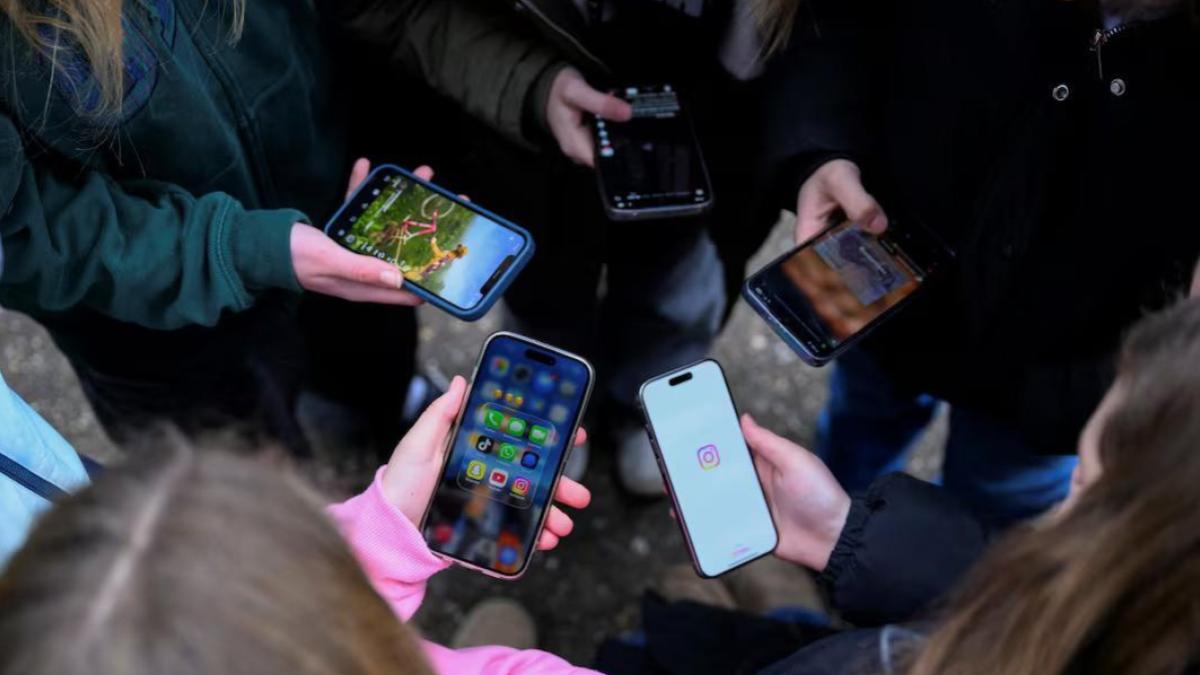
UK government on Wednesday announced plans to introduce a six-hour overnight social media curfew for 16- and 17-year-olds as part of its efforts to improve online safety and reduce excessive screen time among teenagers. If approved by Parliament, the default curfew will switch off access to social media platforms from midnight until 6 am, although users will have the option to turn the setting off, reported news agency AP.
The proposal forms part of a broader package of online safety measures introduced by Prime Minister Keir Starmer’s Labour government before leaving office. It follows the government’s announcement last month that children under the age of 16 will face a social media ban from next spring.
According to the government, the under-16 ban is expected to apply to major social media platforms including Snapchat, TikTok, YouTube, Instagram, Facebook and X. Messaging services such as WhatsApp and Signal will not be covered.
The latest proposal also seeks to reduce features designed to keep teenagers online for longer. Functions such as autoplay, which automatically starts another video after one finishes, will also be disabled by default for users aged 16 and 17.
The measures will require legislation before they can take effect. Political observers expect Andy Burnham, who is widely seen as the likely successor to Starmer, to continue with the policy if it is not passed before the current government’s term ends, reported AP.
How will social media curfew work?
Under the proposal, social media platforms would automatically activate a six-hour overnight curfew for 16- and 17-year-old users. The restriction would run from midnight until 6 am. Teenagers could disable the setting if they choose, making the curfew a default feature rather than a mandatory ban.
Online safety minister Kanishka Narayan defended the approach and rejected criticism that teenagers would simply switch off the restriction. “I wouldn’t do the disservice to teenagers of saying they’re all going to switch it off,” Narayan told Sky News.
He spoke about the results of a pilot programme involving more than 300 teenagers and their parents across the UK. According to him, the trial led to a significant reduction in overnight social media use while also improving sleep quality and concentration.
Narayan said many teenagers who received similar default settings during earlier platform trials chose to keep them enabled. “In October, for example, some platforms introduced these defaults of this sort – 90%-plus teenagers said to us that they’ve maintained those defaults as well,” he was quoted as saying by Sky News.