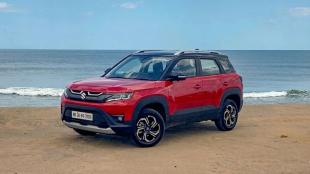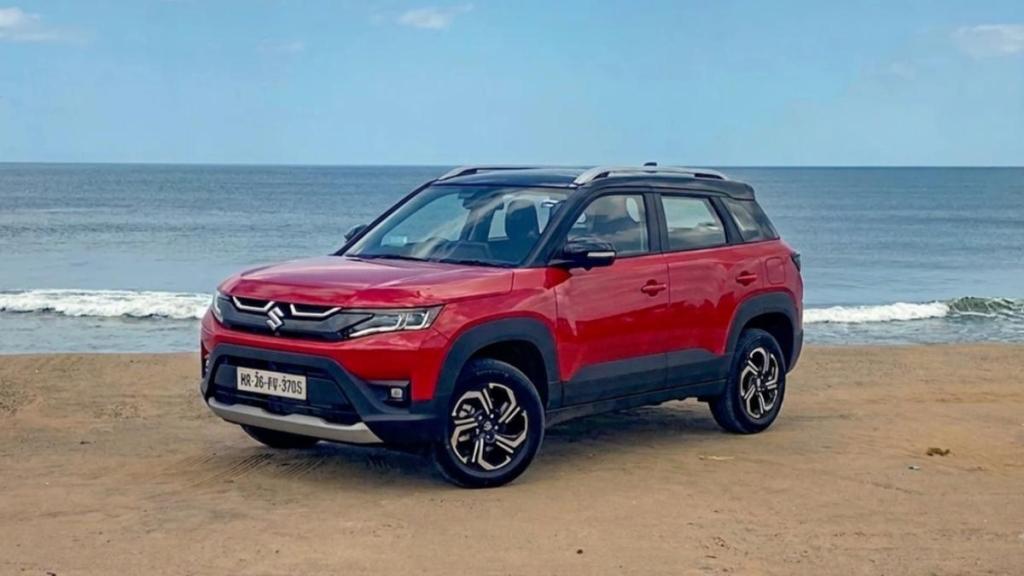
Maruti Suzuki will launch the Brezza facelift soon. But this launch comes at a time when the Brezza faces its toughest rival yet.
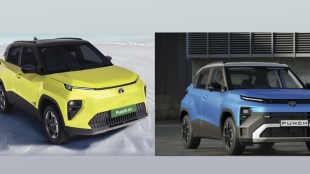
Once the ruler of the segment, the Brezza now finds itself playing catch-up to the Tata Nexon.
First launched in 2016, the Brezza was by far the highest-selling compact SUV almost every year, but things changed in 2023 when the Nexon – powered by a facelift – sold 170,312 units, almost catching up with the Brezza (170,588 units). The Brezza maintained a comfortable lead in 2024 (188,160 units) as compared to the Nexon (161,611 units), but 2025 was the defining year for Tata, as the Nexon (200,561 units) comprehensively beat the Brezza (175,310 units).
In the first six months of this year, the Nexon has increased its lead by selling 118,166 units, as compared to the Brezza’s 88,967 units.
According to Sarosh Poornam, head, Marketing, Tata Motors Passenger Vehicles, the Nexon’s dominance boils down to two things: architectural flexibility and derisking the consumer’s decision.
While competitors have relied mostly on petrol engines, and CNG/diesel, the Nexon is the only car in India that is available in petrol, turbo-petrol, diesel, CNG, and electric.
“This multi-powertrain strategy ensures that no matter how fuel prices fluctuate or how fast regional charging grids mature, the Nexon has an answer,” Poornam said. Urban buyers, for instance, can adopt the zero-emission EV or the petrol, while buyers in tier-2 and tier-3 markets can opt for highly economical diesel or CNG variants.
Automotive analysts said that when a rival brand prepares a major launch, they typically target a specific gap in a competitor’s armour – such as an outdated engine or the absence of an EV. Poornam’s insights reveal that Tata’s multi-fuel line-up effectively closes these windows of vulnerability. The customer enters the showroom unconstrained; they choose the design and form factor first, and then select the right powertrain.
In addition, by building these variants on a highly adaptable platform, Tata Motors can scale production as needed. If EV demand surges, the production of the Nexon EV can be scaled up, and if petrol/diesel/CNG are in demand, the assembly line can be adjusted accordingly.