



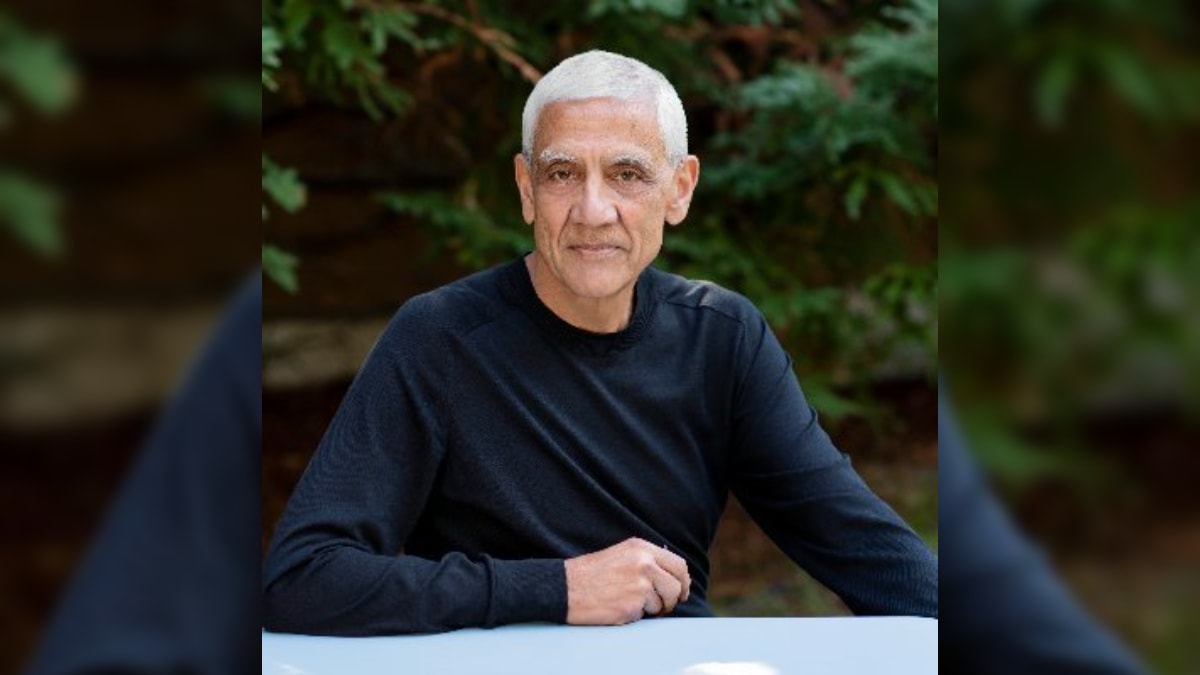
Silicon Valley investor and venture capitalist Vinod Khosla has criticised the US government’s latest immigration rule, saying it could weaken the country’s future in technology and innovation.
Reacting to a post by the Hoover Institution on X, Khosla said the United States was “hurting” its own future competitiveness by making it more difficult for international students and skilled professionals to study and remain in the country.
“It’s sad to see how much we are hurting the USA in future competitiveness and talent! Most people don’t realise how much of tech innovation and hence GDP growth comes from foreign talent in the USA. Innovation and GDP growth are sure to decline,” Khosla wrote.
It's sad to see how much we are hurting the USA in future competitiveness and talent! Most people don't realize how much of tech innovation and hence GDP growth comes from foreign talent in the USA. Innovation and GDP growth is sure to decline. https://t.co/Fe4HoRFoLU
— Vinod Khosla (@vkhosla) July 19, 2026
His comments come just days after the Department of Homeland Security (DHS) finalised a major change to student visa rules, ending the long-standing “Duration of Status” system for international students.
Khosla has long backed legal immigration
The founder of Khosla Ventures, who himself moved to the United States from India, has repeatedly argued that skilled immigrants are one of America’s biggest strengths.
Speaking at the Bloomberg Green conference in July 2025, he said “talent drives everything” and warned that the administration’s immigration crackdown was hurting America’s ability to compete in artificial intelligence and climate technology. According to him, the restrictions would do more damage than energy shortages or cuts to clean-energy tax credits because they could push talented people to build their careers in other countries.
While Khosla has consistently supported skilled immigration, he has also made it clear that he distinguishes between legal and illegal immigration. In a post on X in 2024, he described himself as “extremely pro-immigrant, being one myself,” while saying that legal and properly vetted immigration remains one of America’s biggest advantages. At the same time, he added that illegal immigration “has to be stopped.”
Khosla’s comments come amid wider concern across the technology sector that the United States may be weakening one of its greatest advantages, its ability to attract talented people from around the world.
For decades, foreign-born students and professionals have made major contributions to science, technology, engineering and mathematics (STEM). They have started companies, led research projects, developed new technologies and helped create thousands of patents.
Universities have also depended heavily on international students, both for research and for the tuition fees that help support academic programmes.
Business leaders and education experts now fear that if fewer international students choose the United States, the country could eventually have fewer skilled workers, researchers, innovators and entrepreneurs.
They also warn that talented students may instead choose countries such as Canada, the United Kingdom or several Asian nations, strengthening those economies instead of the US.
What has changed for international students?
For nearly 50 years, international students on F-1 academic visas and J-1 exchange visitor visas were allowed to stay in the United States under a system known as “Duration of Status” (D/S).
Under this system, students could remain in the country as long as they stayed enrolled in a recognised academic programme and continued to meet the conditions of their visa. They could move from one degree to another, such as from a bachelor’s programme to a master’s or PhD, without repeatedly applying for fresh government approval.
That system has now come to an end. On July 17, 2026, DHS published its final rule replacing Duration of Status with a fixed-period admission system.
Under the new rule, F-1 and J-1 students will be allowed to stay until the end of their academic programme or for four years, whichever comes first.
Students who need extra time to complete their studies must either apply for an extension through US Citizenship and Immigration Services (USCIS) or leave the country and seek fresh admission.
The rule also cuts the post-study grace period for F-1 students from 60 days to 30 days. It introduces new biometric requirements and tighter tracking and reporting rules for schools and employers.
The regulation is scheduled to take effect on September 15, 2026.
International student visas were already falling
The new rule comes at a time when the number of student visas issued by the United States has already dropped sharply.
According to US State Department data analysed by the Chronicle of Higher Education, F-1 visa issuances fell by around 36% between May and August 2025 compared with the same period in 2024. That means nearly 97,000 fewer student visas were issued.
The fall was even higher for Indian students, who make up the largest group of international students in the US. During the same period, visas issued to Indian students dropped by around 60%. In July and August 2025 alone, the decline was nearly 80%.
Even in September 2025, visa issuances remained about 18% below the previous year’s level, with little sign of improvement.
The decline was caused by several factors, including a month-long suspension of student visa interviews during spring and summer 2025, tougher social media screening for applicants, and uncertainty surrounding the Optional Practical Training (OPT) programme, which allows F-1 graduates to work in the United States for one to three years after completing their studies.