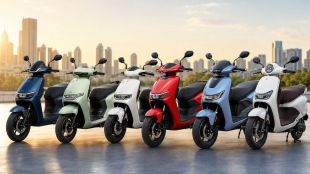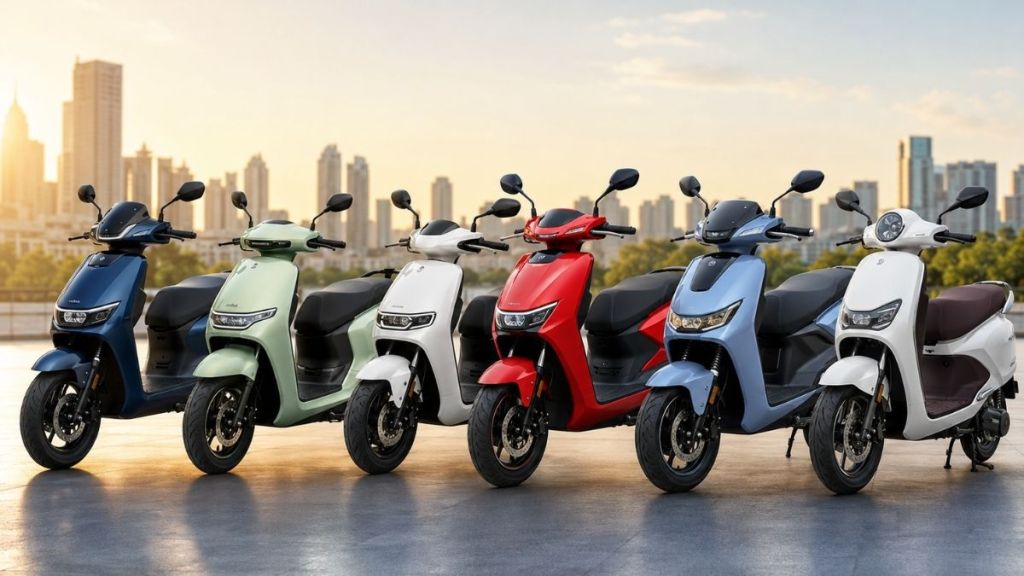
India’s electric scooter market is entering its “Activa moment”, with the focus shifting from tech-heavy, sporty EVs to practical, family-oriented scooters prioritising affordability, storage and usable range. As registrations surged 75% year-on-year to 193,495 units in June 2026, TVS and Bajaj’s success with the iQube and Chetak has prompted Hero MotoCorp, Honda and Ather to target the Rs 1-1.25 lakh segment, where mass-market demand is gathering pace.
Rs 1–1.25 Lakh Sweet Spot
TVS led electric two-wheeler retail sales in FY26 with around 339,000 units, averaging more than 32,000 units a month. The iQube, priced from around Rs 1.1 lakh, has become its flagship family EV, while the recently introduced Orbiter, starting at about Rs 88,000, broadens its appeal at the value end.
Bajaj followed a similar strategy with the Chetak, retailing around 286,000 electric two-wheelers in FY26, or nearly 25,000 units a month. Its portfolio now spans multiple price points, with the C25 starting at around Rs 91,400.
Ather Energy, known initially for its sporty 450 series, has pivoted towards family buyers with the Rizta. The model helped the company retail around 237,000 electric scooters in FY26, averaging nearly 20,000 units a month. Ather will unveil another mass-market scooter based on its new EL platform on August 29 to further strengthen its presence in the affordable family segment. Additionally, smaller players like Simple Energy are also readying products in the family scooter segment, sources tell us.
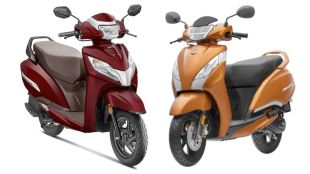
Hero MotoCorp is targeting value-conscious buyers through the Vida VX2 range, which starts below Rs 80,000 in some cities. Vida retailed around 143,000 electric scooters in FY26, averaging nearly 12,000 units a month. Honda, meanwhile, has electrified its biggest scooter brand with the Activa e, while also offering the more affordable QC1. Yet despite its dominance in petrol scooters, Honda sold only 2,389 electric scooters during the first half of 2026.
Suzuki and Yamaha have also entered the segment but remain priced well above the emerging sweet spot. Suzuki’s e-Access costs Rs 1.88 lakh and retailed 2,042 units between January and June 2026. Yamaha’s EC-06 is priced at around Rs 1.72 lakh, while the Aerox E costs Rs 2.81 lakh. The company sold just 418 electric scooters between March and June.
Without products in the Rs 1-1.25 lakh segment, both Japanese manufacturers risk missing the largest pool of family buyers. As more mainstream brands expand their portfolios, India’s electric scooter race is shifting from winning early adopters to earning a permanent place in the family garage.
According to two-wheeler expert Sanjay Tripathi, “What we’re witnessing is the ‘Activa-isation’ of the electric scooter market. The next phase of growth will be driven by mainstream family buyers, not early adopters. In India, the winning scooter has never been the highest-performing one, but the one that fits seamlessly into a household’s daily life. That’s why the focus is shifting from performance and features to practicality, reliability, affordability and a trusted ownership experience.”