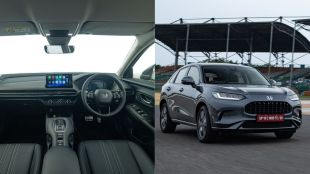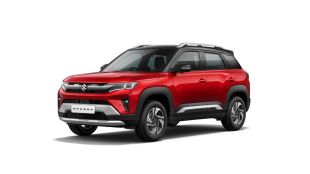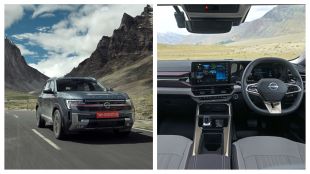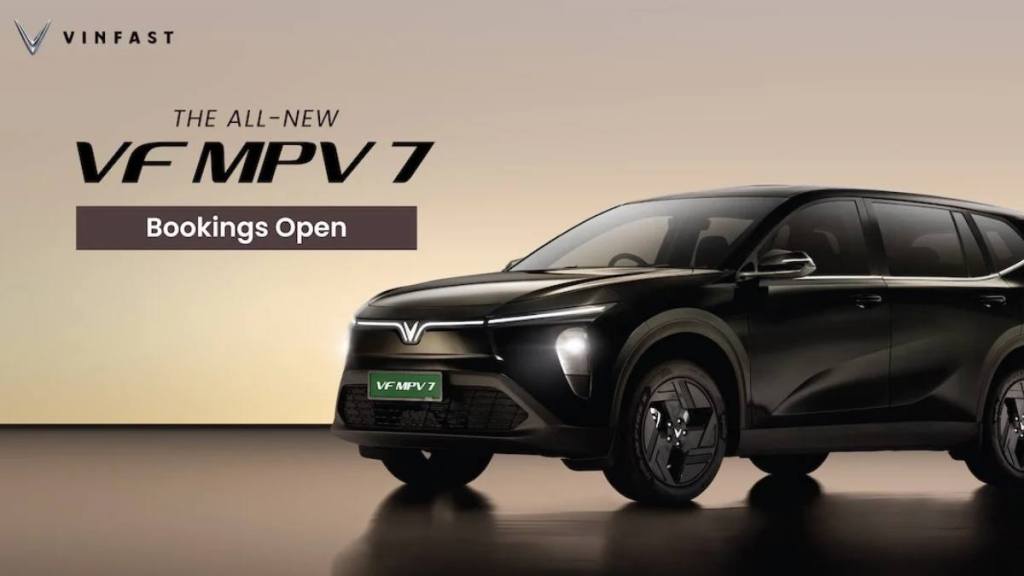
With the launch of the VinFast VF MPV 7, choosing a family-sized EV has become complicated. Should you buy the fully-loaded VF MPV 7 (which comes bundled with three years of free maintenance, a 10-year battery warranty, a 7-year vehicle warranty, and seven years of roadside assistance), the proven Mahindra XEV 9S, the highly-capable Kia Carens Clavis EV, the highly-spacious BYD eMax 7, or should you wait for the Tata Safari EV?
The space race
VF MPV 7: It has the longest wheelbase in the segment (2,840 mm), translating into excellent legroom for second- and third-row passengers.
eMax 7: With a wheelbase of 2,800 mm, it feels like a traditional MPV, focusing on low-effort ingress/egress.
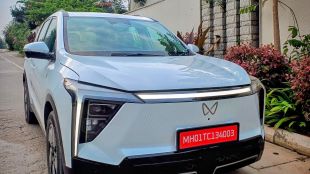
XEV 9S: It has a 2,762-mm wheelbase, and a more powerful road presence, but the third row is tight.
Carens Clavis EV: Despite limited exterior dimensions, it offers very good cabin space (2,780 mm wheelbase).
The range war
XEV 9S: It’s the range-and-choice king, with three battery options – 59 kWh (521 km), 70 kWh (600 km), and 79 kWh (679 km).
eMax 7: It has two battery options – 55.4 kWh (420 km), and 71.8 kWh (530 km).
VF MPV 7: It’s equipped with a 60.13-kWh battery (517 km range).
Carens Clavis EV: It has the smallest batteries in the segment, but both are extremely efficient – 42 kWh (404 km), and 51.4 kWh (490 km).
The bling king
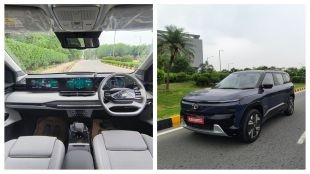
XEV 9S: It has the cockpit of the future, with a triple-screen layout in top variants – it’s an EV for the tech-obsessed dad, or the ‘daddy’.
VF MPV 7: The focus is on space – cabin is more functional, less blingy.
eMax 7: It has features like rotating screen, and the car is high on tech.
Carens Clavis EV: Just the right colours, just the right screen size, just the right bling – it’s an EV for a sensible dad.
Is the price nice?
eMax 7: It has four variants – 55.4 kWh (6-seater for Rs 26.9 lakh, and 7-seater for Rs 27.5 lakh), and 71.8 kWh (6-seater for Rs 29.3 lakh, and 7-seater for Rs 29.9 lakh).
Carens Clavis EV: It has nine variants in total – 42 kWh (Rs 17.99-20.49 lakh), and 51.4 kWh (Rs 21.99-24.99 lakh).
VF MPV 7: It’s available in just one fully-loaded variant priced Rs 24.49 lakh – for a brand still setting up its presence in India, the price seems on the higher side.
XEV 9S: It’s the most value-for-money family EV, with prices of the 59-kWh variant starting at Rs 19.95 lakh (charger extra for Rs 75,000), of the 70-kWh variant from Rs 24.45 lakh, and of the 79-kWh variant from just Rs 21.95 lakh.
Wait for Tata?
Tata Motors is expected to launch the Safari EV shortly – it’s likely to share battery options with the Harrier EV (65 kWh for Rs 21.49-24.48 lakh, and 75 kWh for Rs 24.99-29.48 lakh). Considering the price difference between the Harrier and Safari petrol/diesel models when comparing equivalent trims is Rs 50,000 to Rs 1.5 lakh, expect the Safari EV to be priced very competitively.
(Note: Range figures are claimed, not real-world; prices are ex-showroom.)