The facelifted Tata Punch has been launched as the first major update to the micro-SUV since the launch of the 2021 model. Priced from Rs 5.59 lakh (ex-showroom), the 2026 model introduces bolder styling, a premium interior, a powerful new turbo-petrol engine, six airbags as standard, and advanced features. For those already owning an earlier version of the Tata Punch, or those planning to upgrade to a new car this year, the question must arise – how does the 2026 model stack up against the pre-facelift 2025 model?
The 2025 Punch was already a segment leader with strong sales, a 5-star Global NCAP rating, and class-leading dimensions (3827mm length, 1742mm width, 2445mm wheelbase). The facelift builds on this foundation while addressing key demands for more engine power, better safety, and modern tech features. Here’s a detailed head-to-head comparison between the 2026 Tata Punch and the 2025 Tata Punch.
Tata Punch 2026 vs Punch 2025: Design
The 2026 facelift adopts a sharper, more contemporary SUV-inspired design, drawing cues from the Punch EV and newer Tata models. Key upgrades include slimmer LED DRLs with black surrounds, vertically-stacked projector headlamps, a redesigned grille and bumpers with thicker cladding, faux silver skid plates, connected LED tail lamps, and fresh 16-inch diamond-cut alloy wheels.
The pre-facelift 2025 model had a simpler, boxier front with sharp LED DRLs and projector headlamps housed in a separate big unit on the lower bumper. The rear of the Punch has two tiny taillamp units.
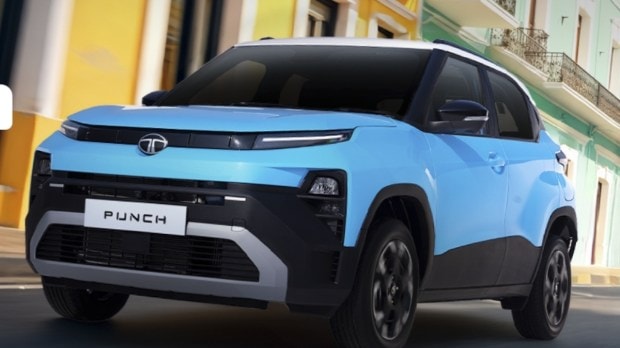
The new model also offers a refreshed colour palette with vibrant shades like Cyantafic Blue, Caramel Yellow, Bengal Rouge Red, Daytona Grey, Coorg Clouds Silver, and Pristine White.
Tata Punch 2026 vs Punch 2025: Interior and features
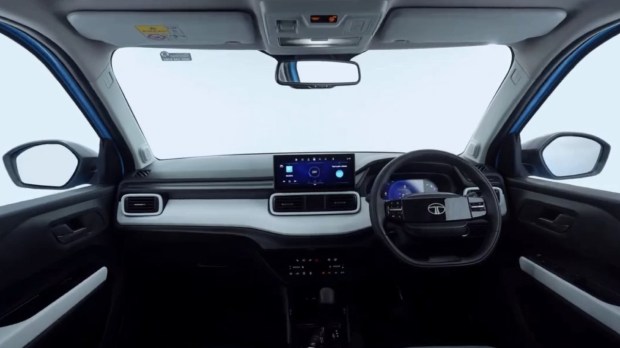
The 2026 Punch cabin feels noticeably more upmarket, featuring an updated dashboard layout (borrowed from the Punch EV), a two-spoke illuminated Tata steering wheel, touch-based climate control, dual-tone charcoal-blue upholstery with white inserts, extendable thigh support for rear seats, rear AC vents, a 7-inch digital instrument cluster, and a larger 10.25-inch touchscreen with wireless Android Auto/Apple CarPlay.
Additional comforts include a wireless charger, voice-assisted electric sunroof, auto headlamps, rain-sensing wipers, 360-degree camera, auto-dimming IRVM, and connected car tech.
In comparison, the 2025 model’s interior was functional but simpler, with a smaller touchscreen (up to 7-inch in higher trims), an analogue-digital cluster, and fewer premium touches like touch climate controls or a digital display.
Tata Punch 2026 vs Punch 2025: Safety and Engines
Safety sees the biggest jump on the 2026 Tata Punch, where you get six airbags as standard (vs dual airbags in base 2025 variants). You also get ESC, hill descent control, blind-spot monitoring, TPMS, and a 360-degree camera. The facelift retains the 5-star Bharat NCAP rating of the previous model.
As far as the engine options are concerned, the 2026 Tata Punch carries forward the base engine option from the 2025 model but adds a new turbocharged option as an alternative. The 2026 Punch retains the 1.2L NA petrol (88 PS/115 Nm) with 5-speed MT/AMT gearbox options, whereas the CNG variant now gets a 5-speed AMT gearbox as an option. For those wanting more performance, Tata has added a new 1.2L turbo-petrol engine making 120 PS of power and 170 Nm of torque, along with 6-speed MT and AMT as an option. This engine comes from the Altroz.
Tata Punch 2026 vs Punch 2025: Pricing and value
The 2026 Tata Punch facelift starts at Rs 5.59 lakh (similar to the 2025’s Rs 5.50 lakh base price), with top variants reaching around Rs 10.54 lakh. The added features, safety, and turbo option justify a slight premium, especially for performance-oriented buyers. Overall, the 2026 Tata Punch facelift is a comprehensive upgrade that makes it even more competitive against rivals like Hyundai Exter and Nissan Magnite.