Leading sport utility vehicle (SUV) manufacturers have sought a relaxation in emission limits under the proposed third phase of Corporate Average Fuel Efficiency (CAFE-3) norms, marking a shift after earlier opposing relief extended to small cars.
At a meeting with the Ministry of Heavy Industries (MHI) on February 10, the Society of Indian Automobile Manufacturers (SIAM) urged the government to ease the proposed targets for the industry.
According to people aware of the deliberations, Mahindra & Mahindra indicated that the proposed targets would be difficult to meet under its current product mix and sought a relaxation of around 6 g/km. The company is learnt to have cautioned that if the norms remain unchanged, it may face non-compliance penalties.
The demand is notable because SUV makers had earlier opposed the 3 g/km relaxation provided to small cars under the existing framework, arguing that the industry should move towards stricter standards without segment-specific concessions.
Strategic Reversal
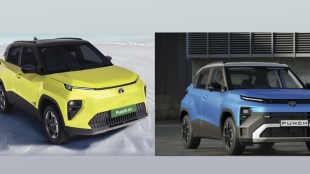
Tata Motors is learnt to have supported a softer framework for larger vehicles. While Tata is considered closer to meeting the proposed targets, sources said the company is keen to maximise benefits from emission credits under CAFE-3. The framework provides “super credits” for electric vehicles (EVs), under which one EV is counted as three vehicles for fleet emission calculations, lowering average emissions on paper. Manufacturers that exceed their targets can also trade surplus credits with other original equipment manufacturers (OEMs).
A government official present at the meeting said Mahindra’s push for relaxation reflects the composition of its portfolio, with nearly 75 per cent of its sales coming from diesel vehicles. Electrification in the SUV segment remains gradual due to higher battery costs and pricing constraints, the official added. This despite Mahindra’s public commitment to raise EV penetration to around 30% of its overall sales.
Industry estimates suggest Mahindra’s FY32 fleet emission target under the proposed formula would have to be around 92.53 g/km. A 6 g/km relaxation would raise the threshold to approximately 98.53 g/km, easing compliance pressures.
Queries sent to Mahindra and SIAM did not elicit a response till press time.
Compliance Gap
Maruti Suzuki, India’s largest small car maker, is understood to have reiterated its earlier stand that SUV manufacturers have greater headroom to meet targets through weight reduction, technological upgrades and changes in fuel mix. Small cars, it argued, are already optimised for fuel efficiency and have limited scope for further gains.
Emission data submitted by the industry to MHI show a wide gap across vehicle categories. In the mid-hatchback segment, a Maruti WagonR emits about 98 kg of CO₂ per 1,000 km, compared with 122 kg for the Tata Tiago. In the sedan category, the Dzire emits around 98 kg per 1,000 km versus 123 kg for the Tigor. In the small off-roader segment, the Jimny emits 135 kg, while the Mahindra Thar emits 187 kg. In the mid-SUV segment, the Grand Vitara emits 117 kg compared with 195 kg for the Scorpio. In the multi-utility vehicle (MUV) category, the Ertiga emits 116 kg, against 139 kg for the Kia Carens.
Maruti has also argued that major global markets — including the European Union, the United States, China, Korea and Japan — provide differentiated treatment or protection for small cars under their fuel efficiency regimes. India’s framework, it said, should provide similar safeguards.
Under the proposed CAFE-3 formula, the Alto’s CO₂ performance stands at 89 g/km, while its compliance target is pegged at around 62 g/km, a level the company says is unviable. According to the company, even the Fiat 500, regarded among the world’s most fuel-efficient small cars, emits about 88.5 g/km of CO₂, comparable to the Alto, yet would still face a gap of nearly 30% against India’s prescribed target under the current framework.
SIAM, in its recommendations submitted to the MHI and the Bureau of Energy Efficiency (BEE) on December 3, 2025, also stated that emissions do not continue to decline indefinitely with vehicle weight reduction. Beyond a certain threshold, further weight reduction does not yield additional CO₂ benefits. As a result, several global regulators modify the slope of the CAFE curve at lower weight bands to reflect this trend.