



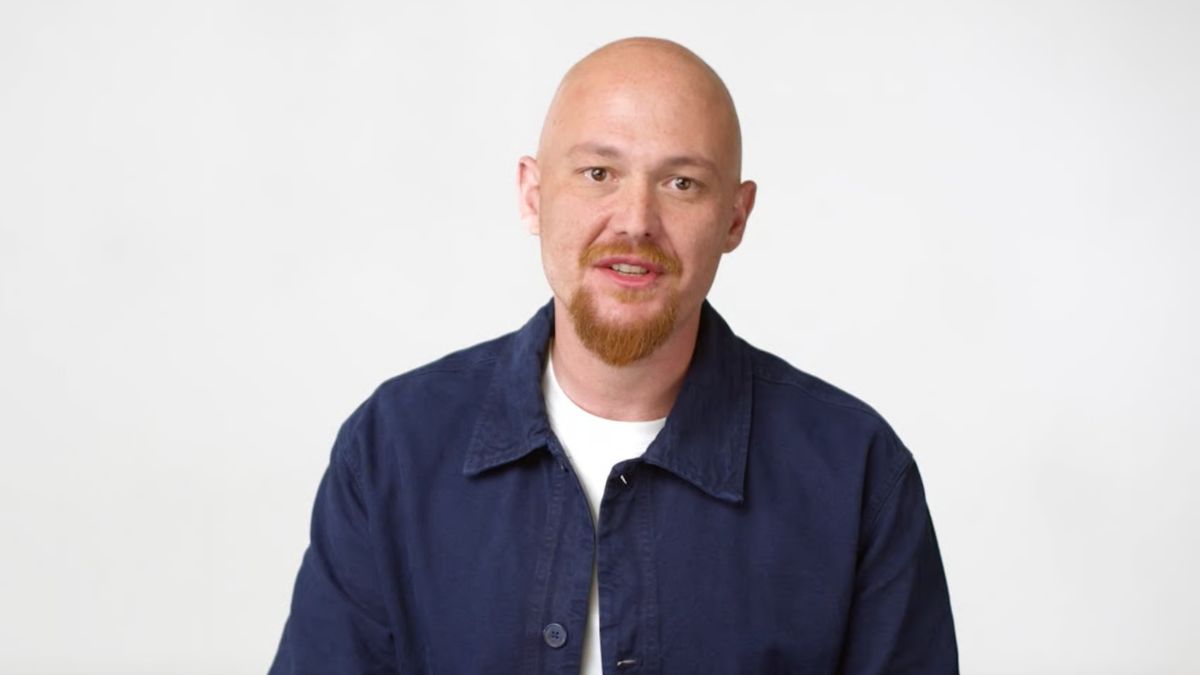
Not every billionaire begins their journey in Silicon Valley. Long before he was building one of the world’s hottest artificial intelligence startups, Amjad Masad was a young boy in Jordan teaching himself to code on an old IBM computer and creating software for neighbourhood internet cafés. Today, that curiosity has turned into a $2 billion fortune, making the Jordanian-born entrepreneur America’s newest billionaire of Arab origin.
The Replit cofounder and CEO entered the billionaire ranks after his AI coding startup was valued at $9 billion following a $400 million funding round announced in March 2026. According to Forbes’ America’s Richest Immigrants 2026 list released on July 8, Masad is worth an estimated $2 billion and ranks No. 102.
From a refugee family in Jordan to Silicon Valley
Masad’s story began in Amman, Jordan, where he grew up in a lower middle-class household. His father, a civil engineer, was a Palestinian refugee, while his mother, a homemaker, was a refugee from Algeria.
When Masad was six, his father brought home an IBM PC. Within a year, he had taught himself how to code and even built simple educational software to help his younger brother learn mathematics.
As he grew older, he started earning money by developing management systems for local internet cafés, allowing customers to create accounts and protect computers from viruses. During his teenage years, he also performed competitive Arabic poetry.
After studying at Jordan’s Princess Sumaya University for Technology, Masad moved to the United States in 2012 to join Codecademy, the online coding education startup. He later worked as a software engineer at Facebook before cofounding Replit in 2016 with his wife, Haya Odeh, who now serves as the company’s head of design.
The startup riding the ‘vibe coding’ wave
Replit has emerged as one of the biggest names in the fast-growing world of “vibe coding,” where users build software using natural-language prompts instead of writing traditional code.
The company’s latest AI product, Agent 4, takes the concept further with what Replit describes as a digital canvas. Developers can sketch ideas, tweak mockups and app designs, collaborate with teammates in real time, and build applications using simple prompts.
Y Combinator cofounder and early Replit investor Paul Graham said he saw the technology before most people. After another demonstration earlier this year, he believed the company was about to reshape the category.
The funding round that made Masad a billionaire
Replit’s valuation surged from $3 billion to $9 billion in just six months after raising $400 million in March 2026. The funding round was led by Georgian, with participation from Andreessen Horowitz, Coatue, Donald Trump Jr.’s 1789 Capital, celebrities Shaquille O’Neal and Jared Leto, and sovereign wealth funds including Qatar’s QIA.
Masad and his wife Haya cofounded the company and remain among its biggest shareholders, helping push his net worth to an estimated $2 billion.
The fresh capital will largely support Replit’s international expansion, particularly across Asia and the Middle East, while also strengthening its go-to-market team. Although the company has not disclosed its current revenue, it says it is on track to generate $1 billion in annual recurring revenue by the end of 2026.
Winning over enterprise customers
Replit’s growth is no longer limited to individual developers. Companies including Zillow, Databricks, PayPal and Adobe now use the platform to build internal software. Zillow alone has around 600 Replit seats, with employees creating more than 7,000 applications on the platform over the past year.
The company is competing in an increasingly crowded AI coding market alongside Anthropic’s Claude Code and Cursor, two of the fastest-growing products in the space.
Masad has spoken about how moving to the United States changed the trajectory of his life. “America provides a lot of opportunity. If you have any ideas that wouldn’t get funded in any other place in the world, they have a chance to get funded in the United States,” he told Forbes.
He has also argued that immigrants naturally develop a higher tolerance for risk because leaving one’s home country already requires taking a leap of faith.
Joining an exclusive list of Arab-origin billionaires
Masad is now part of a relatively small group of American billionaires of Arab origin. The list is led by Jordanian-born private equity executive Ramzi Musallam, whose fortune is estimated at $10.8 billion. Lebanese-born private equity investors Sami Mnaymneh and Tony Tamer follow with net worths of $7.8 billion each.
Masad shares the $2 billion mark with Lebanese-born biotech entrepreneur Noubar Afeyan. He is also the only newcomer on Forbes’ America’s Richest Immigrants list this year. Last year, Lebanese-born entrepreneur Karim Atiyeh joined the ranking with an estimated fortune of $1.9 billion.