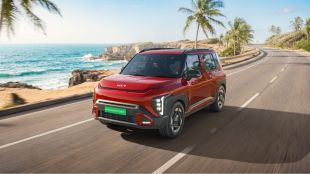
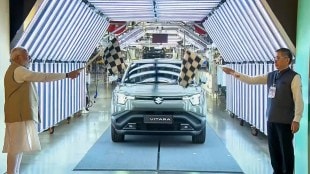
Maruti Suzuki India Ltd (MSIL) will commission a dedicated electric vehicle (EV) production line at its Gujarat plant by July, as it moves to ease capacity constraints and accelerate its EV rollout across domestic and export markets.
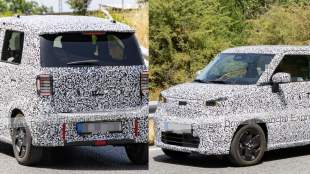
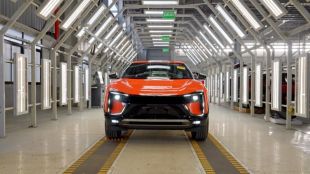
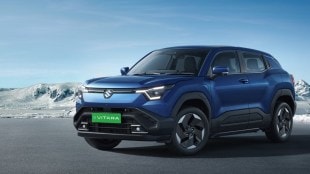
Internally called the ‘Production D’ line, the new facility will have an annual capacity of 2.5 lakh vehicles and will operate alongside the existing A, B and C lines. The fourth line will be exclusively used to manufacture the eVitara and the Toyota Urban Cruiser Ebella, along with future EVs from the Toyota-Maruti joint venture. With the addition of this line, the Gujarat plant’s annual capacity will rise from 7.5 lakh units to 10 lakh units.
Capacity Expansion
At present, the eVitara and Urban Cruiser Ebella are produced on a shared line that also builds internal combustion engine (ICE) models such as the Fronx, which continues to see strong demand and long waiting periods. This overlap has led to production bottlenecks at the facility.
“We have a little issue with our production capacity,” said Partho Banerjee, Senior Executive Officer (Marketing & Sales), Maruti Suzuki, during a conference call. He pointed out that one line at the Gujarat plant, with an annual capacity of one lakh units, caters to multiple ICE and EV models for Maruti and Toyota.
Breaking the Bottleneck
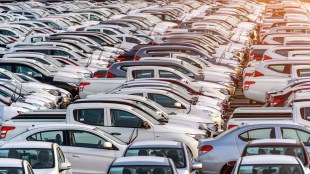
Maruti reported record total wholesales of 2,36,962 units in January, up 11.6% year-on-year the highest monthly dispatches in its history. Domestic wholesales stood at 1,78,300 units, also a January record, while exports surged over 88% to 51,020 units.
Despite the robust numbers, demand continues to outpace supply. “We are trying to keep balance and that problem will be there till July and post that things will be smoother. We will work to keep waiting periods low,” Banerjee said.
Booking growth in January 2026 was nearly 25% higher than a year ago, with pending bookings at around 1.75 lakh units above the typical one-month backlog. With 6–7 days of dealer stock in transit, inventory levels remain lean, underscoring sustained demand momentum.