For a sedan to have a non-stop run for nearly three decades in India is a big achievement. Back in 1998, when Honda Cars India launched the City sedan in a small-car market, it was a gamble. Decades later, its rivals from that era—Maruti Esteem, Daewoo Cielo, Hyundai Accent, and Mitsubishi Lancer—have gone into the annals of automotive history, but the City soldiers on, defending itself in the age of SUVs.
Honda has launched the 2026 City facelift, with aesthetic and functional upgrades – the aim is to compete against both SUVs and midsize sedans such as Volkswagen Virtus and Skoda Slavia.
We tested it in and around Bengaluru.
What are the changes?
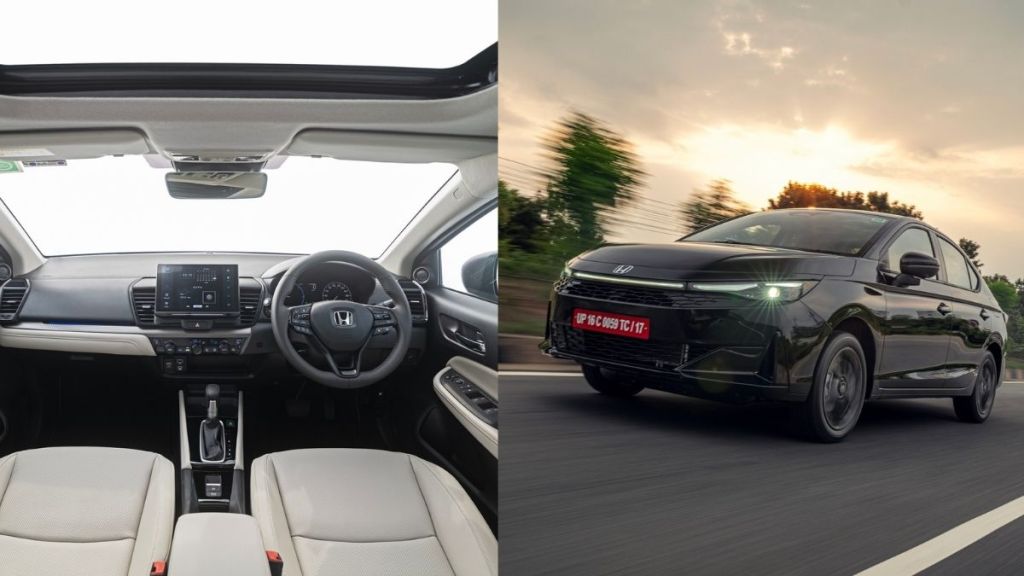
Front: It doesn’t have that thick chrome slab that previously dominated the nose, but a sophisticated, connected LED light bar.
Rear: It has a smoked-out, clear-lens treatment on the tail-lights, a honeycomb-pattern faux diffuser, and a body-coloured trunk lip spoiler.
Length: New front and rear bumpers have increased the City’s length by 11 mm (now measuring 4,594 mm), giving the car a distinctly European stance. In fact, from the sides, it looks a lot like the previous Civic.
Colour: The old Golden Brown Metallic paint has been replaced by a deep Crystal Black Pearl shade.
How’s the cabin?
Getting in and out is easy, and driver visibility is good (but for older people, getting in and out of any sedan can be a challenge). A big change is that Honda has replaced the boring 8-inch central screen with a modern 10.1-inch floating touchscreen system (wireless Android Auto and Apple CarPlay).
But a problem is that even this screen is pixelated. At a time when people are used to extremely clear smartphone screens, it feels dated. Even though the City has a 360-degree multi-view camera to complement the left-wing mirror LaneWatch system, the images they project just aren’t sharp.
But it gets ventilated seats – a relief in Indian summers. And petrol variants have a huge 506-litre boot space, though the hybrid variant drops to 306 litres.
How does it drive?
The City has the most comfortable rear seat in the Rs 10-20 lakh price bracket, and the cabin is quiet. The 1.5-litre petrol MT is a joy – the gearshift is slick, and power delivery is predictable. The 1.5-litre CVT is amazing in stop-and-go traffic.
But the strong hybrid e:HEV variant is a class apart, and is a self-charging electric car.
At low speeds, it moves on electric power. When you floor the accelerator, the petrol engine and electric motor work in tandem to drive the wheels. As you lift off and brake, regenerative braking captures kinetic energy to top up the battery. It is very efficient – the company claims a fuel efficiency of 27.26 km/litre, but in city traffic, my test car delivered almost 30 km/litre because frequent braking kept on charging the battery.
The Honda Sensing Level-2 ADAS suite brings semi-autonomous capabilities like lane-keep assist and adaptive cruise control, allowing the car to guide itself within marked highway lanes.
Sedan versus SUV
The City is a masterclass in packaging – it has more usable cabin space, better high-speed stability, and better fuel economy than midsize SUVs like the Hyundai Creta. But its lower ground clearance means you have to tackle high speed-breakers with caution.
Honda has kept prices the same despite adding features like ventilated seats, a 360-degree camera, and the 10.1-inch screen – meaning that the City remains a no-nonsense car for the premium car buyer who values rear-seat comfort, mechanical reliability, and elegance.
It’s actually time to think beyond SUVs.