



Discovering a new planet or having an extra-terrestrial object like an asteroid named after them perhaps tops the wishlist of many astronomy enthusiasts, including school students.
Over the past 6 years, several amateur astronomers and students from across the country have made discoveries facilitated by city-based organisation SPACE under its educational outreach programme, the All India Asteroid Search Campaign (AIASC).
Also Read: Ancient asteroids enhanced life supporting habitat on Mars
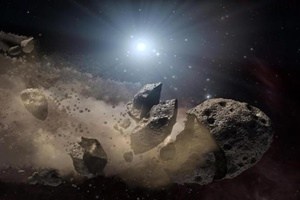
Asteroids are large numbers of small rocky bodies orbiting the sun that range enormously in size and can be typically found between the orbits of Mars and Jupiter. Astronomers vie with one another to be the first to spot them.
Now, under its AIASC for 2016, SPACE, in collaboration with the International Astronomical Search Collaboration (IASC), conducted by Patrick Miller from Hardin Simmons University in the US is offering students from India a chance to add to NASA’s database of asteroids hurtling in space.
90 teams, of 2 participants each per team, from across the country have been selected for the programme that begins on June 27 and is spread out over two phases till August 23 this year.
The overall purpose of the Asteroid Grand Challenge (AGC), a large-scale effort under NASA, is to encourage students and citizen scientists to identify and document asteroids in earth’s environment in order to assess their threat to the planet and also study them.
“The experience was great and I got to learn a lot,” says Amanjot Singh, who was the first to discover an object from Asia in 2010, as a student in class XI. Singh says he was enthused by the experience and has now joined SPACE as an instructor.
Under AIASC programme students and amateur astronomers get an opportunity to explore and study astronomy in a hands-on and detailed approach. The campaign gives the participants access to astronomy images, as well as opportunities to interact with international scientists.