



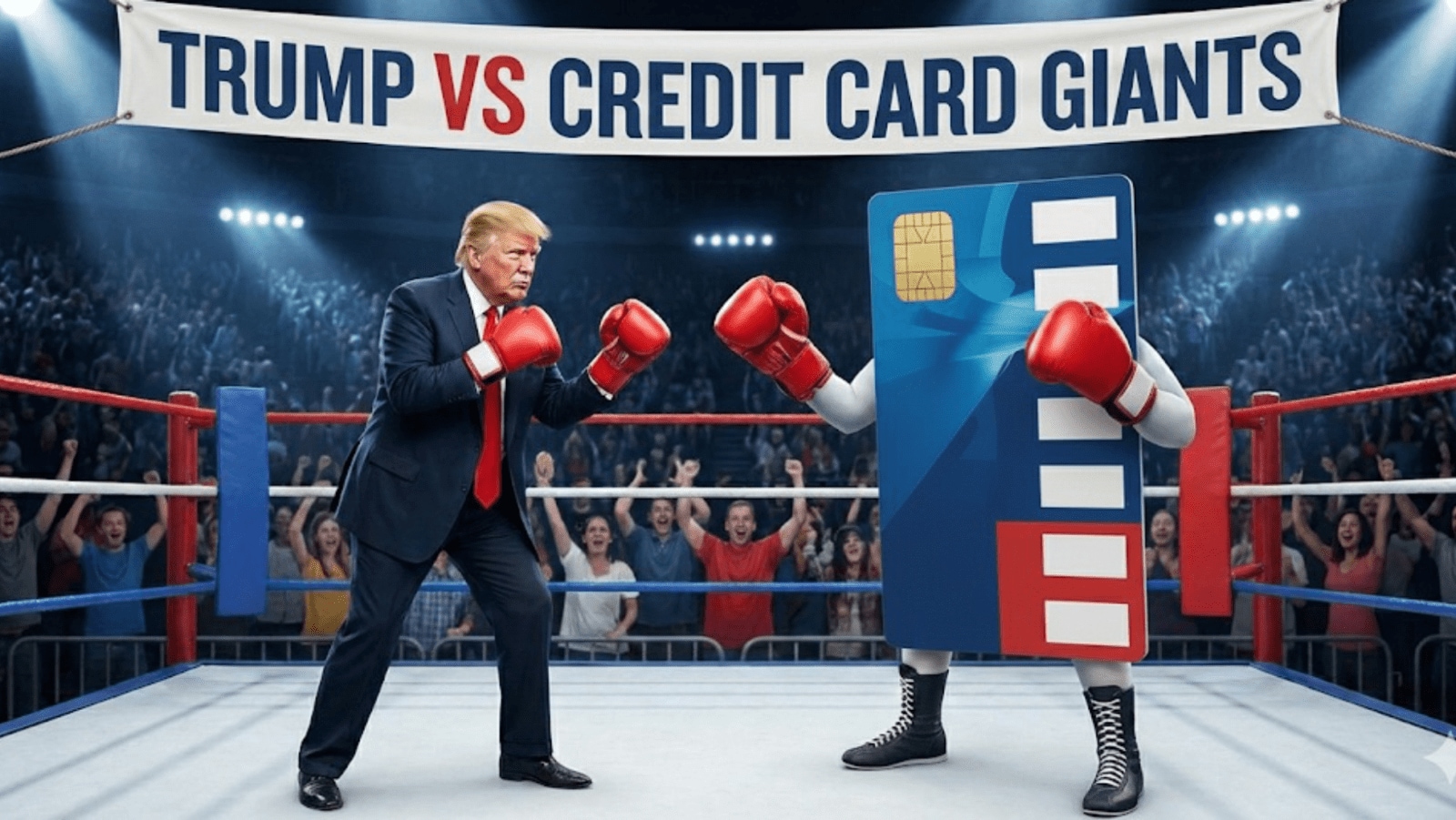
When Donald Trump declared that Americans would no longer be “ripped off” by credit card companies, the message was unmistakable even if the mechanics were not. On January 10, Trump announced that he wanted credit card interest rates capped at 10% for one year, effective January 20 but without any explanation of how such a cap would be enforced or whether it had Congressional backing.
In his post, Trump blamed credit card companies for charging interest rates of 20% to 30% or more and stated that these practices worsened during the Biden administration and had made everyday life unaffordable for millions of Americans.
Why credit cards matter so much in America
Credit cards are deeply embedded in daily life in the United States. According to Federal Reserve data, 81% of US adults had at least one credit card in 2024, translating to more than 216 million people. Many Americans hold multiple cards, with Experian estimating that the average adult owns over seven credit cards and actively uses nearly four. This usage is not about luxury spending alone. Credit cards are used for groceries, fuel, medical bills, emergencies, and unexpected expenses. For many households, they function as a financial buffer when incomes fall short of rising costs.
The debt trap behind everyday spending
The problem begins when balances are not paid off in full. Nearly half of American cardholders carry balances month to month, which means they pay interest. Around 23% do not even have a clear repayment plan, an indicator of financial stress rather than poor money management, as per 2025 Experian study. With annual percentage rates often exceeding 20%, even modest balances can snowball into long-term debt.
Trump’s proposal aligns with the “10 Percent Credit Card Interest Rate Cap Act,” introduced by Bernie Sanders and Josh Hawley. The bill seeks to impose an all-in 10% cap on credit card APRs. Supporters argue that credit card interest has crossed the line from risk-based pricing into something closer to predatory lending, especially as household budgets have been squeezed by years of inflation.
How much money could Americans save?
A 2025 study by Vanderbilt University estimated that a 10% interest cap could have saved Americans nearly $100 billion in interest payments if it had been implemented in 2024. Lower interest rates would mean faster repayment, reduced monthly burdens, and improved affordability for households already struggling with debt. The study also explained that banks could remain profitable by cutting back on costly rewards programs, such as cash-back offers and airline miles.
Why banks say the idea could backfire
The banking industry argues that credit card interest rates are not arbitrary. They are designed to cover losses from defaults and to account for the fact that credit card lending is unsecured. Without the ability to price for risk, banks warn they would have to protect themselves in other ways.
Industry groups including the American Bankers Association and the Bank Policy Institute said a 10% cap would reduce credit availability and harm the very consumers it aims to help. They argue that lenders would tighten standards, cancel cards, reduce credit limits, and increase fees to offset lost interest income.
According to the Bank Policy Institute, as many as 14.3 million individuals and families who regularly carry balances could be directly affected by reduced access to credit. Other studies cited by industry groups explain that most cardholders with credit scores below 740 could lose access altogether if such a cap were enforced
Bill Ackman’s warning
Billionaire hedge fund manager Bill Ackman called Trump’s proposal “a mistake,” warning that it would lead to mass account closures and push consumers toward loan sharks offering even worse terms. His concerns are similar to the industry’s fear that interest rate caps, even if it is politically popular, can create unintended consequences that harm lower-income and higher-risk borrowers the most.
Meanwhile, a 2024 LendingTree survey found that two-thirds of cardholders support a credit card interest rate cap even if it means reduced rewards. Six in ten said they would still support it even if access to credit became more restricted.
For many households, the current system already feels stacked against them, making trade-offs seem acceptable if it means relief from crushing interest payments.
Trump’s policy contradiction
Trump’s support for an interest rate cap explains shift from his earlier stance. His administration previously sided with banks against a Biden-era rule that sought to limit certain credit card fees. That rule was blocked by a federal judge, and Trump’s team supported the legal challenge against it. Now, Trump is championing a far more aggressive intervention in credit card pricing, highlighting the political complexity of the issue.
Trump cannot impose a credit card interest rate cap on his own. Any such move would require congressional legislation. His announcement, for now, functions as a proposal and a signal of political intent rather than an enforceable policy.
Will a 10% cap really save Americans from debt?
The answer is complicated. A cap could significantly reduce interest burdens and help millions repay debt faster. At the same time, it could limit access to credit for vulnerable borrowers and push some toward riskier alternatives. With Americans owing $1.23 trillion in credit card debt and paying more than $160 billion in interest annually, the frustration is real. Whether a blunt interest rate cap is the right solution or a policy that creates new problems while solving old ones is a debate that is only just beginning.