



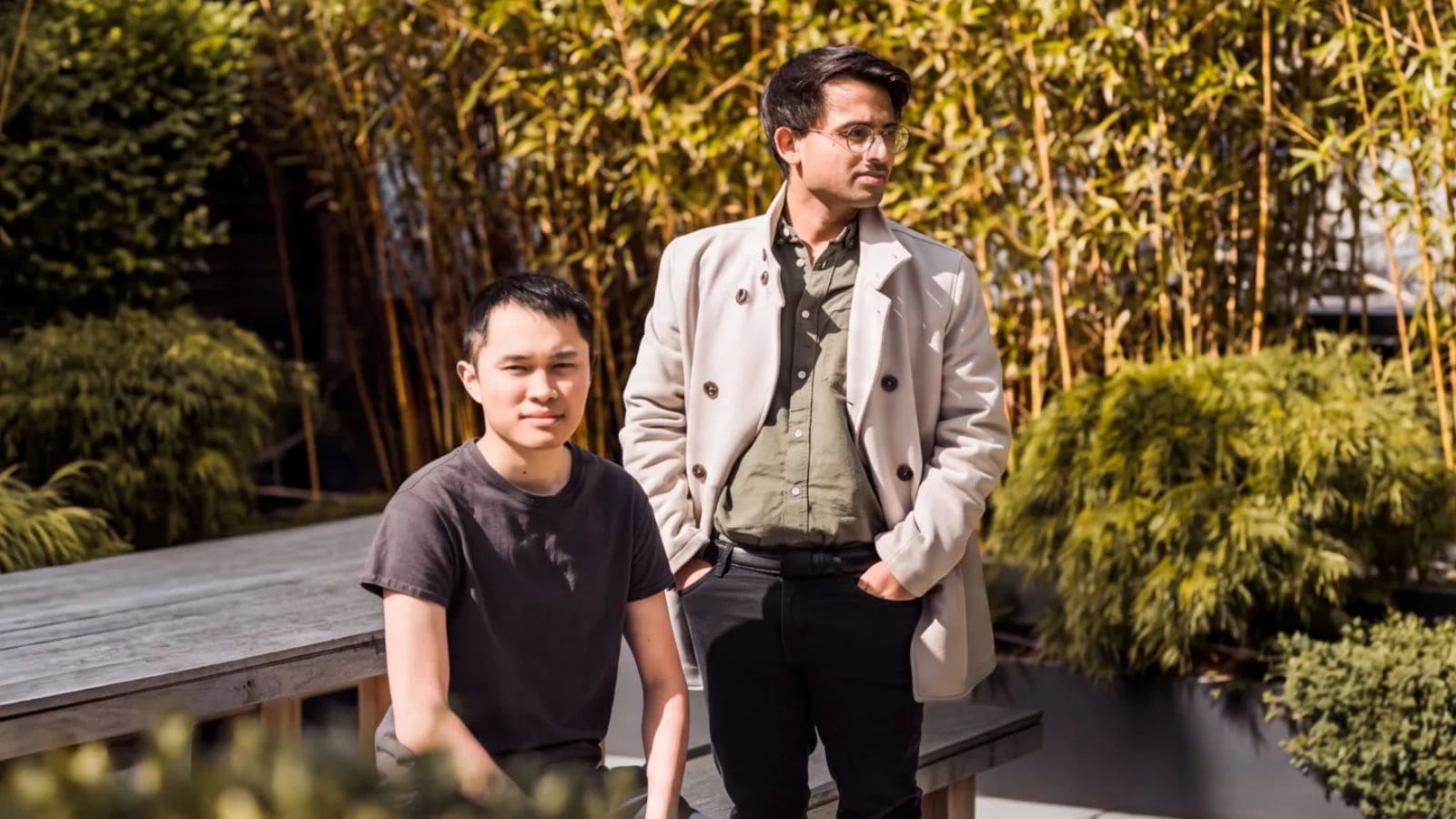
Indian-origin entrepreneur Nishith Khandwala has raised $25 million for his healthcare AI startup Bunkerhill Health, taking the company’s total funding to $55 million. The latest Series B funding round was led by Khosla Ventures, with Sequoia Capital, Felicis Ventures, Optum Ventures and Y Combinator also investing.
Nishith announced the news on his X post. The startup has become one of the fastest-growing names in healthcare AI by helping hospitals use artificial intelligence to improve patient care, reduce paperwork and cut waiting times. What began as a student project at Stanford University is now being used by some of the biggest hospital systems in the United States.
Today, I am excited to share that @joinBunkerhill has raised $55 million from @vkhosla at @khoslaventures, @Alfred_Lin from @sequoia, @ycombinator, and other amazing investors. Over the past year, we have partnered with more than a dozen health systems and grown revenue 20x.… pic.twitter.com/APJeyPCVmz
— Nishith Khandwala (@nish_khandwala) July 16, 2026
$25 million funding takes total investment to $55 million
Bunkerhill’s funding journey includes a $150,000 seed investment from Y Combinator in 2019, a $6.5 million Series A round in 2023 led by Sequoia Capital, and the latest $25 million Series B round announced on July 16, 2026, led by Khosla Ventures with participation from Sequoia Capital, Felicis Ventures, Optum Ventures and Y Combinator. Together, these rounds have taken the company’s total funding to $55 million.
“Over the past year, we have partnered with more than a dozen health systems and grown revenue 20x. Today, I’m also excited to formally share what we’ve been building,” Nishith wrote on X.
Vinod Khosla, whose firm led the latest round and who was also an early investor in OpenAI, has said hospitals are becoming much more willing to adopt new software now that AI is showing real value in healthcare.
Although the company has confirmed it has raised $55 million in total, it has not revealed its latest valuation.
| Funding Round | Date | Amount Raised | Lead Investor(s) | Other Participants |
|---|---|---|---|---|
| Seed | 2019 | $150,000 | Y Combinator | — |
| Series A | 2023 | $6.5 million | Sequoia Capital (Alfred Lin) | — |
| Series B | July 16, 2026 | $25 million* | Khosla Ventures | Sequoia Capital, Felicis Ventures, Optum Ventures, Y Combinator |
| Total Funding Raised | — | $55 million | — | — |
Note: The Series B amount is listed as $25 million, although some startup databases have not fully disclosed or updated the round details. Despite differences across data trackers, the company’s cumulative funding of $55 million is consistent across reported sources.
How a personal experience inspired the company
The journey started in 2017, when Khandwala was studying computer science at Stanford University. Along with his classmate David Eng, he wanted to build an AI system that could scan routine medical images and detect early signs of heart disease that busy radiologists might overlook.
But convincing hospitals to trust two college students was not easy. The project struggled to move forward and almost came to a halt.
A few years later, the idea turned quite personal. Khandwala’s father suffered a heart attack, and a cardiologist later told the family that an older scan had already shown warning signs, but they had gone unnoticed.
That experience boosted Khandwala’s belief that hospitals did not lack medical knowledge; they lacked the technology to turn that knowledge into timely action.
Later, with his friend, he officially launched Bunkerhill Health in 2019 with the goal of bringing AI into everyday hospital care.
Bunkerhill has grown far beyond its original focus on reading medical scans. Today, its platform, called Carebricks, allows hospitals to build and run AI agents across clinical, operational and administrative work. These AI tools help reduce specialist waiting times, remind patients about missed follow-up appointments, identify urgent medical cases faster and clear paperwork that often slows down hospitals.
Instead of using different software for every task, hospitals can manage multiple AI applications through a single platform.
Working with leading US hospitals
The Carebricks platform is now being used by 15 healthcare systems across the United States, including Cleveland Clinic, Mayo Clinic, Intermountain Health and the University of Texas Medical Branch (UTMB).
At UTMB alone, the company has deployed 22 AI agents. The platform also includes nine FDA-cleared clinical algorithms. Among them are tools that can detect silent heart valve disease and measure osteoporosis risk using routine CT scans.
According to the company, its AI agents have reduced nephrology waiting times at UTMB by more than half.
They have also improved follow-up care for patients with unexpectedly discovered lung nodules by around 80%. In one case, an AI tool that measured coronary calcium risk helped doctors identify a patient who later underwent an emergency triple bypass surgery.
A series of FDA approvals helped build trust
Over the past two years, Bunkerhill has secured several important approvals and partnerships.
In January 2025, the company received what it says was the first FDA clearance for an AI tool that automatically measures aortic valve calcification on non-cardiac chest CT scans.
In April 2025, it received another FDA clearance for software that measures bone density from routine abdominal CT scans to help identify osteoporosis.
Its latest FDA clearance came in June 2026 for AI algorithms that assess coronary and aortic valve calcium. Around the same time, the company also secured a CMS reimbursement pathway, making it easier for hospitals to receive payment for using the technology.
The company launched its Carebricks platform in February 2025, partnered with Cleerly for cardiovascular care in March 2025, expanded its work with UTMB Health through 2025 and January 2026, and added McLaren Health Care as a customer in February 2026.
Bunkerhill also received several industry honours, including Inc.’s “Best in AI Implementation” award in December 2025 and the Newsweek AI Impact Award for health equity outcomes in June 2025.
Rather than focusing only on eye-catching AI technology, Bunkerhill is trying to solve everyday problems inside hospitals—reducing paperwork, speeding up follow-ups and helping doctors identify patients who need urgent care. As the company continues to grow, Khandwala is emerging as another Indian-origin founder making a mark in one of the world’s most challenging technology sectors.