



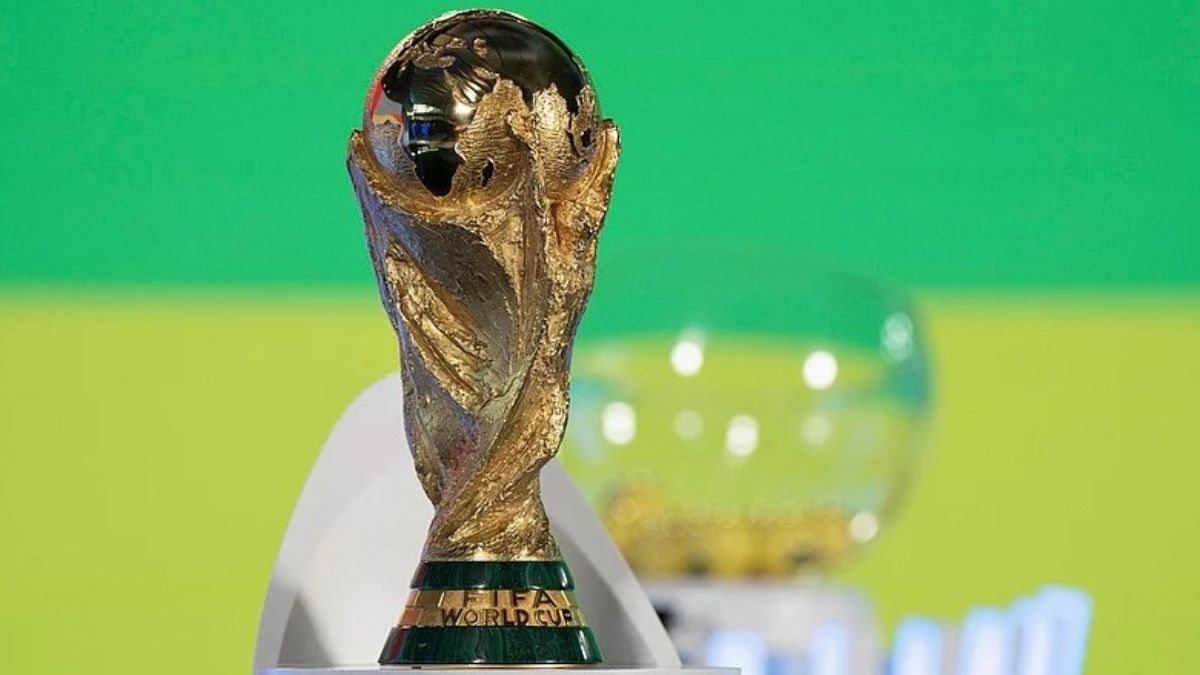
By the time you finish your Monday morning chai, you will know whether the world belongs to Argentina or Spain. Tonight’s final at the MetLife Stadium—kicking off at a very India-unfriendly 12.30 am—is the first time the two countries have met in a World Cup final. Lionel Messi, at 39, is chasing a fairy-tale fourth star and the first successful title defence in nearly 70 years; Lamine Yamal, who turned 19 last week, is chasing his first. One of them will be photographed with the trophy, and half of Kerala and Kolkata will have opinions about it before sunrise. But here’s the thing. Whoever lifts the cup, we already know who is winning football. It isn’t a country; it’s capital.
While we were watching the group stages, the game was quietly changing hands—literally. Recent research by Boston Consulting Group on the business of football points to three broad shifts: where the money comes from, how the game is governed and how much football can be squeezed into the calendar. For clubs, these changes boil down to three commercial questions: who owns the game, where we watch it and how much each fan is worth.
Let’s take them one by one, ideally before the pre-match show starts.
Force one: the new owners don’t wear scarves. The romantic idea of a football club—owned by a local biscuit baron and run at a genteel loss—is rapidly disappearing. Today’s owners are private equity funds, sovereign wealth funds and multi-club conglomerates that collect teams the way the rest of us collect OTT subscriptions.
Chelsea’s 2022 takeover involved £2.5 billion for the club and a further £1.75-billion investment commitment. Newcastle United is controlled by a consortium led by Saudi Arabia’s Public Investment Fund. And approximately 400 professional clubs now belong to multi-club groups—portfolios of teams spread across countries, sharing scouts, data and players like divisions of one company. If this sounds distant, look closer to home. Mumbai City FC is part of the City Football Group, the Abu Dhabi-backed empire built around Manchester City, with clubs on several continents. When an Island City fan cheers, she is, in a small way, cheering a line item in a global portfolio.
Indians, of course, invented nothing here—we merely perfected it early. The IPL taught the world that a sports league could be designed like a business from day one. Global football is now catching up, just with more zeroes and fewer strategic time-outs.
Force two: the screen is the stadium. Football’s biggest revenue engine has long been television rights. That engine is now being rebuilt mid-flight. Cable television is shrinking, streaming platforms are bidding for matches the way they bid for film stars, and leagues are building their own apps to reach fans directly, sometimes cutting out the middleman altogether.
For Indian fans, this is old news with new packaging. We already watch the Premier League at 12.30 am on one app, the highlights on another, while a fourth sends notifications about a fifth. The battle is no longer for your television. It is for your lock screen.
But streaming presents football with a problem. It can produce enormous audiences without necessarily producing television-sized revenues. Free digital viewing expands reach, particularly in markets such as India, but earns less per viewer than traditional broadcasting or subscription platforms. Football wants the young fan who refuses to pay for cable, but it has not yet worked out how to make that fan as valuable as the old one who did.
Which brings us to force three: you are the product; you always were.
This is the part of the business that consultants get genuinely excited about, and the numbers explain why. Analysis has found that top-quartile Premier League clubs earn roughly seven to eight times more sponsorship revenue than bottom-quartile clubs and more than six times as much from merchandise. The gap is not just about talent or trophies. It is about how efficiently a club converts affection into transactions.
BCG cites the example of an English club with more than 100 million social media followers, fewer than one million of whom interact with it in any way that the club can identify or monetise. That leaves roughly 99 million fans cheering into the void, commercially speaking. The clubs that thrive will be those that turn anonymous followers into known, contactable and data-rich customers—through apps, memberships, games, exclusive content and personalised offers. Once a club knows who you are, where you live, which player’s shirt you bought and what time you watch highlights, fandom becomes something that can be measured, segmented and sold.
Exhibit A is Fantasy Premier League, which has grown from about 75,000 players in 2002-03 to roughly 11.5 million across 150 countries. It keeps supporters engaged throughout the week rather than merely for 90 minutes on match day.
Any Indian with a fantasy-sports account and a family WhatsApp group full of football trash talk understands this model in their bones. We are, per capita, possibly the world’s most monetisable sports fans. The algorithms noticed long ago.
Should any of this bother us? A little, yes. When clubs become asset classes, the fan risks becoming a subscriber, while a century of community is reduced to “brand equity”. The most successful clubs become richer because they have the largest global audiences, use that money to buy the best players, win more trophies and attract still more followers. The virtuous circle for them becomes a vicious one for everyone else.
Regulators are increasingly nervous. UEFA now limits spending on player wages, transfers and agents’ fees to 70% of club revenue—essentially telling billionaires that even their toys need budgets. Whether this can restrain football’s financial arms race is the game’s other great contest.
And yet, football keeps rescuing itself. No spreadsheet scripted Argentina’s comeback against England, with Messi creating two goals in the closing minutes. No fund manager designed Spain’s relentless progress to the final. The money can buy almost everything except the reason we watch.
So tonight, stay up. Somewhere between the half-time spectacle—featuring Madonna, Shakira and BTS, and curated by Coldplay’s Chris Martin, because even the interval must now pay its way—and the final whistle, one set of fans will cry the good tears. The owners, funds, sponsors and platforms will get paid regardless.
That, ultimately, is football’s new economic model: the result remains uncertain, but the revenue increasingly does not.
Argentina or Spain? That we will know early morning on Monday. But if the question is: Who owns football? That one, sadly, is already settled.
(Data on football economics, ownership and fan engagement drawn from Boston Consulting Group’s 2026 research on the business of football)