



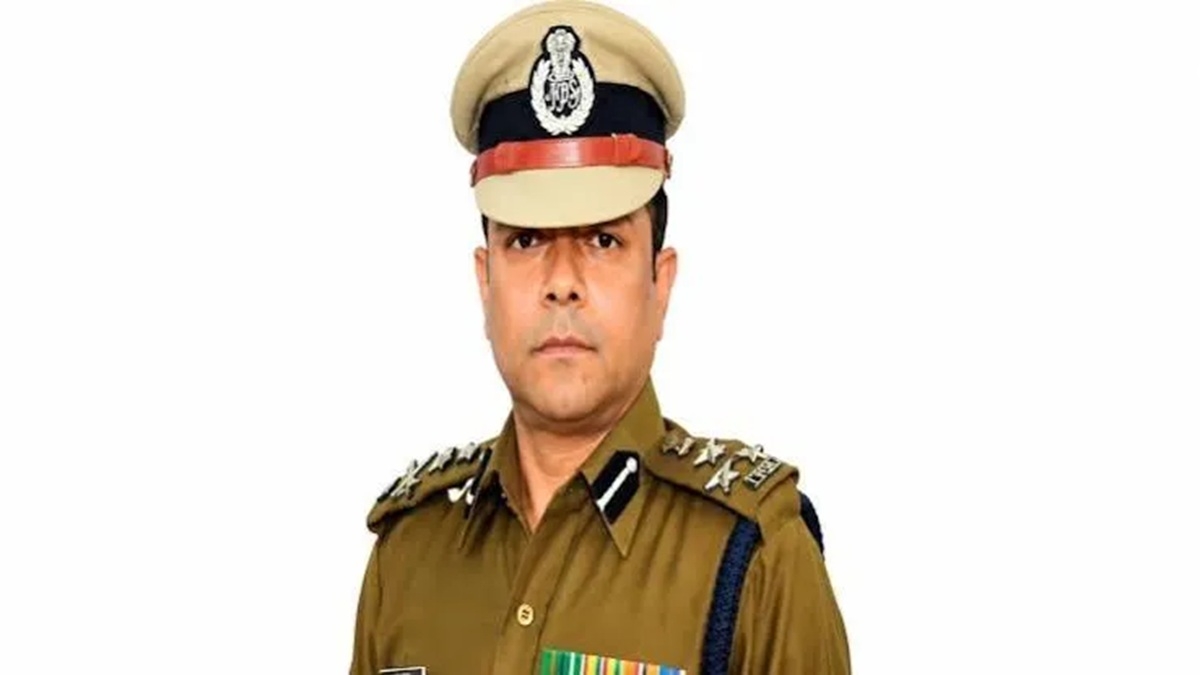
A significant leadership change has been announced at the top of the Delhi Police, with senior IPS officer Anurag Kumar appointed as the new Commissioner of Police for the national capital. The appointment, notified by the Ministry of Home Affairs (MHA) on Friday (July 17), places the 1994‑batch officer from the AGMUT (Arunachal Pradesh–Goa–Mizoram–Union Territories) cadre in charge of one of India’s most high‑profile and demanding policing assignments, succeeding incumbent Commissioner Satish Golcha.
According to the official order, Anurag Kumar’s appointment comes with the approval of the competent authority and takes effect from the date he assumes charge, continuing “until further orders.” The notification clearly specifies his cadre and batch — IPS (AGMUT:1994) — underlining that he returns to his parent cadre after central postings.
The Appointments Committee of the Cabinet (ACC), led by Prime Minister Narendra Modi, repatriated him from his position as Special Director in the Intelligence Bureau (IB) to the AGMUT cadre on Thursday, paving the way for his elevation as Delhi Police Commissioner the following day.
Anurag Kumar appointed new Delhi Police Commissioner: Ministry of Home Affairs order pic.twitter.com/eKrg3DQKxv
— Press Trust of India (@PTI_News) July 17, 2026
The same order directs outgoing Commissioner Satish Golcha, a 1992‑batch IPS officer, to report to the Lieutenant Governor (LG) of Delhi for further posting once Anurag Kumar assumes charge. This ensures a formal and immediate transition of command, reflecting a top‑level reshuffle in Delhi’s law‑enforcement leadership. The order, signed by Under Secretary Rakesh Kumar Singh, has been marked to the Chief Secretary of Delhi, the Commissioner of Police, and the Principal Secretary to the Lieutenant Governor, signalling the importance of coordination across the capital’s administrative apparatus.
Who is Anurag Kumar?
Anurag Kumar is a career Indian Police Service officer with over three decades of experience across state policing and central security/intelligence assignments. As a 1994‑batch IPS officer of the AGMUT cadre, he has served in multiple postings before rising to senior ranks. Most recently, he held the role of Special Director in the Intelligence Bureau, India’s premier internal intelligence agency, where he was involved in high‑level security and intelligence operations.
Kumar is an engineer by education, holding a Bachelor of Engineering degree, which has often been highlighted in profiles of his career trajectory. His technical background is seen as an asset in an era where policing increasingly intersects with technology, data, and cyber‑enabled threats. Over the years, he has built a reputation for handling complex assignments at the Centre, including intelligence, internal security and specialised investigative roles.
Anurag Kumar’s service record includes a mix of cadre postings and central deputations, giving him exposure to both ground‑level policing and strategic national security work. In recognition of his performance, he has been awarded the Police Medal for Meritorious Service in 2010 and the President’s Police Medal for Distinguished Service in 2016, one of the highest honours for police officers in India. These decorations underscore his standing within the police fraternity and the trust placed in him by successive governments.
Before his current elevation, Kumar served as Special Director in the Intelligence Bureau, a role typically reserved for officers with deep experience in counter‑terror, counter‑espionage, and internal security. Earlier stages of his career included postings in his AGMUT cadre, where officers handle policing responsibilities in diverse and challenging environments across multiple Union Territories and small states. This combination of field and headquarters experience is considered valuable for leading a large and complex force like the Delhi Police.
What is the significance of Anurag Kumar’s appointment for Delhi?
The decision to appoint an officer with a strong intelligence background as Delhi Police Commissioner comes at a time when the national capital faces layered challenges — from routine law and order and crime control to communal sensitivities, major public events, VIP security and emerging threats such as cybercrime and disinformation‑driven unrest. As the “top cop” of Delhi, Anurag Kumar will oversee a force that sits at the intersection of local policing and national security, working closely with the MHA, IB and other central agencies.
His tenure will likely be shaped by priorities such as maintaining public order during large‑scale protests and political events, strengthening community policing, improving crime detection and response times, and enhancing coordination with central intelligence units. Given his IB experience, observers expect a sharper focus on intelligence‑led policing, better integration of technical surveillance and data analysis, and tighter security protocols around critical infrastructure and high‑profile targets in the city.
From an administrative perspective, the appointment reflects the Centre’s continuing practice of bringing senior officers from central security agencies into key capital posts. The formal language of the order — appointing him “with effect from the date of assumption of charge and until further orders” — gives the government flexibility on tenure while signalling confidence in his leadership. The direction to Satish Golcha to report to the Lieutenant Governor for further posting suggests that his removal is part of a broader reshuffle rather than an isolated move.
For Delhi’s governance ecosystem, Anurag Kumar’s arrival as Commissioner means a new working equation between the Police, the Lieutenant Governor’s office, the Union Home Ministry, and the Delhi government. His experience in central agencies and his decorated service record position him as a key player in how the capital will handle law and order, public safety, and security challenges in the coming years.