



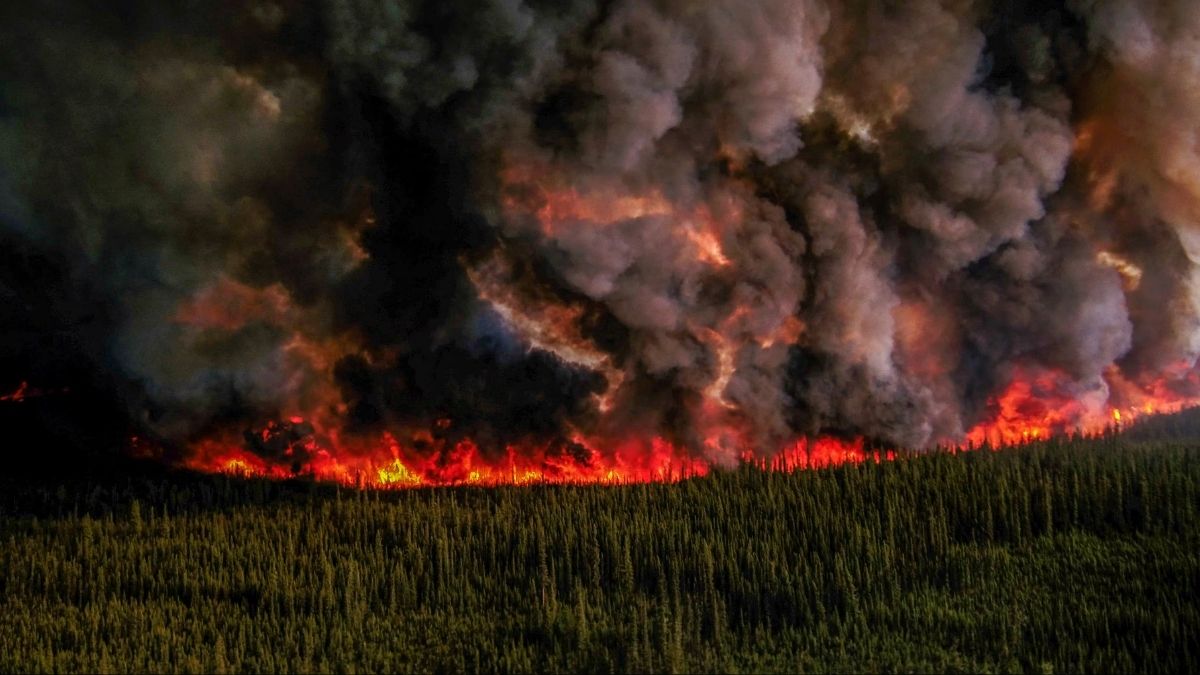
Smoke from hundreds of wildfires burning across Canada, along with several fires in northern Minnesota, has spread into large parts of the United States, creating unhealthy air conditions for millions of people across the Midwest and Northeast, reported news agency AP. Authorities have issued air quality alerts across several states as thick smoke reduces visibility and increases pollution levels.
More than 830 wildfires were burning across Canada on Wednesday, while more than a dozen additional fires continued to burn in northern Minnesota near the Canadian border, reported ABC News. Many of the fires remained largely uncontained, forcing evacuations and sending massive amounts of smoke into the atmosphere.
Strong winds pushed the smoke south into the United States, affecting cities and towns across Minnesota, Wisconsin, Michigan, New York and other northeastern states. Weather forecasters said the poor air quality could continue through the end of the week before rain helps clear the skies.
Which areas are most affected by the wildfire smoke?
Some of the thickest smoke covered Duluth in Minnesota, Marquette in Michigan and parts of northern Wisconsin on Wednesday morning, reported ABC News. As the day progressed, the smoke spread eastward into New York state and New England.
By the afternoon, the smoke was expected to reach major cities including New York City and Boston. Later in the evening, dense smoke could stretch from Buffalo to Philadelphia while also affecting Green Bay, Milwaukee, Grand Rapids, Detroit and Toronto.
Although New York City is not expected to experience conditions as severe as those during the June 2023 Canadian wildfire smoke event, forecasters warned that skies could turn hazy and air quality may reach unhealthy levels.
The worst conditions are expected on Thursday across parts of northern Michigan, Duluth and Green Bay, where smoke concentrations could become extremely high. Air quality in some locations may rank among the worst in the world for a brief period, reported ABC News.
Air quality alerts have been issued from Minnesota to New York, including the entire states of Wisconsin and Michigan.
Health advisory
In Michigan, the Department of Environment, Great Lakes and Energy issued an air quality alert covering the entire state. Officials warned that fine particle pollution could reach unhealthy levels, especially for children, older adults and people with asthma, heart disease or other respiratory illnesses.
Health officials advised residents to reduce prolonged outdoor activity, keep windows closed whenever possible and use air conditioning with clean filters or air purifiers to improve indoor air quality, reported CBS News. People who develop symptoms such as coughing, chest discomfort or shortness of breath should move indoors and seek medical care if symptoms become severe.
At the same time, southeastern Michigan remained under a heat advisory as temperatures and humidity pushed heat index values between 100 and 107 degree Fahrenheit, reported CBS News. The National Weather Service urged residents to stay hydrated, avoid strenuous outdoor activities during the hottest part of the day and spend time in air-conditioned buildings.
The combination of poor air quality and dangerous heat prompted several local governments to cancel or postpone outdoor events. Bedford Community Stadium closed to the public, the Detroit Police Department canceled its “Walk a Mile Wednesday” event, Highland Park postponed a scheduled music performance, and Westland canceled community events planned for Wednesday and Thursday, reported CBS News.
Several cities also opened cooling centres to help residents escape the heat. Fire departments in some communities organised free splash events for families as temperatures remained dangerously high.
Forecasters expect rain to reach parts of the upper Midwest on Friday and the Northeast on Saturday, which should help reduce smoke levels and improve air quality across the region.
The smoke could also have economic consequences if poor air quality persists. According to Statistics Canada, major wildfire events can lead to missed work hours, business disruptions and higher healthcare costs. Export Development Canada has also said wildfire seasons can affect freight movement, reduce workplace productivity and hurt tourism, adding to the broader economic impact beyond the immediate damage caused by the fires.