



Deceptive Data: There are certain batters whose relationship with sixes becomes larger than the actual number.
VVS Laxman was one of them. His batting rarely depended on power and even less on intimidation. Instead, it lived through timing, wrists and the ability to find gaps that seemed unavailable to everyone else. Some batters overwhelm bowlers. Laxman often appeared to outsmart geometry itself.
This is the player Indian cricket remembers from Kolkata in 2001, from Adelaide in 2003 and from countless fourth-innings rescues that seemed to arrive exactly when India needed them. The highlights remain vivid even now. The flick through midwicket. The on-drive threaded between fielders. The effortless way boundaries emerged from positions that looked entirely defensive.
Which is why this statistic feels slightly misplaced.
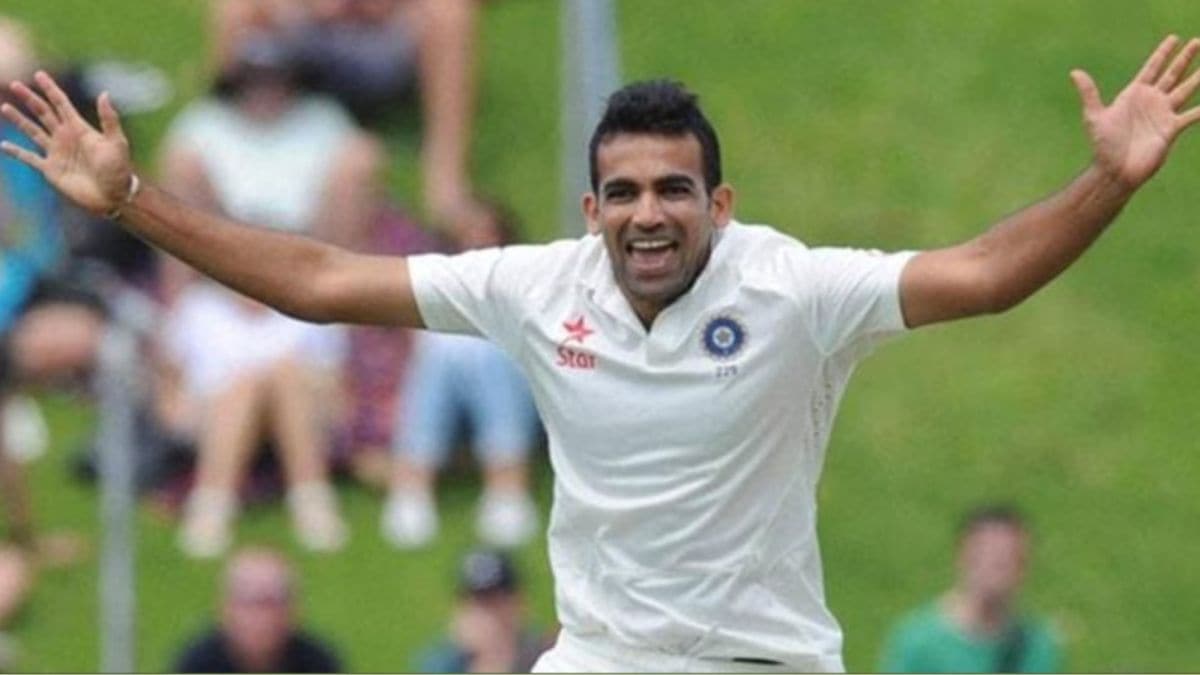
Zaheer Khan finished his international career with more international sixes than VVS Laxman.
At first glance, it sounds like the sort of record produced by a database error rather than a scorecard. One player is remembered as one of the most elegant batters India has ever produced. The other spent most of his career carrying the new ball and trying to remove opposition batters.
Yet the numbers remain stubbornly intact.
The night Zaheer won a chase
There is a tendency to remember lower-order batting only when it becomes comic or catastrophic. Zaheer Khan’s batting often existed in a different space. Useful enough to matter. Unpredictable enough to surprise.
One of the best examples arrived in Mumbai in 2007 against Australia. India were chasing a revised target under the Duckworth-Lewis system and had somehow slipped to 195 for 8. Australia sensed an opening. India appeared to be running out of recognised batters.
Then Zaheer stayed. Alongside Murali Kartik, he put together an unbeaten partnership that gradually dragged India towards the target. There was nothing glamorous about it. No breathtaking assault or dramatic celebration but just a fast bowler calmly refusing to lose. Zaheer finished unbeaten on 31 and India completed a tense two-wicket victory. It remains one of the stranger scorecards of that era. Not because Zaheer made runs. Because he made the winning runs.
When brett Lee tried to Sledge Zaheer Khan🥵🔥 pic.twitter.com/qHVDuZpqfP
— Classic Cricket Clips (@ClassicCrickMP4) January 8, 2026
Long before that innings, he had already revealed a very different side of his batting. In an ODI against Zimbabwe in 2000, India needed quick runs at the end of the innings. Henry Olonga ran in for the final over. Zaheer responded by launching four consecutive sixes.
Forgotten Heritage: When Zaheer Khan decided he was an elite finisher. 🔥
— Akul (𝑨𝑻10) (@Loyalsachfan10) June 2, 2026
6️⃣, 6️⃣, 6️⃣, 6️⃣ in the final over against Henry Olonga.
Pure carnage! pic.twitter.com/4tyHIQUPJX
For a few minutes, one of India’s newest fast bowlers looked less like a tailender and more like a specialist finisher. The innings lasted only 11 deliveries. He remained unbeaten on 32. Moments like that rarely become central to a player’s legacy. But they explain why the statistic exists. Zaheer was never a great batter. Yet he was far more willing to attack than cricket memory now remembers.
The artist and the fast bowler
To understand why this statistic feels wrong, you have to look at how the two men occupy cricket memory.
Laxman is remembered through beauty. Even his greatest innings rarely feel violent in recollection. His famous 281 against Australia at Eden Gardens contained only a handful of boundaries compared to modern standards. The innings survives because of control, endurance and artistry rather than brute force.
Indian cricket has always romanticised batters like that. Players whose timing feels superior to power. Players who seem capable of turning difficult situations into elegant solutions. Laxman belonged comfortably in that category. Zaheer never did.
His cricketing identity was built around reverse swing, old-ball spells and marathon workloads. He led India’s pace attack through one of its most significant transitions and became one of the country’s most important fast bowlers. Batting existed largely as a footnote.
Nobody bought a cricket bat hoping to imitate Zaheer Khan. No young batter spent afternoons trying to recreate his technique. His contributions with the bat usually arrived after the recognised batters had already departed.
Which is precisely why the sixes feel so disobedient. Why the number exists. Part of the explanation lies in how the two players scored runs.
Laxman’s batting was built around accumulation. Boundaries arrived naturally because of timing but sixes were rarely central to his method. He preferred extending innings, building partnerships and manipulating gaps. Risk was something he managed carefully rather than embraced eagerly.
Zaheer operated under a completely different set of incentives. Tailenders are not expected to construct innings over long periods. They often arrive with limited batting resources remaining and a shrinking amount of time available. In those situations, attack becomes practical.
A middle-order batter worries about preserving his wicket.
A No. 10 often decides the wicket is already living on borrowed time.
Sometimes that freedom produces edges and mistimed slogs. Occasionally, it produces four consecutive sixes in an over. Over a long enough career, those moments begin to accumulate.
Across years of international cricket, Zaheer repeatedly found himself in situations where quick runs mattered more than survival. Sometimes the aggression failed immediately. Sometimes it produced entertaining cameos. Occasionally, it produced innings substantial enough to shift matches. More importantly, it produced sixes.
The strange mathematics of memory
What makes the statistic fascinating is not that Zaheer was a better batter. He was not by any stretch of the imagination. Nor does it diminish Laxman’s greatness. If anything, it reveals how differently memory and scorecards process cricket.
Laxman’s batting felt larger than his six count because his most famous innings became part of Indian cricket folklore. They carried emotional weight. They altered series. They survived through repetition. Zaheer’s batting rarely received that treatment.
Most of his sixes arrived in moments that felt secondary to the larger narrative of a match. A counterattack after a collapse. A useful partnership with the tail. A brief spell of resistance before the innings ended. The runs mattered but the memory often moved on. Over time, those forgotten moments accumulated into a number that now feels strangely out of place.
The scorecard remembers differently
Sport prefers cleaner stories than this. We expect the elegant batter to dominate categories associated with batting. We expect the fast bowler to sit comfortably behind him. We expect reputation and statistics to point in the same direction.
But scorecards are wonderfully indifferent to reputation. They remember only what happened. And somewhere inside international cricket’s records sits a statistic that feels wrong but it is what it is afterall. One of India’s greatest stylists finished with fewer international sixes than one of its finest fast bowlers.
But that’s because cricket’s record books count outcomes while memory collects impressions. And impressions, unlike scorecards, rarely keep track of every six.