



For two decades, football belonged to two kingdoms and together they were worth hundreds of millions of dollars a year. Cristiano Ronaldo, who topped Forbes’ 2025 World’s Highest-Paid Athletes list with estimated earnings of $275 million, and Lionel Messi, ranked fifth with $135 million, transformed football into a global commercial enterprise. Between them, they amassed more than a billion social media followers, signed lifetime deals with Nike and Adidas, and became the faces of everything from luxury watches and airlines to hotels and video games.
As the two icons prepare to step away from international football following the 2026 FIFA World Cup, clubs, sponsors and FIFA are already investing in football’s next commercial era. But unlike the last two decades, the future may not belong to a single rivalry.
“The Messi-Ronaldo era was unique because football had two transcendent athletes dominating the sport for nearly 15 years, coinciding with the explosive rise of social media, global broadcasting and digital fan engagement,” says Karthik Yanamandra, co-founder of sports consulting firm 360D Sports. “What we’re seeing now isn’t a decline in star power, but a shift from a duopoly to a diversified portfolio of global brands.”
Beyond the Duopoly
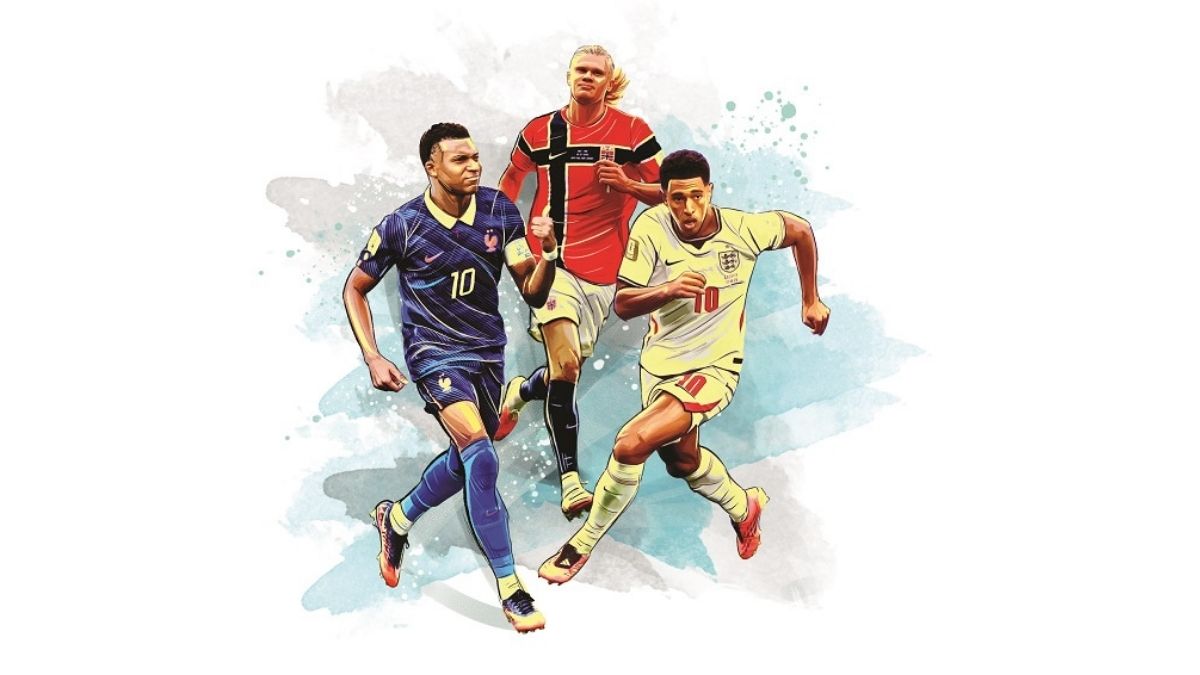
Leading the pack is Kylian Mbappe, who joined Real Madrid in 2024 and is already football’s biggest commercial draw. Ranked 12th on Forbes’ World’s Highest-Paid Athletes list, the French captain earned $70 million on the field and $25 million off it, with endorsements from Nike, Dior, Hublot and Oakley.
Alongside him is 25-year-old Erling Haaland, whose 60 million euros move from Borussia Dortmund to Manchester City in 2022 now looks like one of football’s greatest bargains. The Norwegian recently signed a record 9.5-year contract with City and has endorsement deals with Nike, Breitling, Midea and Hyperice. With nearly 58 million Instagram followers, an estimated market value of 200 million euros, and annual earnings of $80 million, Haaland has become one of football’s most bankable names.
Real Madrid has also invested heavily in 23-year-old Jude Bellingham, signing the England midfielder from Borussia Dortmund for an initial 103 million euros, potentially rising to 133.9 million euros. Bellingham has more than 43 million Instagram followers, is one of Adidas’ flagship athletes, Louis Vuitton’s brand ambassador and carries a market value of around 150 million euros. Barcelona’s teenage sensation Lamine Yamal, already valued at around 200 million euros at the age of 18, and Brazil’s Vinicius Junior (25), bought by Madrid for 45 million euros and now worth around 170 million euros with Hugo Boss’ global ambassador under his belt, illustrate how clubs are increasingly buying not just footballers but future global brands.
Yanamandra says performance remains the foundation, but today’s stars must also deliver success in marquee tournaments, build authentic personal narratives, engage with fans through digital platforms and attract partnerships that increasingly extend beyond traditional endorsement deals.
Sports science researcher Abhijit Upadhyay believes Mbappe and Haaland have already carved out distinct identities. “Mbappe’s game is built on fearless mentality, explosive pace and incredible close control. Haaland is a completely different kind of striker, his movement, positioning and timing inside the box are elite. Different styles, same level of greatness,” he says, adding that watching the duo reminds him of a young Cristiano Ronaldo’s relentless hunger to score.
For 29-year-old Argentina supporter Saurav Mukherjee, the emerging generation extends beyond just two names. “Mbappe, Haaland, Bellingham, Yamal, Vinicius Jr., Pedri, Gavi and Jamal Musiala all make the difference in tight matches. Some bring brute attacking force, others create chances. They are defining the next generation,” he says.
Whether they can recreate the commercial dominance of Messi and Ronaldo is another question. “Messi-Ronaldo’s longevity should be studied in universities,” says Rahul Saha, a 31-year-old media professional and lifelong Barcelona fan. “Playing at the top level for almost two decades is unprecedented. Mbappe is already a commercial success, his parents trademarked his celebration when he was just eight and Haaland has built a similar brand. But staying injury-free is the real challenge. In today’s football, creating another monopoly or even a duopoly will be extremely difficult.”
Meanwhile, Cape Verde’s veteran goalkeeper Vozinha has turned out to be the breakout star of World Cup 2026. After the tiny nation’s historic run — two draws against Spain and Argentina — Vozinha has now bagged his first major commercial sponsorship deal by partnering with the mobile version of UFL, a video game cofunded by Cristiano Ronaldo.
Also, before the unforgettable draw against Spain, Vozinha had about 50,000 Instagram followers. Today, he has 29.3 million and counting.