



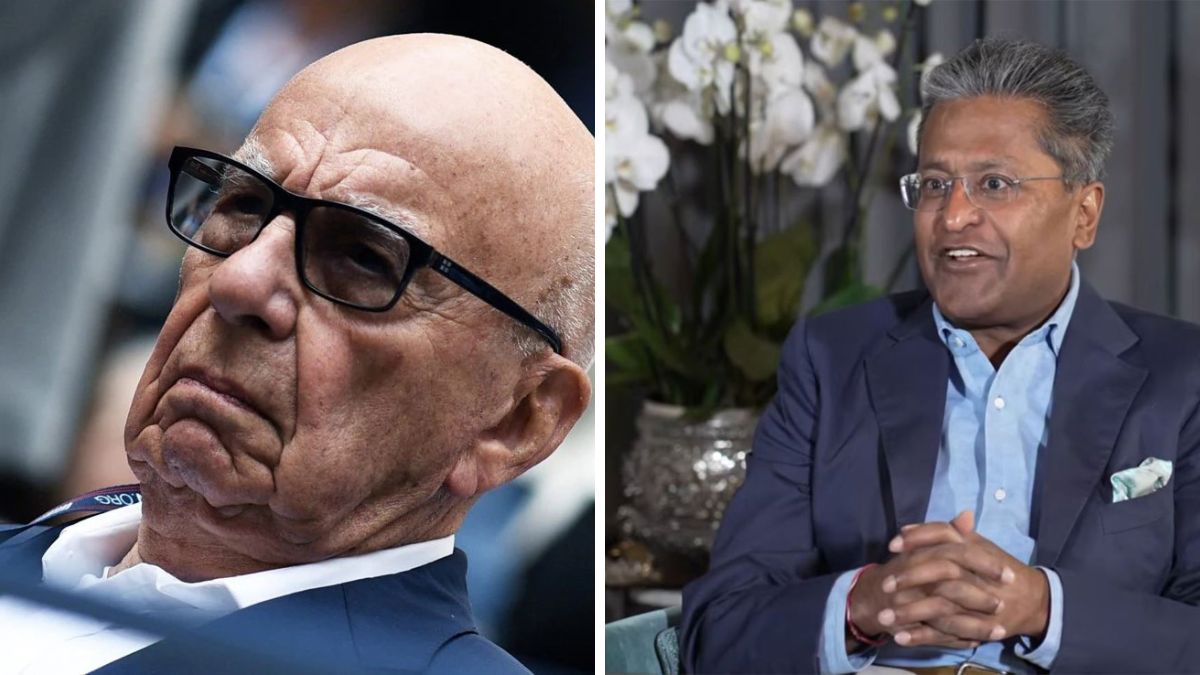
Rupert Murdoch is not someone to be fooled easily. The media mogul has ruled the roost, and to be able to arm-twist him into paying for a contract worth millions, even without fulfilling the commitments, is like reaching space without even letting anyone know you studied science. Both comparisons sound absurd, but so does the recent revelation by former IPL commissioner Lalit Modi.
In a video released by news agency ANI, Modi claimed that he was able to get all the money from his contract deal with Murdoch’s media company, ESPN Star Sports—a massive global commercial, marketing, and broadcasting venture. ESPN Star Sports held the absolute rights for the inaugural edition of the cricket’s champions league, known as the Champions League T20 (CLT20).
But the surprising part? Not a single ball was bowled in that 2008 competition.
The Setup: A Fully Booked Mumbai and a Narrow Escape
The inaugural Champions League Twenty20 was scheduled to kick off in late 2008. As Modi recalls, the scale of the tournament’s logistics was massive, with the elite of global domestic T20 cricket descending upon Mumbai.
Modi had been at the Taj Hotel from 5 am to 7 am on November 26 with 200 people at the Souk restaurant holding a security briefing. He stepped out exactly at 7 am to go for drinks on the boat of Vijay Mallya in the harbor. For the next day, the Champions League events were scheduled, and Modi had 100% of the Taj Hotel and the Oberoi Hotel booked out because the participating international teams were landing that night.
He had just reached the Gateway of India when the terrorist gunshots began. In the ensuing chaos, his personal bodyguards heroically carried 200 people out of the Taj via the fire shaft. Recognising the immediate, extreme peril, Modi intercepted the arriving Pakistan team and sent them right back to prevent a potential massacre.
With the city under siege, the tournament was instantly dead in the water. But while cricket had stopped, the legal machinery of Lalit Modi’s multi-million dollar broadcasting contract with ESPN Star Sports was just getting started.
The Clause That Blew a Hole in Murdoch’s Wallet
The global broadcasting rights for the Champions League had been sold to Rupert Murdoch’s network for a staggering sum. With the tournament canceled due to an act of terrorism, standard Force Majeure (Act of God) clauses usually protect broadcasters from paying out for unplayed games.
However, Modi had inserted a hyper-specific, ironclad trigger clause into the contract that completely bypassed standard cancellation protections.
Under standard rules, no games played would mean the broadcaster gets a refund. However, Modi’s specific clause dictated that the minute the teams touch down on the soil, the contract becomes live and viable.
Because the international teams had already physically touched down in Mumbai on the night of November 26, the entire financial liability of the contract was legally activated. Murdoch’s network owed the full sum, regardless of the fact that the opening ceremony was canceled and no balls were bowled.
Turning Down the Buyout: Making an Enemy for Life
Realising they were legally trapped into paying hundreds of millions of dollars for empty airtime, Murdoch’s executives tried to scramble for a corporate exit. They approached Modi with a massive cash buyout to tear up the agreement.
Selling the Champions League rights to Rupert Murdoch ultimately made him Modi’s second biggest enemy. Modi cancelled the Champions League, meaning the broadcasters lost a few hundred million dollars, but they still had to pay because the contract was viable the moment the teams landed.
“Rupert Murdoch became my second-biggest enemy. Because I sold my Champions League (CLT20) rights to Rupert Murdoch, and that story has already been said… I cancelled the Champions League (2008). They lost a few hundred million dollars. But they still had to pay us, because the minute the team touches down, the contract is live. So the contract becomes viable,” Lalit Modi detailed in his interview with ANI.
He added that Murdoch tried to make me cancel the contract even when the former left (the tournament?). “And paid me hundreds of millions of dollars to cancel the contract. I could have taken that money, and I did. But I made another enemy.”
Modi claimed he could have taken that personal money to let the network slide, but he refused to let them off the hook, choosing instead to protect the financial infrastructure of the organising cricket boards and making a massive global enemy in the process.
The Aftermath
By refusing the personal buyout and forcing Murdoch’s empire to honor the legal wording of the deal, Modi claims to have ensured that the financial interests of the stakeholder cricket boards remained entirely secure. However, if his version of events is accurate, it permanently burned his bridge with the world’s most powerful media mogul.
While the story remains a legendary anecdote of sports business folklore, it is ultimately a narrative built on the unverified recollections of its chief architect—leaving a tournament canceled by tragedy, a media empire forced to pay for dead air through its flagship network, and Lalit Modi claiming to have walked away with millions of Murdoch’s dollars without ever throwing open the stadium gates.