



Argentina’s defeat in the FIFA World Cup 2026 final may not be over yet.
Days after Spain edged Lionel Scaloni’s side 1-0 after extra time to lift their second World Cup title, FIFA has confirmed it has opened disciplinary proceedings into the chaotic scenes that unfolded immediately after the final whistle at the New York New Jersey Stadium.
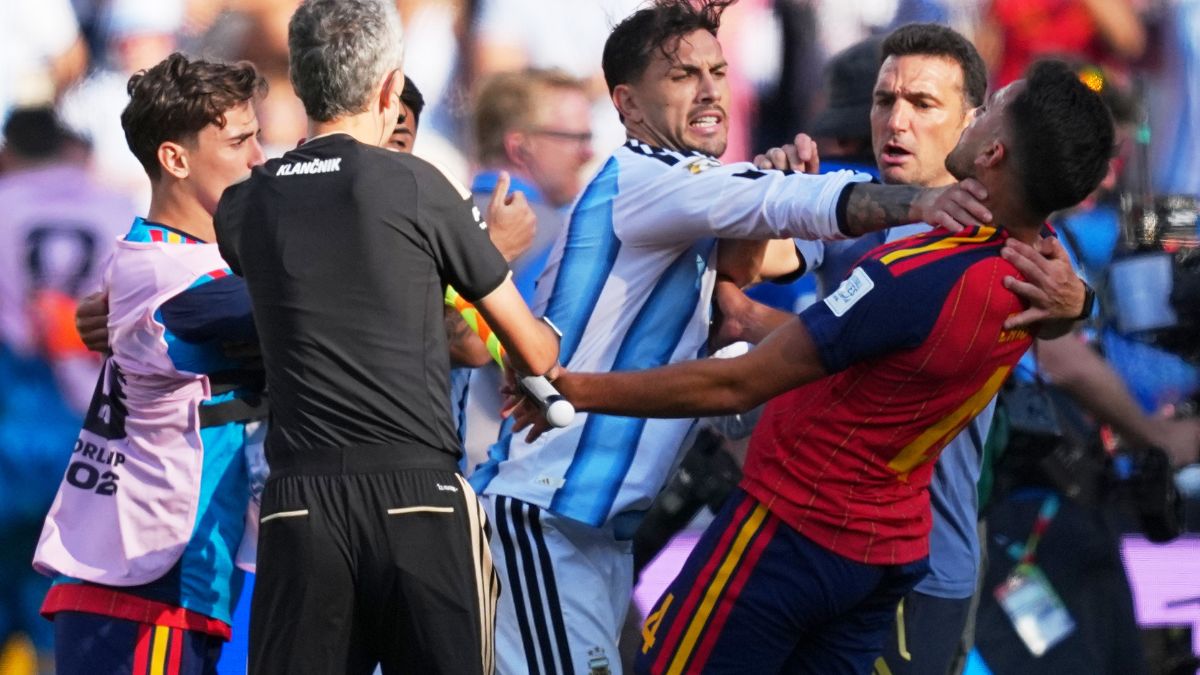
Several Argentina players and coaching staff became involved in heated confrontations as Spain celebrated their triumph, prompting football’s governing body to appoint a disciplinary prosecutor to investigate potential breaches of its disciplinary code.
FIFA appoints prosecutor
In an official statement, FIFA confirmed that it has begun formal proceedings.
“Following an assessment of the relevant match reports for the FIFA World Cup final between Spain and Argentina, and in line with Article 36 of the FIFA Disciplinary Code (FDC), the FIFA Disciplinary Committee has appointed a Disciplinary and Ethics Prosecutor to investigate potential breaches of the FDC with regard to the post-match incidents.
“Further details will be communicated by the FIFA Disciplinary Committee once the prosecutor’s report has been completed.”
The investigation will examine the incidents that erupted after Spain’s victory, when players from both teams became involved in multiple confrontations.
What happened after the final whistle?
Spain’s celebrations were quickly overshadowed by ugly scenes involving several Argentine players.
Leandro Paredes and Thiago Almada were seen wrestling Spain midfielder Gavi to the ground, while Paredes also appeared to grab defender Eric Garcia around the neck during one altercation.
Nahuel Molina seemed to swing a punch towards Spain captain Rodri as the midfielder ran to celebrate with his teammates.
Veteran defender Nicolas Otamendi was also involved in a heated exchange with Rodri over comments reportedly made by Spain defender Aymeric Laporte before the final.
Elsewhere, Argentina assistant coach Roberto Ayala clashed with Spain midfielder Dani Olmo as tensions spilled onto the pitch.
The incidents quickly went viral across social media, drawing widespread criticism and prompting calls for FIFA to investigate.
Could Argentina players be banned?
Under Article 14 of the FIFA Disciplinary Code, players found guilty of violent conduct face a minimum three-match suspension.
The same minimum sanction applies to offences including:
- Assault
- Punching
- Kicking
- Elbowing
- Biting
- Spitting
- Striking an opponent or any other person besides a match official
If found guilty, any suspensions would apply to Argentina’s next official international fixtures.
Beyond individual punishments, the Argentine Football Association (AFA) could also face disciplinary action if FIFA concludes that the team’s overall conduct breached its regulations. Financial penalties and additional sporting sanctions also remain possible.
Argentina already facing another FIFA probe
The World Cup runners-up are also under scrutiny over events following their semi-final victory against England.
After sealing a 2-1 win, several Argentina players celebrated with a banner reading “Las Malvinas son Argentinas” (“The Falklands are Argentine”), referencing the long-running sovereignty dispute over the Falkland Islands.
The display triggered criticism in Britain, with political figures calling for FIFA to investigate whether the banner breached the organisation’s neutrality rules.
With one disciplinary case already under review and another now formally opened following the final, Argentina’s World Cup campaign could yet extend beyond the football field and into FIFA’s disciplinary chambers.