



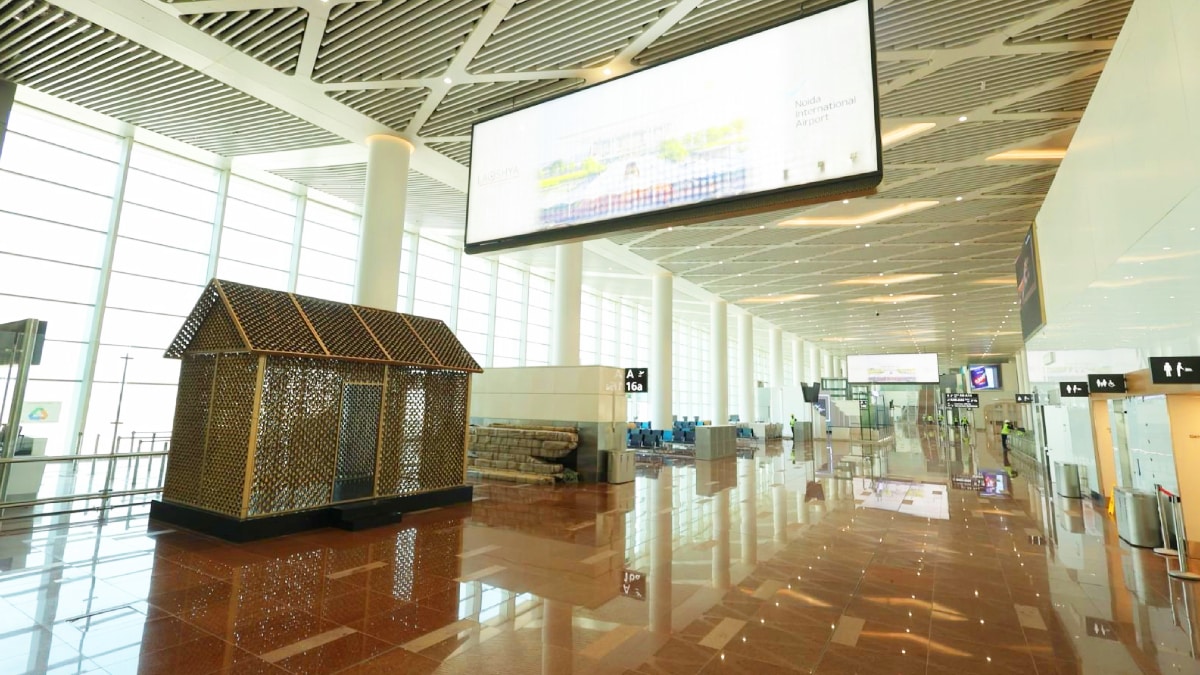
Phase 1 of the Noida International Airport (NIA) officially opens its gates, helping the Delhi NCR region with flying conveniences, easing pressure on Delhi’s IGI Airport. With two airports to service the region now, the NIA begins its journey by going tech-savvy right from the first day. Hence, you get all of today’s boarding conveniences available at major hubs across the country, all while experiencing an efficient passenger handling solution.
For the NIA, the available technology suite for passengers includes advanced facial recognition check-in to AI-managed baggage services and more. Here is a quick breakdown of the tech-driven conveniences that passengers can take advantage of at the Noida airport.
Noida International Airport goes biometric for check-in
One of the most striking digital features at NIA is the complete integration of DigiYatra technology. For registered passengers, their face becomes their boarding pass.
– High-speed biometric scanners at entry gates, security checkpoints, and boarding gates mean you can keep your phone and paper documents in your pocket.
– By automating ID checks, airport officials aim to transition passengers from the terminal entrance to the security-hold area in under 10 minutes – something that’s not possible at traditional hubs.
End of check-in queues
With modern digital conveniences, the traditional check-in counter is becoming a thing of the past at Jewar.
Smart kiosks and auto-bag drop
Dozens of self-service kiosks at the airport allow for instant check-in. The airport features an advanced Automated Bag Drop (ABD) system, where passengers can tag and induct their own luggage onto the conveyor belt in seconds.
VarioTray technology
Under the floor, NIA uses the world-class VarioTray conveyor system. This high-speed baggage handling technology reduces the risk of lost luggage to near zero and ensures your bags often reach the arrival carousel by the time passengers reach the baggage terminal.
A ‘smart’ terminal experience
The airport has partnered with major tech providers to ensure the terminal functions smoothly.
5G connectivity
NIA is 5G-ready from day one. Using a “neutral host” infrastructure, the airport ensures seamless, high-speed data coverage for all major Indian carriers (Jio, Airtel, Vi) across all areas of the facility.
Indoor wayfinding
Passengers can use the airport’s digital platform on their smartphones for real-time indoor navigation, guiding them directly to their gate, a specific lounge, or a duty-free shop.
AI-managed flows
Sensors throughout the terminal monitor “heat maps” of passenger crowds. If a security line gets too long, the system automatically alerts staff to open more lanes or redirects passengers to quieter zones.
Security AI
The infrastructure includes features like AI-powered CCTV, intrusion detectors, and automated tray retrieval systems (ATRS) at security checkpoints.
BagIQ software
This intelligent control software, deployed by Siemens Logistics, uses advanced architecture to coordinate the routing of every bag, ensuring high reliability and faster delivery.
Smart cargo management
AI is synchronised with cargo systems to track shipments in real-time and optimize logistics within the integrated cargo terminal.
Proactive threat detection
In partnership with Tech Mahindra, the airport’s integrated Network and Security Operations Centre (NOC-SOC) uses AI for 24/7 monitoring and early detection of cyber threats.
Smart parking ready for EVs
Passengers concerned with parking facilities can also look at the following things:
Paperless parking
The parking zones use sensor-based tech to guide drivers to open spots and utilize contactless, UPI-enabled payment systems to eliminate exit-gate bottlenecks.
Electric infrastructure: For the eco-conscious passengers, the airport features extensive EV charging stations, supporting its mission to be the country’s first net-zero emissions airport.
Fog-proof operations
While this is not a convenience you can interact with directly, it does affect each and every passenger when flying on cold days. NIA is equipped with CAT IIIb Instrument Landing Systems. Combined with advanced ground radar, this allows aircraft to land in near-zero visibility, ensuring that the digital seamlessness of the terminal isn’t ruined by weather-related delays.