



Climate change is becoming one of the most defining economic challenges of the century. While its association with melting glaciers, rising sea levels and record-breaking temperatures is well known, we are waking up to another crisis arising out of climate change — lost GDP. Across the world, governments, insurers and international financial institutions are increasingly calculating the cost of more frequent and severe weather events. In India, too, agriculture, infrastructure, labour productivity and public finances are all feeling the effects of a warming climate.
There is no single annual figure showing exactly how much GDP has been lost to climate change because economies are influenced by many factors simultaneously, including pandemics, inflation, geopolitical conflict, demographic change and technological advances. However, organisations such as the International Monetary Fund (IMF) and the World Bank have attempted to develop projections linking climate change to its real-world impacts.
According to the Sustainable Development Goals (SDG) Report of 2026, released by the United Nations in July, between 2015 and 2024, based on countries’ reported data, direct economic losses averaged over $110 billion a year — equivalent to 0.28% of reporting countries’ GDP collectively. The report also notes, “These figures likely understate the true scale: when cascading effects and ecosystem damage are included, disaster losses exceed $2.3 trillion a year.”
Financially, not accounting for population and other factors, the US continues to record the world’s largest annual climate-related economic losses as hurricanes, floods, wildfires and heat waves inflict billions of dollars in damage each year. China follows closely, with repeated flooding, typhoons and heatwaves disrupting infrastructure and manufacturing, according to a report by Swiss Re, a Swiss reinsurance company, covering 90% of the global economy, released in 2024.
India also ranks among the countries experiencing the largest overall economic losses from climate change, standing to lose around 24.7% of GDP by 2070, making it among the countries most economically exposed to climate risks globally, according to Asian Development Bank (2024).
The SDG report of 2026 revealed that LDCs (least developed countries) accounted for nearly 13% of globally reported losses over the same period, while representing just 1.36% of total GDP, a more than tenfold disproportionate impact.
According to the Climate Risk Index (CRI) 2026, India experienced nearly 430 major climate-related events between 1995 and 2024. Floods, cyclones, landslides and heatwaves affected approximately 1.3 billion people, caused more than 80,000 deaths and generated economic losses exceeding $170 billion.
Dominica, Myanmar and Honduras are the top three countries that face growing costs from increasingly frequent flooding and extreme weather, as per the CRI. India ranks 15th on this list.
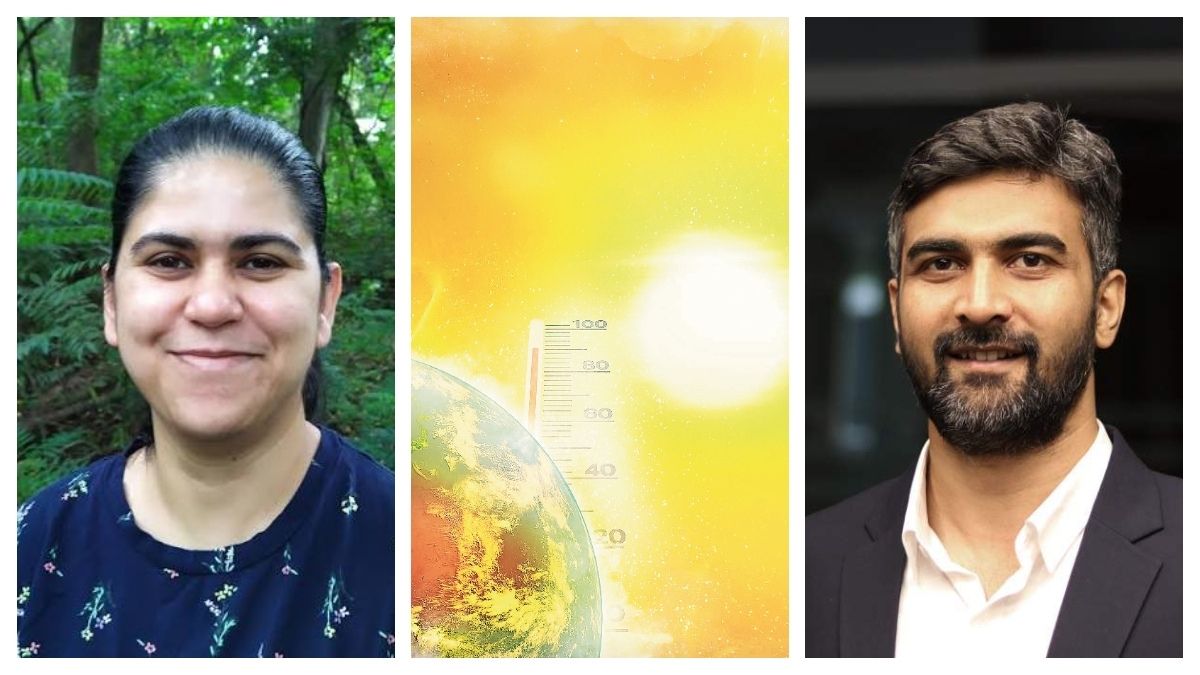
Vishwas Chitale, who leads the climate resilience team at Council on Energy, Environment and Water (CEEW), a not-for-profit policy institution and think tank based in New Delhi, says, “In 2019, India lost nearly $69 billion due to climate related events, which is in sharp contrast to $79.5 billion lost over 1998-2017.”
When climate damage is measured as a proportion of national GDP, developing countries tend to emerge as far more vulnerable. According to the Swiss Re Institute, economies like India are among those facing the greatest long-term risks because large parts of their economies remain closely tied to climate-sensitive sectors such as agriculture and natural resources.
“Climatic shocks can have far-reaching, long-term and cross-border impacts,” says Ulka Kelkar, executive director, climate, economics and finance, WRI India, an independent knowledge organisation that provides objective information to foster environmentally sound and socially equitable development.
“The Bangkok floods in 2025 affected the semiconductor factories, which in turn impacted the laptop industry in Japan,” she says, adding, “Japan’s GDP fell by 4% in that quarter alone.”
Industries get directly affected by rains, heatwaves and cyclones. “The economy is globalised, and climatic disasters in one country often reflect across borders,” she adds.
India’s exposure is reflected in several international rankings. The Notre Dame Global Adaptation Initiative Country Index (ND-GAIN Index) placed the country 111th overall in 2024, with a vulnerability ranking of 59th and a readiness ranking of 102nd, indicating that while adaptation efforts are improving, significant climate risks still remain.
These escalating climate impacts have occurred alongside sustained economic growth. India’s GDP growth increased from 6.5% in 2024 to around 7.6% in 2025, according to the Ministry of Statistics and Programme Implementation (MoSPI).
Meanwhile, India’s Fourth Biennial Update Report submitted to the United Nations Framework Convention on Climate Change (UNFCCC) in 2025 reported that the country had already reduced the emissions intensity of its GDP (measures the amount of greenhouse gas emissions released for every unit of economic output) by 36% between 2005 and 2020, surpassing its original target ahead of schedule. The Government of India has since raised its target to a 47% reduction by 2035, arguing that India has successfully balanced economic development with environmental responsibility.
Economic disruption
Climate change is only one of the several forces shaping economic performance. In the past decade, the world’s economies have endured a series of shocks — the Covid-19 pandemic remains the largest economic disruption, after which ensued the deepest global recession in decades. That was followed by inflation, and sharply rising interest rates and supply chain disruptions. Geopolitical tensions, demographic changes and slowing productivity have also weighed heavily on long-term economic growth, says the IMF.
The Swiss Re Institute published a Climate Economics Index in 2021, creating the only ranking for factors impacting the GDP of different countries. For India specifically, economists generally rank the country’s biggest influences on GDP during the past decade as the Covid-19 pandemic, domestic economic reforms such as the Goods and Services Tax and insolvency reforms, global demand, inflation and interest rates, followed by climate change and geopolitical tensions, according to the index. Another iteration of the report has not been published since then.
According to the Swiss Re Institute, climate change currently ranks below these in terms of GDP effects. The pathways through which climate change affects GDP are varied. According to this index, which ranked overall climate resilience accounting for 90% of the world economy — India was fourth from the bottom, in readiness for extreme climate events, ahead of Indonesia, Malaysia and the Philippines, and preceded by Thailand, Venezuela and Colombia. The top five countries by this metric are Finland, Switzerland, Austria, Portugal and Canada.
“Extreme heat reduces labour productivity, particularly among outdoor workers in agriculture, construction and manufacturing. As temperatures rise, fewer safe working hours are available, directly reducing economic output,” says Kelkar. According to global standards, worker productivity, especially in manual labour jobs, reduces drastically by almost 70% when the temperatures rise past 40 degrees Celsius, she adds.
Vulnerable sectors
Much of India’s economy depends directly on weather-sensitive sectors, making it particularly vulnerable to rising temperatures and increasingly erratic rainfall. Agriculture remains the most vulnerable. According to the Periodic Labour Force Survey of 2025, conducted by the National Sample Survey Office under the MoSPI, 43% of the workforce in India is employed in the agriculture sector. Crop failures, declining yields and unpredictable monsoons threaten rural livelihoods while contributing to food inflation across the wider economy. This has declined from 44.8% to 43% since last year.
“Agriculture and allied sectors contribute 18% to the Gross Value Added (GVA) for 2023-2024 and 16% to the country’s Gross Domestic Product (GDP) in FY 2024, according to MoSPI,” says Chitale, adding that agriculture is the source of livelihood for 58% of the Indian workforce. “Without climate adaptation, rainfed rice yields are projected to fall 20% by 2050 and 47% by 2080,” he says.
Innumerable Indians work outdoors in farming, construction, transport and manufacturing, many in the informal sector. Longer and more frequent heat waves reduce safe working hours, lowering productivity and economic output. The Reserve Bank of India estimated in 2023 that extreme weather could reduce India’s GDP by approximately 4.5% by 2030 through lost labour hours, declining agricultural productivity and damage to infrastructure.
Due to heat stress, India could also lose the equivalent of 35 million full-time jobs by 2030.
“Manufacturing and industry are increasingly exposed to heat stress, water scarcity and supply chain disruptions. Energy-intensive industries such as steel, cement, chemicals and automobiles face rising cooling and water costs, production losses during extreme weather, and disruptions in raw material supply,” says Chitale.
“For India specifically, extreme heat events in 2021 were estimated to have reduced labour capacity across sectors like manufacturing agriculture construction and services, equivalent to a loss of $159 billion, approximately 5.4% of India’s GDP as per the Climate Transparency report of 2022,” he says.
Infrastructure is also at risk, with floods, cyclones and landslides regularly damaging roads, bridges, railways, ports and power systems, interrupting business activity while placing additional pressure on government budgets.
Water availability is another growing concern. Changing rainfall patterns, groundwater depletion and glacier retreat threaten irrigation systems, industrial production and urban water supplies. The health sector also experiences indirect economic consequences as heat-related illnesses, respiratory diseases and climate-sensitive infections increase healthcare costs.
Rapid urbanisation adds another layer of complexity. The International Energy Agency in 2023 projected that India’s urban population will increase by around 270 million people by 2040, requiring enormous investment in climate-resilient housing, transport, energy and water infrastructure.
Kelkar found in her field research that tech integration in the service sector has also led to a reduction in productivity in the heat. “People whose work depends on two-wheelers and mobile apps are also facing the brunt of climate change, and not just in terms of health,” she says.
“Those on electric two-wheelers need charging points, which are not available everywhere as of now. With the new regulation for EV two-wheelers, this issue can get exacerbated,” she points out. “Further, these workers often spend a lot of time on their mobile phones, and the batteries tend to die faster in the heat. If their app or cell phone stops working, the number of deliveries that they can do in a day also dips significantly,” says Kelkar.
Researchers have coined the term “greenflation” to describe inflationary pressures associated with low-carbon technologies, according to a research published by peer reviewed research platform Taylor and Francis. Renewable energy systems, batteries and electric vehicles require large quantities of critical minerals, and as demand increases, prices may rise, contributing to higher production costs alongside carbon pricing and energy transition policies.
The Ministry of Finance, in the 2025 Economic Survey, shared that expenditure on climate adaptation represented approximately 5.6% of the country’s GDP. The World Bank estimated in 2018 that without effective adaptation and mitigation, climate change could push around 45 million additional Indians into poverty by 2030 through its effects on agriculture, employment and livelihoods.
However, India has also demonstrated measurable progress. Investments in renewable energy, afforestation and ecosystem restoration have helped reduce emissions intensity while maintaining relatively high rates of economic growth.
Future projections
If current trends continue, economists expect climate change to become one of the dominant influences on global economic growth by the middle of the century.
The Climate Economics Index also estimated that under a high-emissions scenario, the global economy could lose approximately 18% of GDP by 2050 if sufficient climate action is not taken. Among major economies, China could experience GDP losses approaching 24%, while Europe may lose around 11% and the United States approximately 10%.
India’s projected losses ranged between 13% and 15% of GDP, placing it among the world’s most economically vulnerable major economies. Another report by the IMF released in 2024 suggests that climate change could reduce India’s annual GDP growth by between 0.5 and 1 percentage point through the coming decades if adaptation remains insufficient.
Around 40% of India’s GDP depends directly or indirectly on biodiversity and ecosystem services, making environmental degradation a major economic concern. As climate pressures increase, sectors ranging from agriculture to manufacturing, tourism and energy will face growing risks.
However, “India has made significant progress in climate mitigation and disaster preparedness,” says Chitale.
“The 16th Finance Commission has recommended nearly Rs 2 lakh crore for 2026-31 for the disaster risk management fund, based on a comprehensive disaster risk index (DRI), which will help states deal with nearly 14 different types of natural disasters,” he says.
Chitale also makes sure to point out that a key gap is the mainstreaming of climate risk into economic planning and investment decisions. “Climate considerations need to be integrated into infrastructure design, industrial planning, financial risk assessments and state development strategies to avoid locking in future losses.”
Investments in resilient infrastructure, climate-smart agriculture, renewable energy, improved water management and early warning systems have the potential to reduce future economic damage significantly.
The economic costs of rising temperatures are becoming increasingly visible in damaged infrastructure, declining agricultural yields, disrupted labour markets and growing public expenditure.
Kelkar says, “Climate proofing infrastructure like roads and bridges and storm drains is very important. Recently, the Government of India launched the CITIIS 2.0 programme, which is meant to delegate funds to cities for climate related infrastructure.” She explains that with intensifying climate shocks, our climate proofing thresholds are changing. “The width of storm drains, the materials used in roads and the depths of concrete, all need to be reexamined and revised periodically, as the needs keep changing. Benchmarks need to be updated and included in tenders,” she adds.
India remains one of the world’s fastest-growing major economies while also being among the most exposed to climate-related economic risks. Currently, India’s experience is reflective of both the opportunities and the challenges associated with climate change. “Value addition through education, upskilling, tech, food processing, food processing, continued investment in clean energy, resilient infrastructure and climate adaptation may help preserve economic growth,” adds Kelkar.