



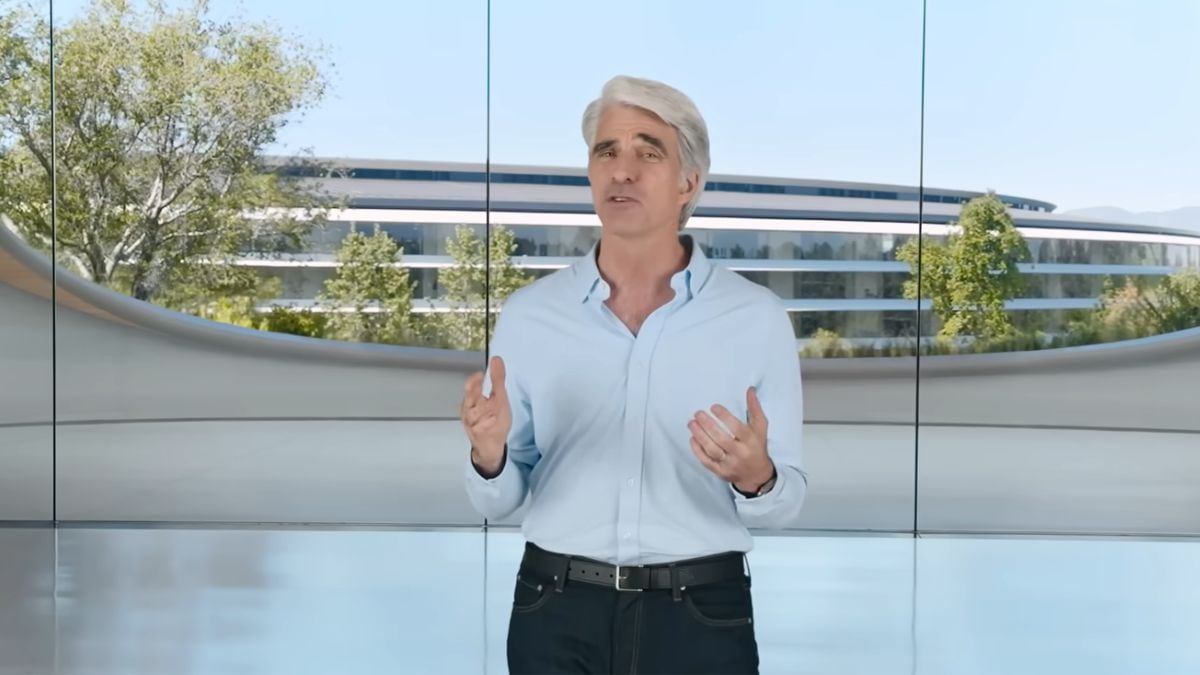
When people think of Apple, the name that usually comes to mind is that of CEO Tim Cook. But if you have watched Apple’s annual WWDC events over the years, there’s another familiar face you have probably seen just as often.
That person is Craig Federighi, Apple’s software chief and one of the company’s most recognisable executives. Whether it’s unveiling a major iOS update, introducing new Mac features or demonstrating Apple’s latest software innovations, Federighi has become a central figure in Apple’s presentations.
He oversees the development of Apple’s operating systems as the company’s head of software engineering. In short, many of the software features that millions of Apple users interact with every day fall under his watch. Besides being responsible for technical matters, Federighi is recognised for his dynamic presence on the scene of conferences as well as for his wit and humour.
His teams are responsible for delivering the software at the heart of Apple’s innovative products, including the user interface, applications and frameworks.
He also leads Apple’s core AI efforts, including the development of foundation models, applied AI technologies, and the research that powers intelligent experiences across Apple products, including Apple Intelligence and the development of Siri. Craig also leads teams responsible for advancing industry-leading privacy and security protections across Apple’s platforms.
Craig returned to Apple in 2009 to lead macOS engineering, and in 2012 took on responsibility for iOS as well, delivering all subsequent releases of the world’s most advanced desktop and mobile operating systems.
Before his return, Craig worked at NeXT, followed by Apple, and then spent a decade at Ariba, an e-commerce pioneer where he held several roles, including chief technology officer.
Notable appearances on Apple’s WWDC stage:
Craig Federighi made his first notable appearance on Apple’s WWDC stage in 2009, where he introduced several new features coming to Snow Leopard. His presentation marked the beginning of a more visible role within the company.
With each passing year, he became more prominent, presenting keynotes on several occasions to introduce new updates in operating systems.
During the WWDC 2013 conference, he presented new versions of iOS 7 and OS X Mavericks. One year after that event, he was back again to present key features of iOS 8 and OS X Yosemite.
One of the biggest and most important times Craig appeared in front of the Apple audience was at the WWDC event in 2015. This event saw him presenting many features, including iOS 9, OS X El Capitan, and the introduction of Apple’s new programming language, Swift.
He also took part in the launch of the iPhone 6s, showcasing the handset’s new 3D Touch functionality. Over the years, he remained a central figure at Apple’s developer conferences, presenting major software updates.
His role at software presentation events would continue every year, leading him to become one of the most familiar presenters of the Apple company.
At WWDC 2023, he appeared in a playful segment featuring an elaborate multi-neck guitar performance. In 2024, Apple showcased him taking part in action-packed scenes that included a skydive and a parkour sequence.
For WWDC 2025, the company raised the stakes once again, featuring Federighi behind the wheel of a Formula One-style race car as he sped across the rooftop of Apple Park, adding another memorable moment to Apple’s keynote tradition.
Craig Federighi’s AI push:
Over time, Craig Federighi quietly became the single most important architect of the company’s artificial intelligence strategy.
According to AppleInsider, a report released in June 2024 showed that there were many issues related to Apple’s AI programs during the tenure of John Giannandrea. The lack of proper resource allocation and slower progress in research meant that Apple failed to keep up with their rivals because the industry was developing fast at that time. Reports indicated that multiple teams within the organisation pursued different projects in AI without coordinating with one another.
However, things took a turn for the better when Craig became more interested in AI technologies. He encouraged more spending on AI projects and offered additional support to his organisation’s software engineering team.
Craig Federighi graduated from the University of California, Berkeley, in 1991, where he attained his Bachelor of Electrical Engineering and Computer Science. Craig went ahead to pursue his Master of Computer Science at the same university two years later, graduating in 1993.