




In the 2000s, her career was at its peak and she was ruling the Bollywood box office. Starring opposite the Khans of Bollywood, Shah Rukh in Veer-Zaara (2004), Saif in Salaam Namaste (2005), Salman in Chori Chori Chupke Chupke (2001), Aamir in Dil Chahta Hai (2001), and of course Bobby Deol and Hrithik Roshan, she is Preity Zinta.
A dimpled actress who first won audiences over with a chocolate commercial and eventually made her way into one the Indian Premier League (IPL).
But like many stories, hers wasn’t all Maahi Ve. Every turn brought a learning curve that shaped her into a resilient spirit and a wise investor, willing to take the right risks.
“When you reach a place of stagnation, you move to another zone. I had worked with the best of filmmakers, producers weren’t giving me earthy or rural roles. And I did not want to be limited to NRI, bubble-gum-babe roles. So I thought, now what?”
And that’s when it struck her. “At the time, it meant an investment of $5 million (Rs 35cr) which I thought I could do. Once I bought the team, I went to Harvard Business School. I did everything I could to learn this business and then I got obsessed with the IPL!”
But it was the $76 million strategy that turned heads.
It took a $76 million bid from Preity Zinta, Ness Wadia, and Mohit Burman, not just for Punjab, but also for Mumbai and Jaipur. Punjab Kings, then known as Kings XI Punjab, was not even on her wishlist at the time.
But Mukesh Ambani’s Reliance outbid everyone with a $119 million price tag for Mumbai Indians, and the $76 million stood strong for Punjab, beating out the Anil Ambani Group.
Zinta’s move to cricket was a strategic investment in a game that is almost like a religion for Indians, joined by Shah Rukh Khan and Juhi Chawla.
The Punjab Kings Ownership Structure
PBKS is owned by KPH Dream Cricket Private Limited, which brokered the $76 million deal. Headlined by Mohit Burman, the Chairman of Dabur India, he continues to hold a 46% stake in the team. Preity Zinta and Ness Wadia each own an equivalent 23%, with a Rs 35 crore investment initially.
Karan Paul, from the Apeejay Surrendra Group, is also an 8% minority stakeholder in the IPL team.
Over the years, as commercial interest in the IPL grew, it became an $18 billion enterprise, as reported by Crictacker.
In 2008, the broadcasting rights were sold for nearly $918 million, while the fresh 2023–27 deal with JioCinema saw a $6.2 billion leap. The IPL no longer remained a domestic tournament. With international players being paid hefty paychecks and flown in to join each team, it became a global event attracting investors across sectors.
Golden Period of Fame and Fortune
Zinta’s big break came in 1998. But before Bollywood, all it took was a chocolate commercial, and destiny came knocking.
In 1996, Preity Zinta’s first television commercial was for Cadbury Perk, a chocolatey glucose bar with the ‘Thodi si pet puja’ jingle. Playing a college student on a hunger strike, her chirpy girl-next-door vibe was seamlessly brought out in the ad.
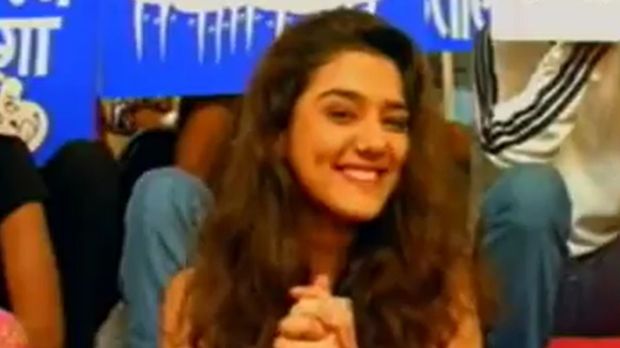
Later in 1997, she became the refreshing new face of Liril, a soap brand. Jumping through the forest drenched in waterfall spray, the mass appeal of the advert was driven by her goofy personality, flicks of wet hair, and the beats to accompany it.
A year after her commercials were being replayed in agencies — but just before she became a leading lady — she auditioned at the suggestion of Shekhar Kapur. And then came the big break.
In 1998 came Dil Se, a newcomer starring opposite Shah Rukh Khan, who was at the peak of his romantic hero era after hits like Pardes and Dil To Pagal Hai in 1997. The film sent box office collections to nearly Rs 25 crore, as per Sacnilk, and was reportedly made on a budget of Rs 11.5 crore.
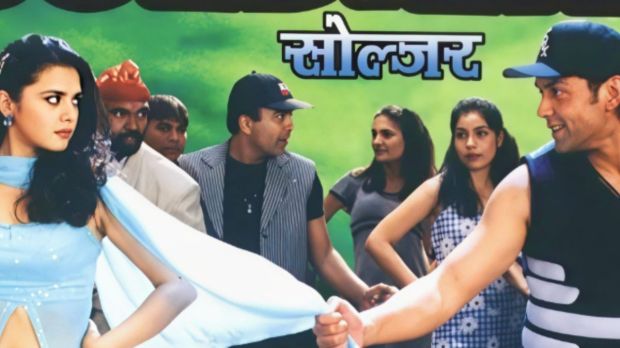
In the same year came Soldier. One of her most iconic pairings with Bobby Deol, the Filmfare award-winning performance became an even bigger box office hit with Rs 38.88 crore at the silver screen.
Taking to Instagram in 2022, Zinta revealed, “Soldier was my second release but the first film I signed. I was so confused that I would be working with two directors with one name… Thank you Rameshji for this opportunity & for not getting upset with me for leaving the set for more than a week to take my psychology exams during the climax shoot in Rajasthan.”
The 2000s Alt-Glam
Defying the 2000s Bollywood heroine stereotype, Preity Zinta played roles no actress would dare to imagine.
In 2000 came Kundan Shah’s Kya Kehna. Radical by Bollywood standards, Zinta played an unwed teenage mother — an uncanny protagonist for a Hindi film at the time. Not only did it outperform all box office expectations, it set the foundation for Zinta’s complete takeover of mainstream cinema.
Part of every millennial’s core memory, these films defined the Preity Zinta era. She starred against some of the biggest male leads of the time: Dil Chahta Hai (2001) with Aamir Khan, Koi… Mil Gaya (2003) with Hrithik Roshan, and Kal Ho Naa Ho (2003), reprising her effortless chemistry with Shah Rukh Khan and Saif Ali Khan.

But 2004’s Lakshya — also with Roshan and Amitabh Bachchan — rewrote history. And in her era of war films came Veer-Zaara in 2004. A career-defining role, it had everything: tragedy, drama, romance, and more. It went on to become the highest-grossing Indian film of the year, collecting nearly Rs 100 crore globally — too big in proportion for the 2000s.
Her paycheck was not modest either. Reportedly charging Rs 2–5 crore per film, she commanded top endorsement deals with Pepsi, Godrej, and Elephant Toothpaste. Fuelled by multiplex expansion across India, more screens meant more fame, and Zinta monetised exactly that.
Zinta came back even stronger in 2005 with Salaam Namaste and Kabhi Alvida Naa Kehna in 2006, one of her last well-known big hits. While Jhoom Barabar Jhoom in 2007 came with much-anticipated fanfare, it became a scattered hit.
The Test of the Investment
But as time has it, the investment was put to the test. While the first few years of the IPL went into proving the format actually worked, the team was on its path forward. After being defeated as semi-finalists, the squad did not stand back. The investment took only a few early IPL seasons to turn modestly profitable, and the momentum was only beginning to build.
But in 2010 came a setback none of the investors were prepared for. The IPL announced that it had terminated the franchise contracts of the Kings XI Punjab and the Rajasthan Royals. Taking the legal route, the Bombay High Court intervened to stay the termination order. And Preity fought — her 23% stake was worth much more now.
What started as a sports debacle soon spun into a media crisis. 2014 became much worse when Zinta filed a complaint against her co-owner Ness Wadia. The actress-turned-investor accused him of molestation, threats, and abuse at a cricket match. Not only was it a personally traumatic crisis, it also put her in direct conflict with the co-owner of a profitable sports team.
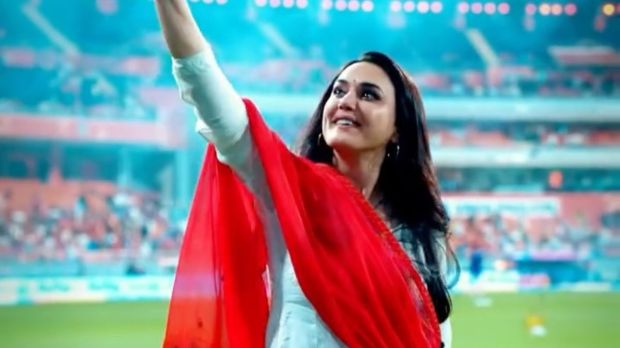
The actress publicly called out the alleged ill-treatment, but then has gone ahead to maintain a professional relationship with Nes as co-owner of the IPL team.
With much patience and reputational risk, Zinta still showed up. Bidding at auction tables, cheering at matches, she showed the grit of an Army officer’s daughter, someone who had gone from being a face on a soap commercial to the lead actress of Bollywood in its golden era.
Turning the Tables
The patience paid off. What started as a Rs 35 crore bet became a one of the IPL’s consistently competitive teams. While it does not have a trophy to its name just yet Preity Zinta is aware of that, on her own terms. Recently, a fan on X pointed out that “there’s a reason why she hasn’t won a trophy, cuz she IS the trophy,” Zinta’s response was characteristically sharp, “Thank you, that’s very sweet but honestly speaking, no woman wants to be a trophy. Trophies are owned. Women are not.”
However, in 2025, PBKS came close to it by defeating the Mumbai Indians in the semi-finals before narrowly falling to Royal Challengers Bengaluru.
According to Houlihan Lokey’s 2025 IPL Valuation Study, PBKS brand value jumped 39.6%, from Rs 856 crore in 2024 to Rs 1,195 crore (approximately $141 million) in 2025, the highest brand value growth among all IPL franchises.
Combining two of the most powerful forces that unite India, Bollywood and cricket, Zinta’s ownership of the Punjab Kings ranked higher than any mere corporate ownership could match. Synonymous with Punjab today, Zinta is more than just an investor; she is a visionary who created a cultural storm.
And Indian cricket was not where she stopped. Preity also owns the Stellenbosch Kings in the Mzansi T20 Cricket Super League in South Africa, as well as the Saint Lucia Kings in the Caribbean Premier League (CPL).
In 2011 came a milestone that brought her journey full circle. Preity Zinta launched her production company, PZNZ Media — a behind-the-scenes investment. Still learning the ropes of the business, it was listed defunct after Ishkq in Paris, a colossal commercial failure, as per Corporate Affairs records.
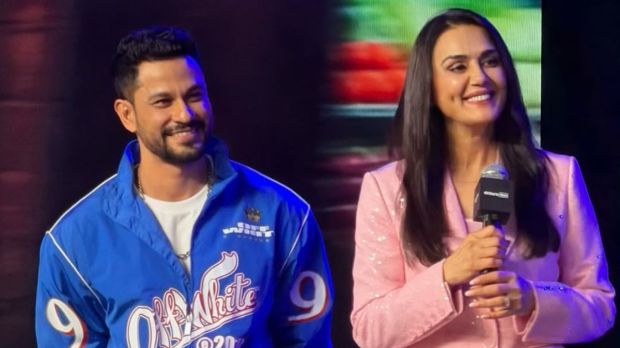
In 2026, Zinta will be seen in Aamir Khan and Sunny Deol’s debut collaboration in August for ‘Lahore 1947’. Reportedly set to release on August 13, the film will feature Sunny, Rajkumar Santoshi, Shabana Azmi, and Zinta, among others. Later, Zinta is also set to make a powerful comeback with Kunal Kemmu’s latest, ‘Vibe’. Set to release in September 2026, the action-comedy stars Sparsh Shrivastava, Dinesh Lal, Yashpal Sharma and Vanshika Dhir, too.
Zinta’s journey is more than a shift from career to portfolio. Bollywood worked because she took the risk. The IPL clicked because she had the courage to follow through. More than her on-screen appearances, she not only defined an entire era of Hindi cinema but gave investors a blueprint for diversification — maintaining the balance between experimentation and calculated risk.
With the discipline of an Army background and a Bollywood career that taught her how to push her limits, a boardroom was not an obstacle she could not conquer.
Disclaimer: This is an independent profile. Preity Zinta’s representatives were contacted but did not respond prior to the time of publication. In the absence of direct comment, this article was reported using publicly available records and reports. This content is not sponsored and was produced in accordance with FinancialExpress.com’s editorial guidelines.