



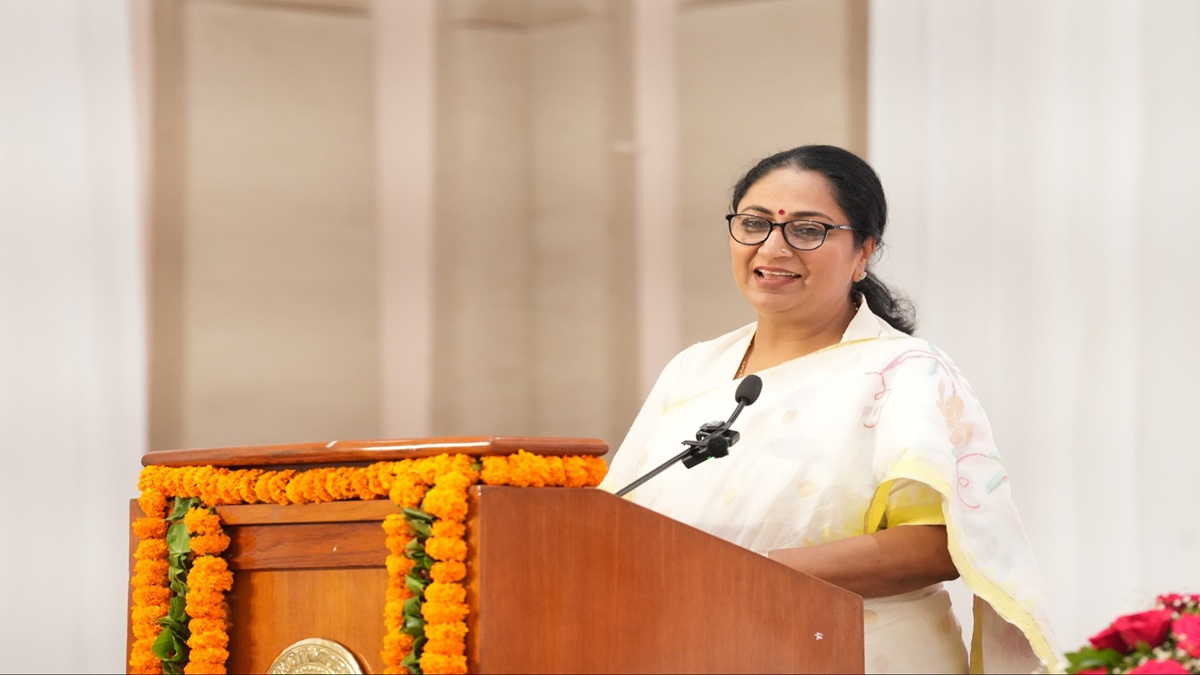
The Delhi government has approved a sweeping ‘Start-Up and Incubation Policy’ that will invest more than Rs 400 crore over the next five years to promote innovation, entrepreneurship and self-employment among students and young people in the national capital, Chief Minister Rekha Gupta announced on July 16 (Thursday).
CM Gupta said the new policy is designed to position Delhi as one of India’s leading centres for innovation and entrepreneurship. She emphasised that the government wants to provide young people with structured support so they can convert promising ideas into successful startups, thereby reshaping Delhi’s economic landscape.
In a significant decision aimed at transforming the youth of Delhi from job seekers into job creators, the Rekha Gupta-led Delhi government has approved the Delhi Startup and Incubation Policy, with an allocation of over ₹400 crore: Delhi CMO
— ANI (@ANI) July 16, 2026
Govt aiming to build Delhi into a ‘startup hub’
“The initiative is not just about helping people launch start-ups, but about transforming Delhi’s youth from job seekers into job creators,” CM Gupta said, underlining the broader vision behind the policy. She added that the policy aims to strengthen Delhi’s culture of innovation, encourage research-driven ideas and accelerate a knowledge-based economy in the capital.
The Start-Up and Incubation Policy will cover a wide network of educational institutions across the city, including 11 state universities, 13 government-aided colleges, industrial training institutes (ITIs) and polytechnic institutions run by the Delhi government. This is intended to ensure that entrepreneurial opportunities are embedded directly within campuses, where many ideas are first conceived.
Students of Delhi government schools will also be able to access the benefits of the policy at these institutions, creating a pathway from school to higher education and then to entrepreneurship. Officials said that successful student innovators will be eligible for financial assistance, making it easier for them to take the risky early steps of building a startup.
Funding: Rs 400 crore over 5 years
Under the policy approved by the Delhi Cabinet, more than Rs 400 crore will be invested over a five-year period to build and sustain the innovation and startup ecosystem. This funding will be channelled into incubation infrastructure, mentoring programmes, networking activities and milestone-based financial support for startups.
Delhi Education Minister Ashish Sood contrasted the new policy with a previous initiative of the Aam Aadmi Party (AAP) government, saying that earlier efforts were limited in both scope and budget.
“As per the records and files we have seen, the previous AAP government did nothing but publicity. Its scheme started in 2021 and ended in 2022,” Sood said, claiming the earlier budget was just Rs 22 crore compared to the current Rs 400-crore provision. He described the present policy as a “full-fledged” framework to develop and nurture young minds, helping them become future business leaders and entrepreneurs.
According to the Chief Minister’s Office, the policy will strengthen Delhi’s culture of innovation, create new employment opportunities, encourage research-driven innovation, deepen collaboration between industry and educational institutions, and accelerate the capital’s knowledge-based economy. With a significant financial commitment and a broad institutional reach, the Delhi Start-Up and Incubation Policy seeks to turn the city’s campuses into engines of entrepreneurship and its students into the next generation of job creators.
In a significant decision aimed at transforming the youth of Delhi from job seekers into job creators, the Rekha Gupta-led Delhi government has approved the Delhi Startup and Incubation Policy, with an allocation of over ₹400 crore: Delhi CMO pic.twitter.com/B044jLf1Kw
— IANS (@ians_india) July 16, 2026
Delhi Incubation Policy Monitoring Committee
To ensure effective implementation, the Delhi government will set up a State Incubation Policy Monitoring Committee (SIPMC). This committee will include representatives from the government, educational institutions, industry and the broader startup ecosystem, bringing diverse expertise to oversee the rollout and functioning of the policy.
The SIPMC will be responsible for monitoring the progress of incubation centres, evaluating the effectiveness of financial support mechanisms and recommending adjustments as the ecosystem evolves. By involving stakeholders from across academia and industry, the government aims to create a governance structure that is both accountable and responsive to the needs of young entrepreneurs.
Building, strengthening incubation centres in Delhi
A key pillar of the policy is the development of robust incubation centres across the covered institutions. The government will provide one-time financial assistance to eligible universities, colleges, ITIs and polytechnics to set up new incubation centres or strengthen existing ones.
Beyond initial funding, these centres will receive annual support for activities that are critical to a thriving startup environment. This includes mentoring programmes, networking events with investors and industry, innovation competitions, and initiatives that deepen collaboration between academia and business. CM Gupta said the centres will offer modern infrastructure, expert guidance, and access to laboratories and testing facilities, among other services needed to turn ideas into market-ready products.
Startups associated with these incubation centres will benefit from milestone-based financial assistance at various stages of their growth. This structured funding approach is designed to support entrepreneurs as they move from concept to commercialisation, reducing early-stage risks while encouraging disciplined progress.
The support will cover multiple phases, including prototype development, proof of concept, product development, market validation and eventual commercialisation. By tying assistance to specific milestones, the policy aims to ensure that public funds are used efficiently while rewarding startups that demonstrate tangible advancement in technology, business models or customer adoption.
Delhi Start-Up Youth Festival
To energise the ecosystem and celebrate student entrepreneurship, the government will organise an annual “Delhi Start-up Youth Festival” under the new policy. The festival will bring together young innovators, educational institutions, startups, investors, industry representatives and policymakers on a shared platform.
The state government officials said the event will showcase promising student-led ventures, provide networking opportunities, and expose young founders to potential mentors and funders. The festival is envisioned as a flagship gathering that not only recognises achievements but also inspires more students to consider entrepreneurship as a viable career path.
CM Gupta stressed that the policy is about much more than startup launches; it is about social and economic transformation through youth empowerment. By equipping young people with the resources, mentorship and confidence to start businesses, the government hopes to create new jobs and foster local solutions to Delhi’s challenges.