



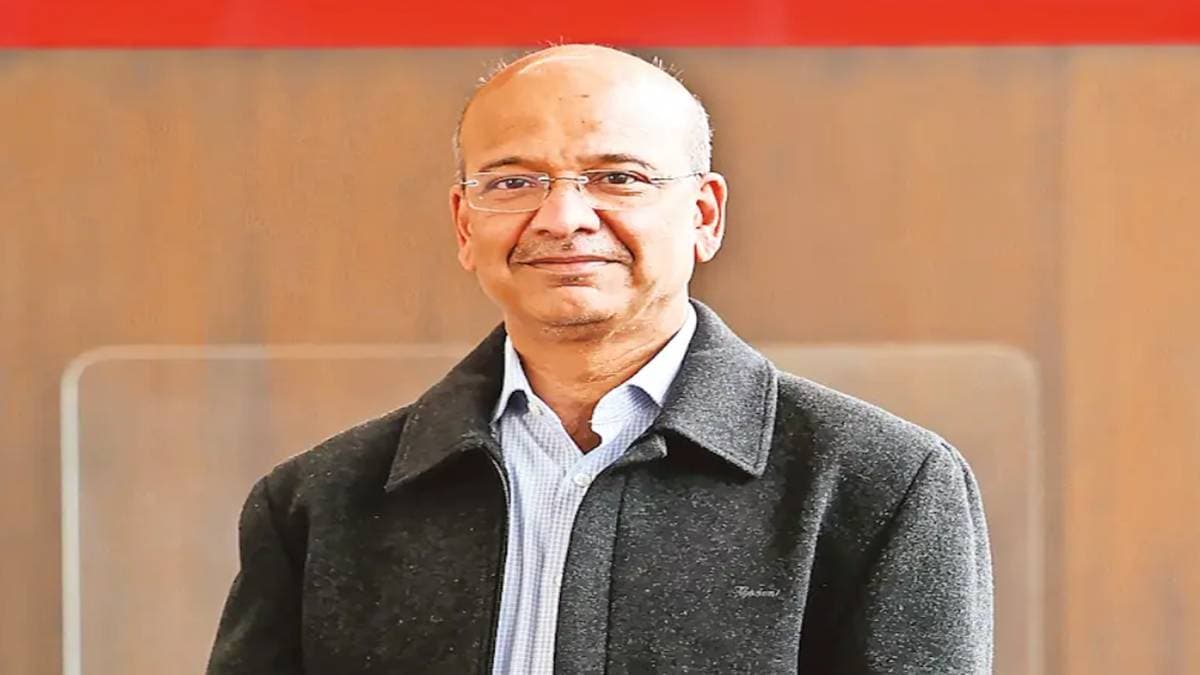
As India pushes aggressively into semiconductors, Cadence Design Systems is betting that the country’s role will extend far beyond back-end engineering. Alok Jain, corporate vice-president and India managing director, Cadence, says India is fast emerging as a global innovation hub for chip design, with over 40% of Cadence’s worldwide R&D now anchored here. In this interview with Sudhir Chowdhary, Jain speaks about AI-led chip design, the rise of “silicon-aware” Indian firms, and why India’s semiconductor ambitions now hinge on moving from execution to innovation. Excerpts:
What role does India play in Cadence’s global R&D strategy?
India plays a pivotal role in Cadence’s global R&D strategy, with its Noida centre being the company’s largest R&D hub outside the United States. The country is emerging as an innovation-led hub in semiconductor design, with strong depth in areas such as logic design, physical design, and verification. Over 40% of Cadence’s global R&D is anchored in India, with teams contributing across the entire design stack and co-developing products for global markets.
The India team is deeply integrated into the global innovation ecosystem, working across the full product development lifecycle, from core electronic design automation (EDA) and IP domains such as digital and custom IC design, packaging, PCB, system verification, and IP to advanced areas like 3D IC, high-speed RF, and pervasive intelligence (AI/ML-led design). Backed by sustained investments, India R&D is driving end-to-end innovation from devices to the cloud, enabling cutting-edge solutions that enhance performance, accelerate time-to-market, and power next-generation intelligent design.
What is evolving is the nature of India’s contribution. Software-led design and EDA align strongly with the country’s core strengths, and with AI reshaping chip design, there is a clear opportunity for India to play a larger role in next-generation systems. To fully realise this potential, however, the ecosystem must deepen further, particularly in system architecture and productisation while building stronger linkages across design, IP, manufacturing, and end markets.
Which sectors are driving demand for advanced chip design?
AI and data centre infrastructure are currently the strongest growth drivers contributing to semiconductor demand. The rapid rise of AI workloads is fundamentally reshaping compute requirements, leading to far greater complexity in chip design, particularly around performance, power efficiency, memory bandwidth, and advanced packaging.
We are seeing this evolve across different phases of AI. Today, most demand is concentrated around training and inference workloads in hyperscale data centres, alongside edge AI applications in devices and industrial systems. However, the next major phase, referred to as physical AI, is expected to accelerate demand even further. This includes autonomous systems, robotics, intelligent mobility, and machines capable of real-time decision-making in physical environments.
In this context, automotive is emerging as a critical semiconductor growth area, driven by the shift towards electric, connected and autonomous vehicles. Modern vehicles today are becoming AI-driven computing platforms on wheels, requiring advanced chips for sensing, safety, connectivity, and real-time processing.
5G remains an important market as well, particularly in enabling connectivity and edge intelligence, though it is now relatively more mature compared to the rapid expansion underway in AI-led computing. Across sectors, the common demand is for high-performance, energy-efficient, and highly integrated chip design.
How are Indian enterprises leveraging Cadence solutions?
Semiconductor design in India is expanding beyond traditional players, with startups and emerging companies beginning to engage more actively. What’s particularly exciting is the rise of “silicon-aware” enterprises in India. Companies in automotive, industrial, and even cloud-native sectors are increasingly engaging with chip design as a strategic capability. Automotive OEMs are investing in in-house design for advanced driver assistance systems (ADAS) and EV platforms, while hyperscalers are exploring custom silicon to optimise performance and efficiency. Cadence is enabling these companies with design, verification, and system analysis tools that allow them to innovate at the silicon level and grow to the full system level. Product design increasingly involves a deep co-optimisation across silicon, package, board, and the end physical system. Cadence’s evolution to address all of these domains is critical for companies to address these multiphysics challenges and succeed in their end markets.
A key enabler of this shift is improved access to design tools. Through the Chips to Startup (C2S) programme, Cadence is providing startups and academia with access to over 100 EDA tools, via the national EDA grid, helping build early-stage design capability and accelerate development.
This is lowering barriers to entry and enabling broader participation in semiconductor design.
How is Cadence integrating AI across the design stack?
AI has been the most significant shift in chip design in decades; it is becoming integral to how design itself is done. Cadence has been embedding AI across the EDA stack, from implementation and verification to system-level design, through our Intelligent System Design strategy.
At a practical level, AI helps engineers manage growing design complexity by enabling faster, more efficient exploration of the design space, delivering clear gains in productivity and quality, especially in implementation and verification.
We’re now extending this with agentic AI orchestration across the entire design continuum from specification to sign off, including our ChipStack AI Super-Agent, which automates key parts of the workflow – from coding and testbench generation to regression management and debug – to deliver step-change productivity gains, in some cases upto 10x. At our recent user conference, we introduced ViraStack AI Super-Agent for custom and analog, and InnoStack AI Super-Agent for digital implementation and signoff. The direction is clear, AI is becoming deeply embedded in the design process, enhancing how engineers build and optimise increasingly complex systems.
Are we moving towards autonomous or “self-driving” chip design?
The idea of fully autonomous chip design is compelling, but in the near term, the reality is more about augmented design rather than complete automation. AI can effectively handle repetitive, optimisation-heavy tasks and significantly accelerate workflows. However, human expertise remains essential, particularly in architectural decisions, trade-offs, and system-level thinking. What we are seeing is a shift towards “AI-assisted design,” where engineers and intelligent tools work together to achieve better outcomes faster. AI orchestration can give each engineer a virtual team of silicon engineers to amplify and accelerate their own abilities. This collaborative model is what will define the next phase of innovation.
Where are the biggest gaps today – talent, IP or infrastructure?
India’s semiconductor push has strong momentum across fabs, design, and policy support, but the gaps are less about intent and more about where India sits in the value chain. Talent is a relative strength, with deep capabilities in core areas like logic design, physical design, and verification. However, gaps remain at the higher end including system architecture and product thinking. The need now is to move from design execution to end-to-end product engineering and differentiation. There is also a need to strengthen IP development, manufacturing linkages, and paths to market. While India contributes significantly to global semiconductor design, it still needs to build a strong base of homegrown product companies to support the upcoming fabs and backend units.
India still has work to do at both ends of the value chain. At the top, strengthening system architecture capabilities to translate ideas into differentiated products, and at the bottom, improving productisation by taking designs to market, building viable business models, and scaling sustainably.
While infrastructure is improving, the real need is for a more integrated ecosystem that connects design, IP creation, manufacturing, and go-to-market pathways. In summary, India has the talent base and policy momentum, but to fully realise its semiconductor ambitions, it must move up the value chain, building stronger IP ownership, scaling product companies, and tightening linkages between design, manufacturing, and commercial outcomes.
What role can India play in making supply chains more resilient?
The semiconductor industry remains deeply interconnected, with no country fully self-sufficient. Recent geopolitical shifts have increased the focus on resilience and diversification. For India, the opportunity lies in strengthening design capabilities while building complementary strengths in manufacturing and packaging.
Resilience will depend on developing the ecosystem end-to-end, by expanding access to design tools, scaling talent, and enabling startups. In India, this is being addressed through initiatives that provide access to EDA tools for startups and universities, alongside efforts to strengthen the curriculum and build early-stage design capability through closer industry-academia engagement. Cadence is engaged in these areas through its work with government, academia, and startups.
If this momentum continues alongside progress in manufacturing and packaging, India can play a more meaningful role in building a resilient semiconductor supply chain.