



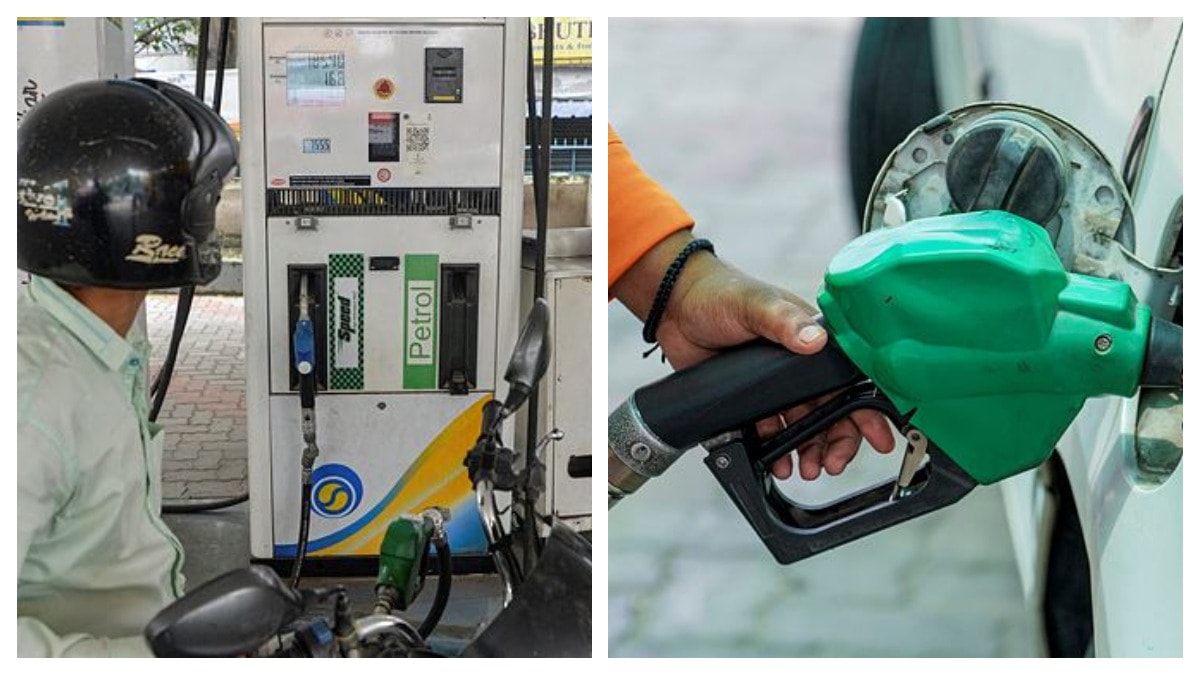
Rising international crude prices driven by the West Asia conflict are set to put fresh pressure on Indian household budgets, Manoranjan Sharma, Chief Economist at Infomerics Ratings, warned.
Speaking to news agency ANI, Economist Sharma said the sharp escalation in global oil prices- which has pushed Brent crude above USD 100 a barrel and spot rates higher still- makes domestic increases in petrol, diesel and cooking fuel largely unavoidable despite government efforts to shield consumers.
“The world is going through a period of great turbulence, particularly in the wake of the West Asian crisis,” Manoranjan Sharma said. He recalled that Brent was trading at about USD 67–68 a barrel when hostilities began, and has since climbed to around USD 100 a barrel; spot prices in some markets are trading between USD 120 and USD 130 a barrel.
“Petrol, diesel prices have been going up all over the world,” he added, stressing that the global nature of the shock limits policymakers’ ability to fully protect end users.
Supply disruption and India’s exposure
Economist Sharma highlighted the specific vulnerability stemming from the closure of the Strait of Hormuz- a chokepoint through which a significant portion of India’s crude and LPG imports transit.
“About 60 per cent of the oil which we import in India comes from the Strait of Hormuz,” he said, noting that the disruption has tightened supplies and raised import costs. The economist explained that higher landed crude costs translate into upward pressure on domestic pump prices and on the cost of household cooking fuels.
Government measures and limits
While acknowledging that the government has taken steps to cushion consumers, Manoranjan Sharma warned that protection has its limits.
“The government has tried to insulate the common person, the aam aadmi, but then there is a limit to what the government can do,” he said, noting that fuel prices in India have been adjusted “in a gradual and calibrated manner” over recent weeks.
He added that these incremental increases are likely to dent household budgets and cause hardship, but are a near‑term reality given the international energy shock.
Longer‑term responses: Renewables and energy transition
On medium‑to‑longer term strategies, Manoranjan Sharma pointed to India’s continuing shift toward renewable and alternative energy sources as a way to reduce vulnerability to imported fossil fuel price swings.
“If you look at India’s position, we have been moving at a steady pace towards renewable energy,” he said, estimating that renewable sources now account for roughly one‑third of India’s total energy production- a comparatively healthy share globally. However, he cautioned that the energy transition is “a work in process” and that substantially lowering import dependence will take time. “This is something which cannot be done overnight, and it will take some time to bear fruit,” Sharma said.
Implications for households and policy
Economists and consumer groups say that sustained high oil and fuel prices could erode real incomes, raise transportation and logistics costs and feed into broader inflationary pressures. For policymakers, the challenge is twofold- manage immediate inflationary risks and household distress through targeted interventions, while accelerating investment in renewables, fuel diversification and supply‑chain resilience to blunt future shocks.