



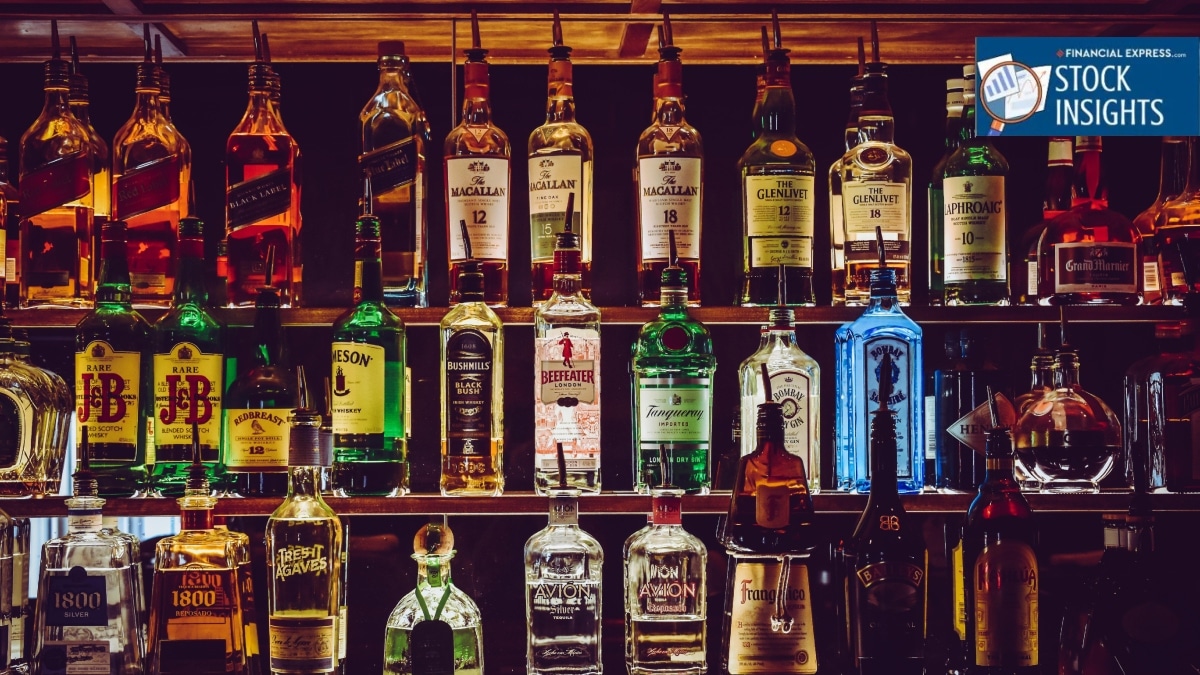
The Indian Alcoholic Beverage (AlcoBev) industry is undergoing a fundamental structural transition, shifting from a volume-led market to a value-driven “premiumisation” powerhouse. Nomura, a Japanese financial company, expects the sector to reach a market value of Rs 5.8 lakh crore by 2030.
This transformation is being supercharged by the India-UK Free Trade Agreement (FTA), which is set to halve import duties from 150% to 75%, effectively democratising luxury spirits for a new generation of aspirational drinkers, as per a recent report by Nomura.
Indian malts ‘beating the scots’ at their game
The shift is perhaps most evident in the rise of domestic liquids that are now outshining traditional giants. In its report, Nomura highlighted a historic reversal in the global hierarchy: “Indian single malts are now ‘beating the Scots’ at their own game, winning global accolades.
This newfound prestige, combined with a demographic tilt toward millennials and Gen Z, places the industry at what Nomura calls a “paradigm shift” in consumption behaviour.
The FTA catalyst: Halving barriers for luxury spirits
The India-UK Free Trade Agreement (FTA), signed in July 2025 and set to be ratified in early 2026, serves as a massive regulatory tailwind for the premium sector. Nomura specifies: “India is reducing duty on UK whisky and gin from 150% to 75% and further to 40% in the tenth year of the deal.”
This reduction is a “clear positive for United Spirit’s Bottled-in-Origin (BIO) Scotch portfolio, such as Johnnie Walker, Black & White, and J&B.”
By halving the initial tariff, the price gap between imported Scotch and domestic premium whiskies narrows, making luxury global brands significantly more accessible.
Key impact of the FTA, as highlighted by Nomura and industry data:
- Immediate Price Drop: Experts suggest a price reduction of roughly Rs 200–300 per 750ml bottle for popular Scotch labels upon implementation.
- Market Shift: The deal is expected to accelerate the transition from “Bottled-in-India” (bulk imports) to “Bottled-in-Origin” (direct imports), as the duty advantage of local bottling diminishes.
- Reciprocal Access: While duties fall in India, Indian distillers are pushing for the removal of UK non-tariff barriers, specifically the “three-year maturation” rule, which would allow Indian single malts to be officially labeled as “whisky” in British markets, further boosting export potential.
The global conquest: Indian single malts strike gold
The narrative of Indian spirits is no longer confined to local mass-market brands. Nomura observes that home-grown liquids are achieving unprecedented international prestige, which in turn drives domestic demand.
Nomura’s report states, “Over the past few years, for the first time ever, some single malt whiskies from India (Indri, Rampur, Godawan, etc.) have won global accolades like Best Whisky / Gold medals.” This international validation has catalyzed a 22% CAGR for single malt whiskies in India between FY19 and FY24.
Nomura analysts Mihir P Shah and Riya Patni note that this success creates an “innovation flywheel” where global recognition funds further premium product development.
Specific examples noted by Nomura include:
- Rampur (Radico Khaitan): Described as the “Kohinoor of single malts,” now available in 50 countries.
- Godawan (United Spirits): An artisanal malt crafted in Rajasthan, now present in Bahrain, Malaysia, and Dubai.
- Longitude 77 (Pernod Ricard): A luxury offering produced in Nashik using locally sourced ingredients.
Nomura asserts that this wider acceptance is “improving credibility, pricing power and export potential” for Indian distillers.
United Spirits: The Premiumisation powerhouse
United Spirits (USL) stands as the primary beneficiary of the industry’s evolution. Nomura has initiated coverage on USL with a Buy rating and a target price of Rs 1,650, representing an upside potential of 25% from current levels.
Nomura identifies United Spirits as the leader in the high-margin segment, noting: “USL is the dominant player in the P&A segment with c.45% market share.”
The company’s strategic pivot is evident in its sales mix; USL’s share of P&A brands in net sales moved from approximately 70% in FY19 to nearly 90% in FY25.
The report highlighted United Spirits’s structural advantages:
- Market leadership: Nomura states, “USL’s market-leading position across categories and its parentage (Diageo) give it a significant edge in terms of global best practices and portfolio breadth.”
- Portfolio optimisation: By rationalising its “popular” portfolio, the company has successfully focused resources on higher-margin products.
- Financial robustness: Nomura observes that USL has transitioned into a “leaner, more profitable entity” with a focus on cash flow generation and debt reduction.
The ‘drink better’ pivot
Nomura identified an “inflection point” where the Indian consumer is pivoting from a culture of high volume to one of high quality.
The report mentions: “The core of our investment thesis lies in a behavioural shift where consumers are moving from drinking more to a drink-better culture.”
Nomura’s data shows:
- Whisky dominance: Accounting for 70% of IMFL sales by value in FY25.
- White spirits: Recognised as the “fastest growing segment in P&A,” despite currently representing less than 9% of the local industry.
The demographic explosion: 13 million new reasons to invest
India’s population dynamics provide a long-term runway for volume growth. Nomura’s analysis notes: “Every year, India adds 13 million drinking-age adults, of which 3-5 million are added to the alcohol-consuming population.”
The report places a specific spotlight on younger cohorts as the primary engine for this change. Nomura notes that “post-Covid and with the rising millennials and Gen Z population, we are seeing a trend shift across categories and income pyramids toward better experiences and products.”
Furthermore, the report emphasised that these younger generations are actively redefining market offerings.
Nomura stated that “Millennials and Gen Z are shaping the future of the industry, driving innovation and diversity in offerings” through their exposure to global trends and preference for premiumisation.
The report also identified a softening of “the stigma around alcohol is gradually fading, as consumers view moderate drinking as a part of the contemporary lifestyle.” This is particularly evident in the 37.1% share of women in the alcohol-drinking population and the rising acceptance in Tier II and Tier III towns.
Investment moats: Why incumbents remain unchallenged
The Indian market is characterized by high entry barriers. Nomura explains: “High compliance burdens and restrictions due to state-specific policies on distribution, pricing, and taxation act as a gatekeeper for new entrants.”
Established incumbents like USL and Radico Khaitan benefit from existing scale and brand equity that newcomers cannot easily replicate in a “media-dark” environment where traditional advertising is restricted.
The Rs 18,000 crore cricket secret
A unique aspect of the United Spirits investment case is its 100% ownership of the Royal Challengers Bengaluru (RCB) IPL franchise. Nomura pointed out that this as a high-quality earnings engine: “RCB contributes c.8% of USL’s consolidated EBITDA, making it more than a pure marketing expense.”
Nomura explicitly valued the sports business at Rs 150 per share. With a potential franchise valuation of $2.2 billion (approx. Rs 18,000 crore), RCB represents roughly 18% of USL’s total market capitalization, providing a significant valuation “kicker” beyond the spirits business.
Conclusion
Nomura concluded that the Indian AlcoBev sector has transitioned into a stable, brand-led staple ecosystem.
With the industry trading at valuations below the ten-year average, the combination of favourable demographics, the FTA tailwind, and the value unlock of assets like RCB makes United Spirits a compelling play for the next decade.