



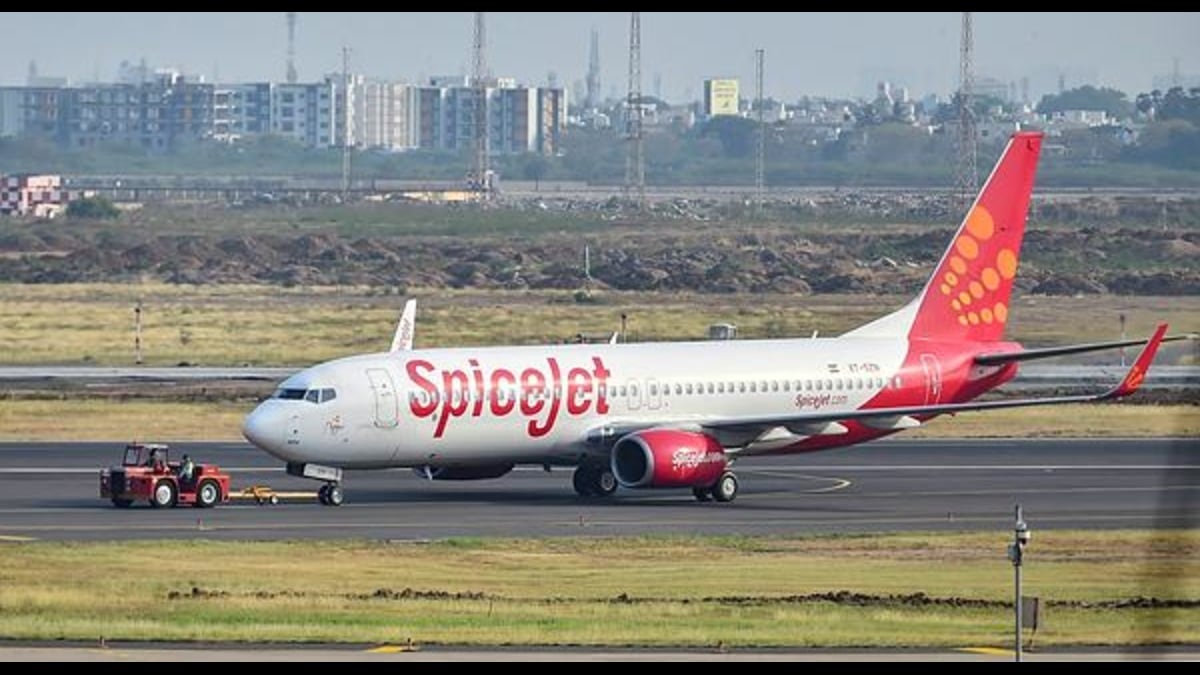
Sun Group chairman Kalanithi Maran has told the Delhi High Court that SpiceJet owes over Rs 400 crore, including interest, in their protracted arbitration dispute- far above the Rs 144.5 crore figure cited by the cash‑strapped airline. Appearing through senior lawyer Jayant Mehta for KAL Airways, Maran argued that SpiceJet’s own books are miscalculating interest and that the outstanding amount exceeds Rs 400 crore. The submission underscores how sharply the two sides differ over the remaining dues, even after years of payments and court orders.
Rs 144 crore deposit order and SpiceJet’s plea
The hearing revolved around SpiceJet’s petition challenging the Delhi High Court’s earlier order directing it to deposit Rs 144.5 crore by April 14 in compliance with an arbitration award, says news agency PTI. The airline, represented by senior advocate Mukul Rohatgi, says the immediate cash payment could push it to the brink, citing the financial stress caused by the West Asia war and sharply rising aviation turbine fuel prices. Rohatgi argued that SpiceJet should instead be allowed to monetize a one‑acre commercial property in Gurugram- described as unencumbered and company‑owned- rather than be forced into a distress sale. The airline has already taken steps to sell the asset, but such transactions naturally take time and cannot be completed overnight.
Justice Subramonium Prasad remarked that facts originally required to be complied with in 2023 are now being supplemented with fresh material from 2026, including the impact of the West Asia war. The judge observed that a party is now seeking to leverage a war that broke out in 2026 to justify non‑compliance with an order that should have been honoured years earlier. The court has reserved its judgment on SpiceJet’s review plea, which seeks relief from the directive to deposit Rs 144.5 crore and, instead, permission to offer the Gurugram property as security.
KAL Airways’ stance
KAL Airways, owned by Kalanithi Maran, has countered that SpiceJet’s review petition is essentially an attempt to keep the sword hanging over the dispute indefinitely. Its lawyers insist the award must be satisfied through monetary payment and not through encumbered or slow‑moving assets. They oppose any relaxation that would allow the airline to defer payment under the pretext of a weak financial position, arguing that this would undermine the enforceability of the arbitration award and embolden other borrowers to stall.
As per the ruling of Live Law, the dispute traces back to a 2023 Supreme Court order directing the encashment of a Rs 270 crore bank guarantee and directing SpiceJet to pay Rs 75 crore towards interest within a specified period. The top court had warned that non‑compliance would make the entire arbitral award fully executable, increasing the pressure on the airline to clear dues. In January, the Delhi High Court recorded that Rs 194.51 crore remained due under earlier directions, and after adjusting Rs 50 crore already deposited, it directed the additional Rs 144.5 crore deposit- now the core of the current review battle.
SpiceJet’s counter‑claims of partial payment
SpiceJet has maintained that it has already paid about Rs 730 crore to Maran and KAL Airways, covering both principal and interest related to convertible warrants and preference shares. The airline argues that these substantial payments should be taken into account before insisting on immediate cash deposits. It also highlights that the proposed property‑based security is backed by a clear title and that the company is already in the process of monetizing it, which naturally requires time and cannot be completed in a few weeks.
The legal conflict began in January 2015, when Maran and KAL Airways transferred their 58.46 per cent stake in SpiceJet to Ajay Singh during a severe financial crisis for the airline. As part of that transaction, Maran and KAL infused around Rs 679 crore through convertible warrants and preference shares.
Later, Maran alleged that the new management did not honour the issuance of these instruments and sought a refund, leading to arbitration before a three‑member tribunal comprising retired Supreme Court judges. In July 2018, the tribunal rejected Maran’s claim for over Rs 1,300 crore in damages but directed SpiceJet to refund Rs 579 crore with interest, setting in motion the current cycle of orders, deposits, and appeals.
At the heart of the dispute are questions about how arbitration awards are enforced against financially vulnerable airlines and how courts balance creditors’ rights with the survival of critical infrastructure like the country’s third‑largest carrier. SpiceJet has argued that insisting on immediate cash payment could destabilise the airline at a time of external shocks, while KAL Airways insists on strict adherence to the award. The Delhi High Court’s final order on the review plea is likely to set a precedent for how similar payment disputes between big corporates, promoters and aviation firms are handled in the future.