India’s automobile industry has grown quickly over the last ten years, but vehicle repair is still scattered and poorly organised. For most car or bike owners, a breakdown often means not knowing how long the repair will take, how much it will cost, or how good the service will be. While sectors like ride-hailing and logistics now run on real-time digital systems, vehicle repair still depends on phone calls, manual follow-ups and local decision-making.
Experts say the problem is not a shortage of skilled mechanics. The real issue is the lack of a system that can manage all the moving parts in real time. Without real-time data systems, repair decisions are often made ad hoc, which makes the process unpredictable and difficult to scale,” Lakshya Khurana, IIT Kanpur alumnus and founder of Ride N Repair said.
“Without data-based systems, these choices are usually made on the spot, making the process unpredictable and hard to scale,” Khurana added.
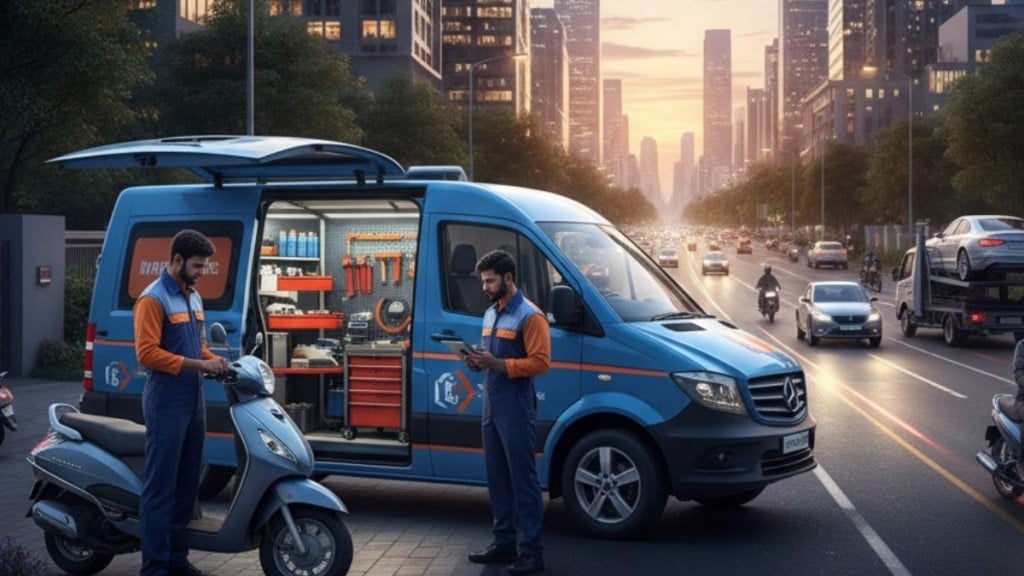
Instead of acting like a simple marketplace that connects customers and mechanics, Ride N Repair claims to treat vehicle repair as a coordination system that requires continuous adjustment as conditions change in real time.
Using live data to manage repairs on the ground
Interestingly, the system continuously tracks live inputs such as where the technician is, how complex the job is, whether parts are available, and how the work is progressing. Based on these live inputs, the system continuously updates technician assignments, timelines, and expected outcomes as conditions change during execution.
This means the system can handle problems that come up during a repair, like delays, missing parts or new issues being discovered, without someone having to step in manually. By accepting that repairs are uncertain and planning for that uncertainty, the platform aims to deliver more consistent service.
Industry observers note that this approach reflects applied AI systems engineering, where real-time decisioning, probabilistic workflows, and operational reliability are engineered into the system rather than managed manually.
An AI engine at the centre of the platform
At the centre of Ride N Repair is a real-time AI coordination system that integrates technician dispatch, routing logic, pricing estimation, spare-parts planning, and performance monitoring into a single decisioning layer.”
Analysts point out that doing this for vehicle repair is much harder than for more standard services, where tasks and timelines are usually fixed.
Going forward, Ride N Repair plans to improve its real-time models and expand into other services that face similar coordination problems. The approach demonstrates how high-variance physical services such as vehicle repair can be managed through real-time coordination systems rather than manual processes.