The passenger vehicle industry is unlikely to see any all-new hatchback launches as carmakers continue to prioritise higher-margin SUVs, according to analysts, even though hatchbacks still account for more than a million annual sales.
“We don’t see any new ICE hatchback in development for at least the rest of this decade,” said Gaurav Vangaal, associate director, light vehicle forecasting, S&P Global Mobility. “In fact, we expect a few entry-segment hatchbacks to phase out of the market entirely in the next few years.”
According to Vangaal, every hatchback currently under development is either a replacement for an existing model or an electric version of an existing nameplate. “A totally new hatchback nameplate is simply not on the cards,” he said.
The shift reflects the growing dominance of SUVs in the market and the economics behind them. Industry data for 2025 shows SUVs and crossovers accounted for 55% of passenger vehicle sales, with volumes exceeding 2.48 million units, up 8% from the previous year. Hatchbacks accounted for 22% of sales at 1.06 million units, with volumes largely unchanged year-on-year.
Harsh Unit Economics
Automotive executives said SUVs typically generate significantly higher margins despite sharing many components with hatchbacks.
“A sub-4 metre hatchback and a sub-4 metre SUV often share the same platform, engine, transmission and suspension. The SUV is essentially a taller vehicle with additional styling elements,” said a former Maruti Suzuki executive. “But consumers perceive SUVs as more premium products and are willing to pay significantly more for them.”
He said mass-market hatchbacks typically generate margins of 3-5%, while comparable SUVs can deliver margins of 10-15%, encouraging manufacturers to channel investments towards the segment.
The result has been a widening gap in product development cycles. While SUVs have received frequent upgrades, new features and model renewals, hatchbacks have largely been limited to periodic refreshes and feature additions.
Yet analysts do not expect hatchbacks to disappear entirely. Despite losing share to SUVs over the past decade, the segment continues to attract first-time buyers and urban consumers seeking affordable personal mobility.
Upgrading Feature Suite
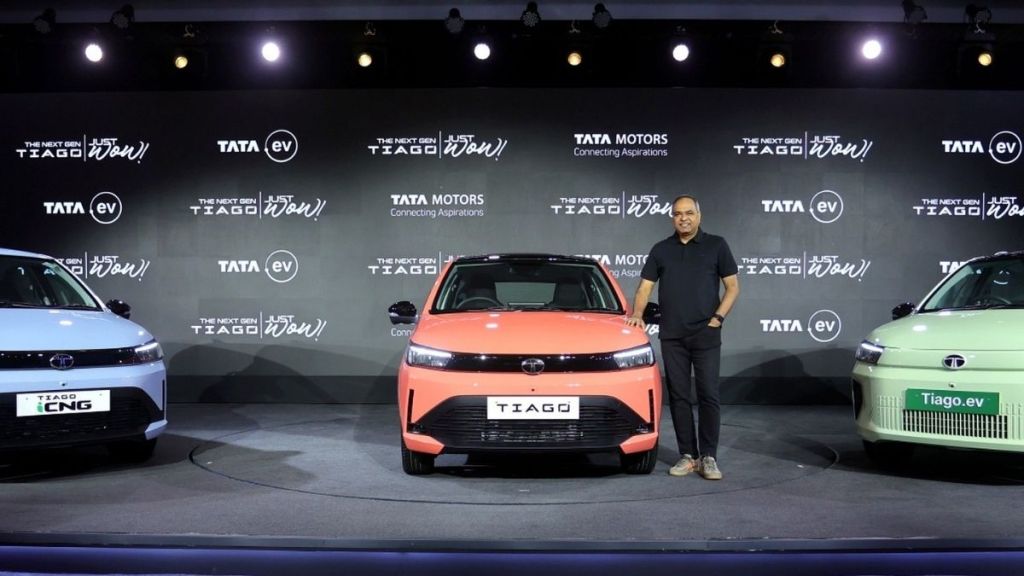
Tata Motors, which launched the new Tiago on Thursday, said that demand for hatchbacks remains intact if customers are offered modern features and technology.
“For far too long, this segment received scarce attention from the industry, when it genuinely deserved far more,” Shailesh Chandra, managing director and CEO of Tata Motors Passenger Vehicles, told this newspaper.
Chandra said manufacturers accelerated innovation in SUVs while slowing investments in hatchbacks, creating the impression that consumers had moved away from the segment.
The new Tiago gets features such as a 360-degree camera, wireless charging, six airbags as standard and battery subscription options on the electric version, features traditionally associated with larger and more expensive vehicles.
Analysts said such upgrades could help sustain demand for existing hatchback models. However, with no new nameplates under development and investment continuing to flow towards SUVs, the segment is increasingly becoming a replacement market rather than a growth category for the industry.