



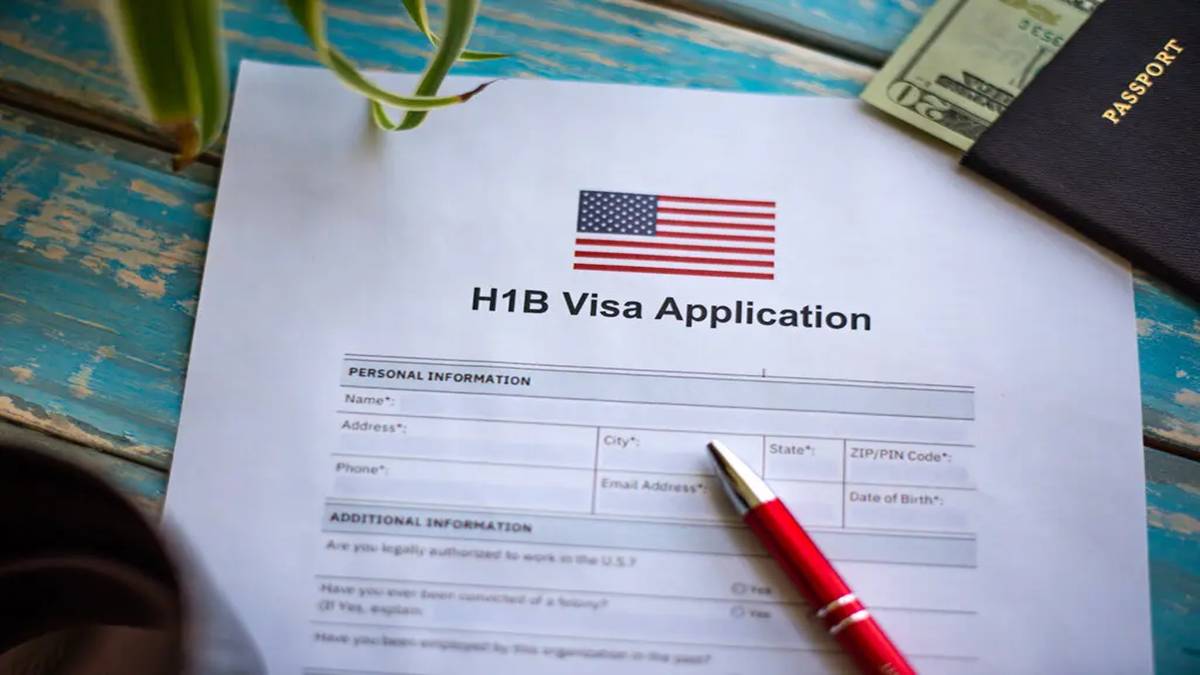
The US Citizenship and Immigration Services (USCIS) has announced that it has received enough applications to fill the H-1B visa quota for the 2027 financial year. The H-1B visa is one of the most popular work visas in the United States, especially among technology companies that hire skilled foreign workers.
USCIS announced on Friday that it has received enough applications to meet both the 65,000 regular H-1B visa cap and the 20,000 additional visas reserved for applicants with advanced degrees from US institutions, also known as the master’s cap.
This means all 85,000 H-1B visas available under the annual limit set by Congress have now been filled.
In its statement, the agency said, “US Citizenship and Immigration Services has received enough petitions to reach the congressionally mandated 65,000 H-1B visa regular cap and the 20,000 H-1B visa US advanced degree exemption, known as the master’s cap, for fiscal year 2027.”
However, applications that are exempt from the cap will continue to be accepted and processed under the existing rules.
First H-1B season under Trump’s new wage-based system
This year’s selection process is different from previous years because it is the first full H-1B cycle under new rules introduced by the Trump administration.
For years, H-1B visas were given through a random lottery, where every eligible applicant had an equal chance of being selected. That system has now been replaced with a wage-based process that gives an advantage to workers offered higher salaries.
Instead of giving everyone one entry in the lottery, the new system gives multiple chances based on the salary level offered by the employer under the US Department of Labor‘s four-level wage system.
Workers offered the highest wages under Level 4 receive four entries. Those under Level 3 receive three entries; Level 2 workers receive two entries, while Level 1, which covers entry-level jobs, receives just one entry.
In simple terms, the higher the salary, the better the chances of being selected.
USCIS finalised the rule on December 23, 2025, and it came into effect in time for the FY2027 registration season. The agency said the move was meant to give priority to highly skilled and better-paid professionals.
A USCIS spokesperson defended the change, saying the earlier lottery system had been “exploited and abused by US employers who were primarily seeking to import foreign workers at lower wages than they would pay American workers.”
$100,000 fee makes overseas hiring more expensive
The wage-based selection system was introduced alongside another major policy change.
In September 2025, President Donald Trump signed a presidential proclamation introducing a $100,000 fee on new H-1B petitions filed for workers who are outside the United States.
The one-time fee applies to petitions filed after September 21, 2025, unless the Secretary of Homeland Security grants a national interest waiver.
The fee does not apply to existing H-1B visa holders or to petitions submitted before that deadline. Current H-1B workers are also allowed to continue travelling without being affected by the new charge.
While announcing the policy, Trump said the goal was to encourage companies to hire “great workers,” adding that the fee would make employers pay for talent that is worth keeping.
Small businesses likely to feel the biggest impact
The new rules are expected to affect smaller employers more than large companies.
According to the government’s own regulatory analysis, around 5,193 small businesses, nearly 30% of the 17,069 small employers that use the H-1B programme, could lose out because their Level 1 wage petitions may no longer be selected or could become too expensive under the new system.
Technology companies, which have long relied on the H-1B programme to hire skilled workers from around the world, are also expected to change the way they recruit.
According to data from Pew Research, about six out of every ten H-1B visas issued since 2012 have gone to computer-related jobs.
Some companies are reportedly looking at shifting jobs to lower-cost cities where they may be able to meet higher wage levels more easily. Regulators have said they are aware of this possibility and have kept the authority to act if employers try to misuse the system.
What happens after the cap is reached?
The filing window for FY2027 H-1B petitions ran from April 1 to June 30, 2026.
Since USCIS has already received enough petitions in the first selection round to meet the annual limit, it is not expected to hold a second lottery this year, similar to what happened during the FY2026 cycle.
Applicants who were selected in this year’s process will be able to begin working in the United States from October 1, 2026, when the new financial year officially starts.