


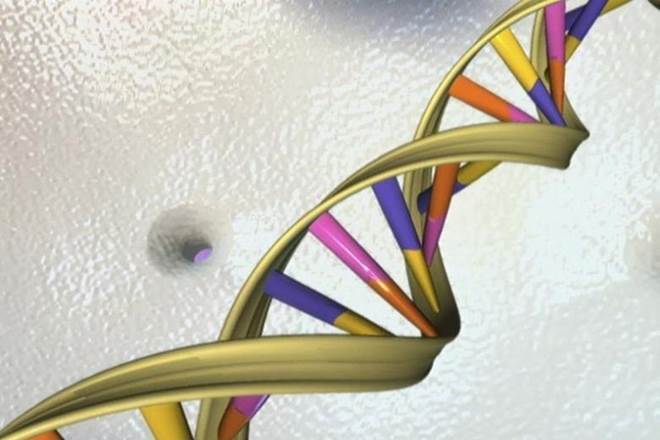

Despite the strides in medical science over the last few decades, granular identification of DNA has often been imprecise. A 2014 report published in the journal, Science, highlighted that the misidentification and contamination of cell lines in medical research were responsible for potentially more than $9 billion in wasted medical research funding on studies. But, now, according to an article published in eLife, researchers may have found a handy solution to the misidentification problem. According to their research, a device, the size of a credit card can not only hold gigabytes of data on DNA sequencing, but can also help identify DNA clusters and differentiate one from another. What this means is that once the technology is perfected, scientists would be easily able to identify different strands of DNA and make progress in countering diseases like cancer, which have remained untreatable till now.
This will, of course, help create detailed DNA profiles of people, that too in real time. So far, the experiments on identifying DNA granularly have been made just on plants. With the MinION DNA sequencing device, human testing may be soon possible with the entire process also reduced to a matter of just few minutes.
The technology developed by Columbia University and New York Centre of Genome Research, however, doesn’t have an easy way ahead. With privacy advocates already rallying against the the use of biometrics and iris scanners for verification, DNA processing for identification is bound to elicit even stronger protests. Until then, the technology can certainly help in victim identification and lead the way in the identification of cancer forms and treatments.