


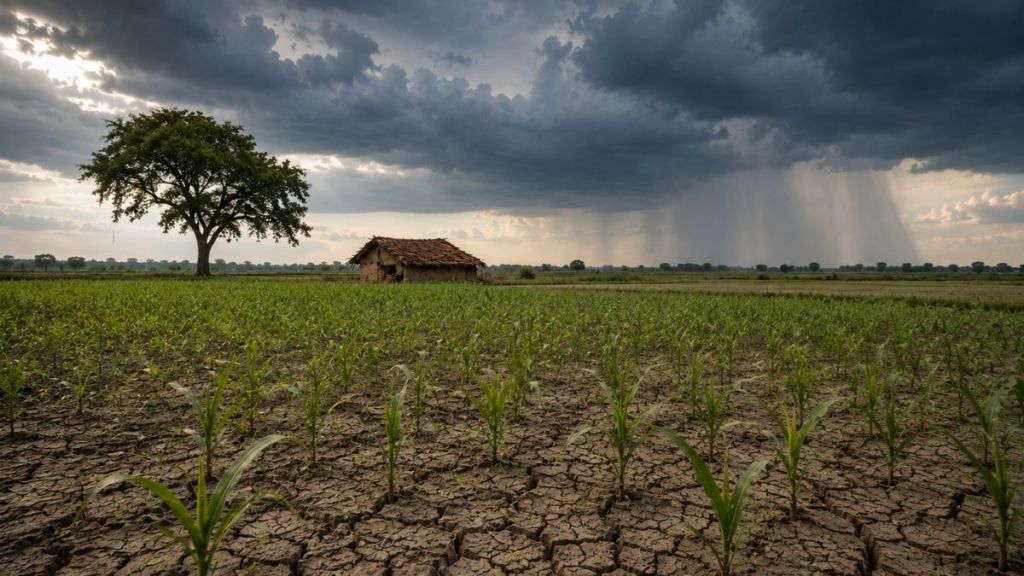

As Indian agriculture substantially depends on rain-fed systems, the spectre of drought is ever present due to fluctuations in precipitation. This year there was an El Niño-driven deficiency of 12.6% in southwest monsoon rainfall—comparable to 2014 and 2015—with many states registering a shortfall of more than 20% which is the threshold for drought. Thanks to a landmark Supreme Court ruling in 2016, a revised manual for drought management has been released by the government which should help in timely declaration of drought conditions. Only Karnataka, Maharashtra, and Andhra Pradesh have so far indicated they have been hit. Due to a 53.4% rainfall deficit from June to August, the Andhra government declared that 21 of the state’s 28 districts have been affected. In Maharashtra, after the chief minister visited affected areas, 74% of the area of the state was declared as drought-hit.
Not so long ago, widespread drought conditions would occasion serious concern at the highest levels of the government as they entailed a major political and economic crisis. Not anymore. The drought years of 2014 and 2015, for instance, were associated with a contraction in kharif food grain output but economic growth was 7.2 and 8%. Although the economy is far from being drought-proofed, there has been progress in building irrigation facilities and adoption of advanced technologies, including the growing use of climate-resistant seeds which are a priority for agri-R&D. Agriculture Minister Shivraj Singh Chouhan appears confident of handling drought conditions as districts have been identified that are vulnerable to deficiency in rainfall and contingency plans have been drawn up. Chouhan plans to visit the affected states and will have consultations on how cropping patterns can be shifted taking water availability into account.
Despite these progressive changes, however, the fortunes of agriculture still depend on its tryst with the southwest monsoon as 55 to 60% of its contribution to the economy emanates from rain-fed crop lands. A substantial rainfall deficiency that created widespread drought conditions call for a strong policy response that enhance the water security of the affected states. The biggest policy challenge in this regard is to nudge shifts to less water-intensive crops in Karnataka and Maharashtra, which has ordered a 10% water cut to prioritise drinking water needs as reservoir levels are severely depleted. With around 4% of the cropped area, sugarcane takes up 65% of the irrigation water in Maharashtra. In Karnataka, rice and sugarcane take up 70% of irrigation water. Considering the power of the sugar lobby, can Chouhan persuade these states to grow less water-intensive crops?
While providing relief is the priority, the ruling dispensation must also use its flagship employment guarantee scheme, Viksit Bharat—Guarantee for Rozgar and Ajeevika Mission (Gramin) (VB-G RAM G) to good effect in drought-affected states. While no eligible rural worker needs to remain without work even for a single day, this scheme should also ensure that the bulk of the work is in permissible projects that enhance water security. These include check dams, gully plugs, underground dykes, recharge shafts, injection wells, rejuvenation of river and other water bodies, reclamation of water-logged land, and renovation of field water distribution channels. Around 15.64 million rural households sought work in September, which was higher year-on-year by 34%. The VB-G RAM G’s true test is in alleviating distress by providing work to these growing numbers as drought stalks the countryside.