


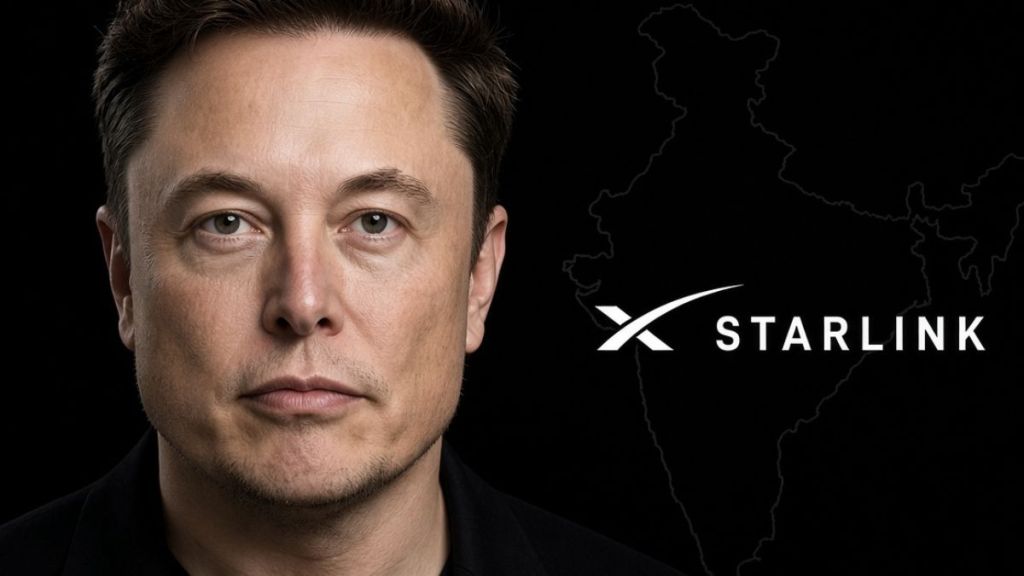

Elon Musk’s allegation that Indian oligarchs are blocking Starlink’s entry to protect their monopolies, culminating in his question whether Mukesh Ambani is the real boss of India, makes for a compelling headline but a weak argument. The SpaceX founder is certainly entitled to seek clarity on the delay in securing final approvals for his satellite broadband service, but his accusations do not stand up to scrutiny. The suggestion that Starlink is being denied entry to protect incumbent telecom operators ignores the government’s spectrum allocation policy, the commercial relationships Starlink has already forged with Indian operators, and, most importantly, the security concerns associated with satellite communications. Equally misleading is the portrayal of satellite broadband as a solution for the masses. With a potential monthly subscription of upwards of Rs 3,000 and a terminal costing around Rs 8,000, Starlink is more likely to serve affluent households and businesses than low-income consumers.
Further, the history of the satellite spectrum debate does not support Musk’s India-versus-Starlink narrative. Reliance Jio had pressed for auctioning satellite spectrum, citing the need for a level playing field with terrestrial telecom operators. Vodafone Idea took a similar position. Bharti-backed OneWeb, on the other hand, advocated administrative allocation, as did Airtel, which warned that auctions could create barriers to competition. The industry was clearly divided. The government eventually opted for administrative allocation, the approach favoured by satellite operators. Had the objective been to keep Starlink out, the government could have chosen a framework that made entry prohibitively expensive. Moreover, Starlink has signed distribution partnerships with both Airtel and Jio, which will explore retailing its equipment and services. These arrangements do not rule out competition, but they hardly suggest a unified effort by Indian telecom operators to shut Musk out.
The more substantive issue is security. Starlink, Jio Satellite Communications, and Eutelsat OneWeb have received licences, but all three are undergoing security assessments and must meet the prescribed conditions before proceeding to spectrum assignment. The government has said that the three are broadly at the same regulatory stage and termed allegations of discriminatory treatment baseless and misconceived. Unlike terrestrial networks, satellite systems operate across national boundaries and can present enforcement challenges. Low Earth orbit satellites move beyond the direct physical control that authorities can exercise over telecom towers and switching facilities. Inter-satellite links can also allow traffic to be routed between satellites, complicating efforts to enforce restrictions through ground gateways alone. The question, therefore, is not simply whether Starlink promises to comply with Indian law, but whether the government can enforce its rules during a security emergency or if the operator fails to comply. The government cannot afford to treat such concerns lightly merely because the operator is licensed in more than 165 countries.
None of this justifies keeping Starlink or any other operator waiting indefinitely. The government must complete its security assessment within a reasonable timeframe, communicate the outstanding requirements clearly, and apply the same standards to all applicants. If Starlink meets the conditions, it should be allowed to launch. Satellite broadband can fill genuine gaps in remote and difficult-to-reach areas where fibre and terrestrial networks are uneconomical, but it should not be confused with an affordable mass-market alternative. Musk’s criticism may generate attention, but it does not establish that the government is protecting a monopoly or that Ambani and Bharti Enterprises Chairman Sunil Bharti Mittal are responsible for the delay.