



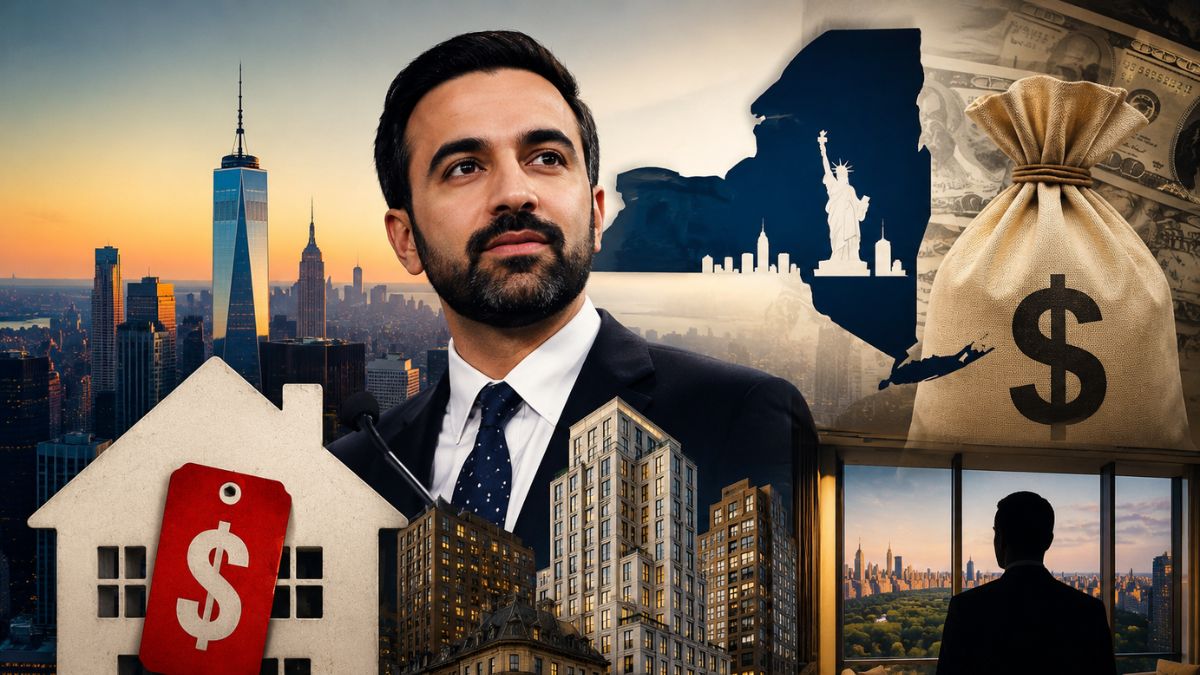
New York City’s long-debated tax on luxury second homes is no longer just a political proposal. State lawmakers have officially approved a new levy on multimillion-dollar properties that are not used as primary residences, marking a major win for efforts to make wealthy property owners contribute more to the city’s finances.
The measure, often called the “pied-a-terre tax,” is expected to generate about $500 million in revenue and help address budget pressures facing the city. It targets people who own expensive apartments, condos or homes in New York but primarily live elsewhere and therefore may not pay New York City income taxes.
Tax years in the making
The tax emerged from a joint push by New York Governor Kathy Hochul and Mayor Zohran Mamdani. However, proposals to increase income taxes on high earners did not move forward, lawmakers found support for taxing luxury second homes owned by some of the wealthiest people in the country. Supporters argue that many of these properties sit empty for much of the year while their owners benefit from city services and rising property values. The new levy is designed to ensure those owners contribute more to city finances.
The complications behind the tax system
The biggest challenge is New York City’s property valuation system. Experts say the city’s current assessment process often values condos and co-ops at a fraction of their actual market price. Because of that, the government will introduce the tax in two stages rather than applying the final rates immediately. During the first two tax years, officials will rely on existing Department of Finance assessments. Since those assessments tend to be much lower than real market values, properties with assessed values above $1 million will be taxed at significantly higher rates.
Starting in the 2028-2029 tax year, the city plans to shift toward valuations based on comparable sales. As property values used for taxation rise closer to market levels, the surcharge rates themselves will drop. “It’s incredibly complicated,” said Robert Pollack, a New York property tax attorney with Marcus and Pollack LLP told CNBC.
How much will owners pay?
Once the new valuation system is in place, second homes valued between $5 million and $15 million will face a surcharge of 0.8%. Properties worth between $15 million and $25 million will be taxed at 1.05%, while homes valued above $25 million will face a 1.3% levy. The tax is currently scheduled to remain in effect through 2031 unless lawmakers choose to renew it.
Officials estimate roughly 10,000 properties could ultimately be affected. Homeowners identified as subject to the tax will be notified and given an opportunity to prove that a property is actually their primary residence.
Ken Griffin becomes the face of the debate
The tax gained national attention when Mayor Mamdani publicly exposed a luxury apartment owned by Ken Griffin, the billionaire founder of Citadel. In a video announcing the proposal, Mamdani stood outside Griffin’s Central Park South penthouse, one of the most expensive homes ever purchased in the United States. This turned Griffin into the most visible symbol of the debate over whether ultrawealthy property owners should pay more. Griffin responded sharply, warning that such policies could discourage investment and eventually lead businesses and jobs to leave New York.
Beyond the revenue it may raise, the new tax carries strong political symbolism. It shows a growing effort by city leaders to target wealth stored in high-end real estate rather than raising taxes more broadly. For supporters, the measure is a way to ensure that owners of multimillion-dollar homes contribute more to the city they benefit from. Critics, meanwhile, see it as another sign that New York risks becoming less attractive to wealthy investors and business leaders.