



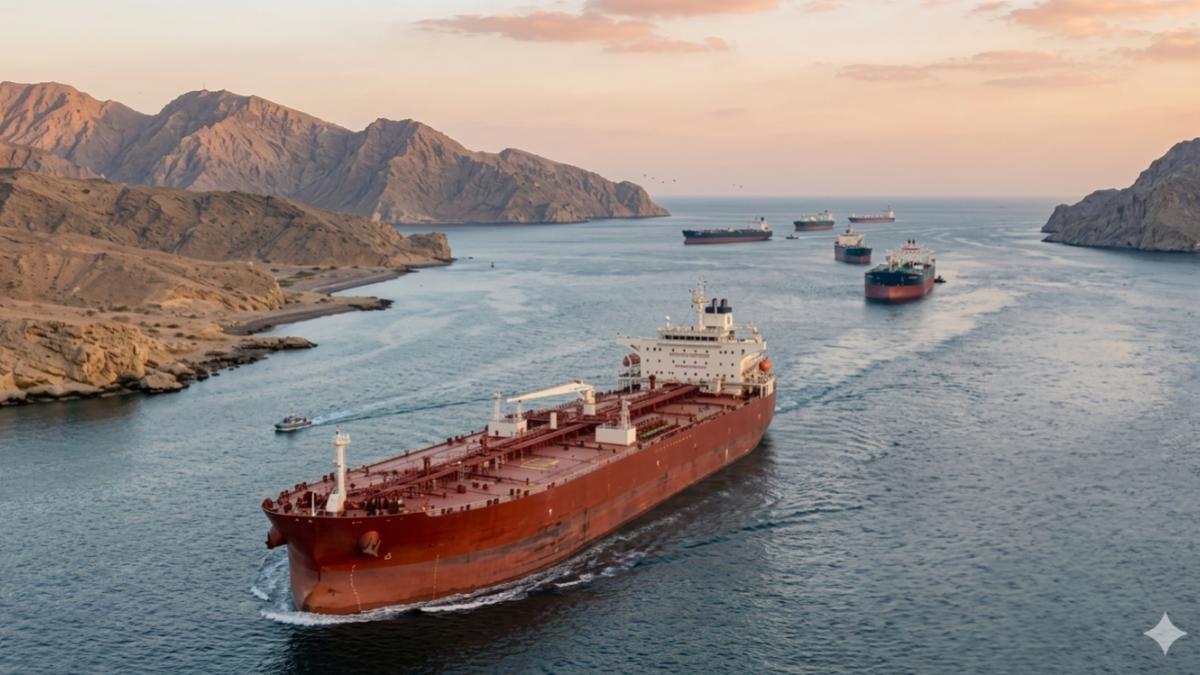
India-bound ships have led transit requests through the Strait of Hormuz since the US and Iran signed a short-lived ceasefire deal in June. The narrow waterway — through which a fifth of the global oil and natural gas supplies pass — has been a focus point in the ongoing conflict. Tehran ‘closed’ the route last week after the US launched fresh strikes, responding to Iranian attacks against vessels traversing the Strait.
The details emerged even as two Indian seafarers were in attacks on vessels in the region over the last three days. New Delhi has since ordered shipowners, ship managers and recruitment companies to avoid deploying sailors to the region. Government data indicates that India is the world’s third-largest supplier of seafarers, with more than 300,000 sailors working across global shipping fleets.
“No deployment of Indian seafarers on vessels undertaking voyages involving passage through the Strait of Hormuz until further orders,” the Directorate General of Shipping order said.
Ships to and from India lead Iran transit list
According to Iranian authorities, more than 200 vessels received passage permits and insurance coverage in the three weeks following the June 17 US-Iran peace agreement. The Persian Gulf Strait Authority was set up in May as Iran established regulatory jurisdiction over the Strait of Hormuz and outlined yet-to-be-enforced plans for tolls. Iran now expects vessels to register with the PGSA before transit, and the Revolutionary Guard Corps claimed recently that the ceasefire agreement gave Tehran control over ship traffic in the strait.
Data accessed by The Indian Express reveals that ships bound for India had a 20% share among the transit requests received by PGSA to exit the Persian Gulf. China held a marginal lead in this regard with about 21% of the requests. The rest of Asia stood at 29% while calls for intra-region movements within the Persian Gulf was 22%.
India also topped the list of transit requests to enter the Persian Gulf with a 21% share while China followed at 19%. Other Asian countries held a combined share of 20% while intra-region requests accounted for 24% and the rest of the world stood at 16%. The PGSA did not reveal how many requests it had received in totality or provide absolute figures.
Iran blames US for Hormuz insecurity as clashes escalate
The Iranian Revolutionary Guards asserted on Friday that Tehran retained full control of the Strait of Hormuz despite the recent clashes. The powerful military group also reiterated that no oil or gas would be exported through the waterway for as long as the US attacks continued. The state-run Islamic Republic of Iran Broadcasting quoted a senior IRGC spokesperson as saying on Thursday that the US and Israel had “no right” to be present in the region.
“The Islamic Republic’s sovereignty over the Strait of Hormuz is a factor of security for the entire region, not insecurity. The reason the Strait of Hormuz is becoming insecure is the presence of the American…If our infrastructure is damaged, all infrastructure in the region will be our target,” IRIB quoted Brigadier General Abolfazl Shekarchi as saying.
Meanwhile the United States Central Command said in the early hours of Friday that its Marines had boarded a vessel in the Gulf of Oman. CENTCOM also shared via X that it had redirected three other commercial vessels as part of its ongoing naval blockade against Iran.
“The Strait of Hormuz and the surrounding waters remain free and open, except for vessels attempting to violate America’s steel wall blockade,” it wrote on X.