



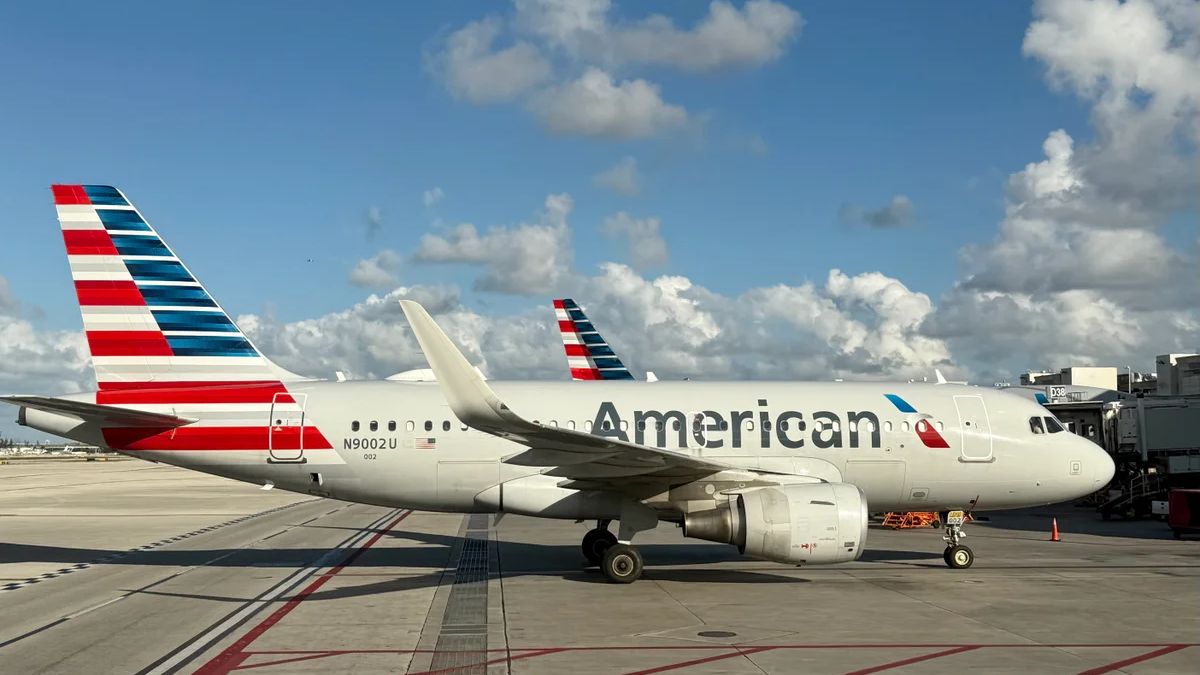
A commercial passenger flight from the US to Venezuela took off on Thursday morning. This is the first such service in nearly seven years. The restart comes as both countries slowly rebuild economic and travel ties after political changes in Venezuela earlier this year.
The inaugural American Airlines flight departed Miami at 10:16 a.m. ET and is expected to land in Caracas at 1:36 p.m. local time, completing a journey of just under three and a half hours. The aircraft is scheduled to return to Miami later in the day.
The airline is running a daily service using an Embraer 175 aircraft through its subsidiary Envoy, becoming the first US carrier to resume regular operations to Venezuela.
Celebrations at departure and arrival
There was a noticeable sense of occasion at Miami International Airport before boarding. Music played near the gate, passengers were offered arepas, and balloons in the colours of the Venezuelan flag filled the space. On the flight, only about two-thirds of the seats were occupied due to weight restrictions, with many of them taken by journalists and officials. At Simon Bolivar International Airport, the welcome was similarly festive, with a saxophonist playing “Theme from New York, New York.”
Fares and demand
Ticket prices vary depending on travel dates and booking conditions. A round-trip fare for early May departures and returns later in the month is currently priced at over $1,000 on the airline’s website.
Why flights were halted
Flights between the two countries were suspended in 2019 after the US banned both passenger and cargo services to Venezuela amid safety and political concerns. That restriction was lifted two weeks ago after US authorities said “conditions in Venezuela no longer threaten the safety and security of passengers, aircraft, and crew.” The resumption follows months of political shifts in Venezuela. Earlier this year, US forces carried out a raid in Caracas that led to the removal of former president Nicolas Maduro.
Since then, Washington has been re-engaging with an interim administration led by Delcy Rodriguez, who previously served as Maduro’s vice president. Under pressure from the US, Rodríguez has introduced reforms, including an amnesty law freeing political prisoners and changes to oil sector rules to attract foreign investment.
The US has begun easing sanctions in response, allowing Venezuela more access to global markets and foreign currency. Even so, the country’s economy remains weak after years of decline. Rodriguez has said she expects improvements in the coming months, including job growth and higher incomes.
Uncertainty over political future
As of mid-2024, about 764,000 Venezuelans were living in the US, according to the Migration Policy Institute. Washington has outlined a three-phase plan for Venezuela focused on stabilisation, recovery and a democratic transition. But there is little indication the current leadership plans to step aside or call fresh elections. “The elections will be held whenever they are, and on that day the revolutionary forces will be prepared to win as we have always won,” Interior Minister Diosdado Cabello said earlier this month.