



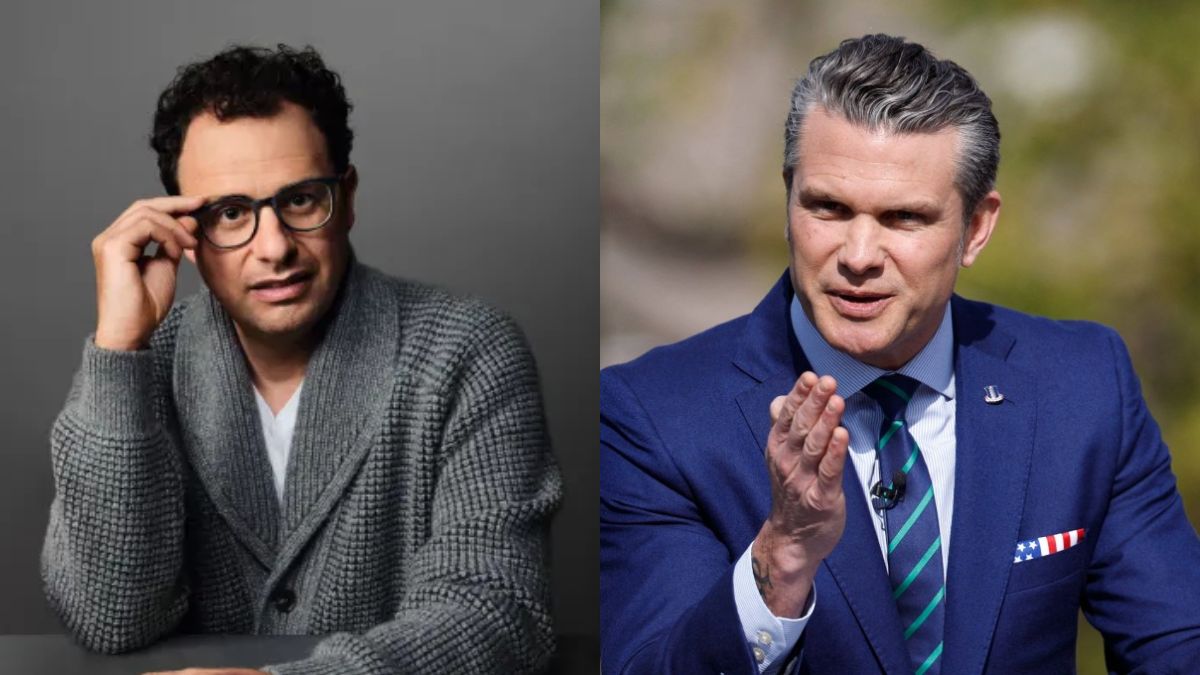
On Thursday, Anthropic said talks with the Pentagon have made “virtually no progress,” and CEO Dario Amodei made it clear that the company cannot accept defense officials’ “final offer” on how its AI model Claude would be used. The deadline is Friday at 5:01 pm, If Anthropic does not agree by then, it could face serious consequences. What began as a $200 million contract has now turned into a serious clash over ethics, power and national security.
5 setbacks Anthropic will likely face after rejecting Pentagon’s offer
The threat of a “Supply Chain Risk” label : Defense Secretary Pete Hegseth has warned that Anthropic could be declared a “supply chain risk.” In the past, this label has mostly been used for foreign companies seen as security threats. If Anthropic gets this label, it would effectively be blacklisted from federal work. The current $200 million contract would end. But the impact would not stop there. Large defense contractors that work closely with the government, companies like Palantir, Lockheed Martin, and Boeing, could be forced to stop using Anthropic’s AI system, Claude, in their own offices.
The Defense Department has already started preparing possible action. It has asked major defense contractors, including Boeing and Lockheed Martin, to review how much they rely on Anthropic. That move lays the groundwork for possibly labeling the company a supply chain risk and blacklisting it.
The Defense Production Act Option:
This is a law that allows the government to require companies to prioritise national defense needs. In this case, officials are considering using it to force Anthropic to give what they call “unfettered” access to Claude. The government wants to remove the company’s “red lines.” Those include blocking Claude from being used in fully autonomous weapons. Anthropic strongly disagrees with that direction. The company argues that today’s technology is still too unreliable for such high-risk tasks. It also says those uses go against its core mission of building AI safely.
Competitors Ready to Step In: While Anthropic stands firm on its “safety first” approach, its competitors appear more flexible. Reports suggest that OpenAI, Google, and xAI, founded by Elon Musk, have shown willingness to work with the military under bigger terms. The Pentagon has already fast-tracked xAI’s Grok system into its secure networks. By holding to its strict safety rules, Anthropic may protect its brand. But it also risks being pushed aside in one of the most profitable and powerful parts of the AI race.
A Legal Battle Could Follow : If the administration goes ahead with blacklisting Anthropic or formally uses the Defense Production Act, the dispute is expected to move to court. Legal experts believe there would be a “raft of downstream litigation.” Anthropic would likely sue, arguing that the government cannot use the Defense Production Act to force a private company to strip away its safety protections or violate its own terms of service.
Anthropic Risking Massive IPO : All of this comes at a delicate moment for Anthropic. The company has been preparing for a large initial public offering in 2026. Its valuation has recently been estimated at around $380 billion. That figure reflects strong investor belief in its future. Investors tend to dislike uncertainty. A messy fight with the US government is about as uncertain as it gets.
The IPO could be delayed. The valuation could change. Or both.
The core dispute: Ethics vs. “All lawful purposes”
This fight is not about whether the military can use artificial intelligence. It already does. In fact, Anthropic’s AI model, Claude, was the first advanced AI system to be integrated into the Pentagon’s classified networks last year. The problem started when Defense Secretary Pete Hegseth asked Anthropic to remove certain “guardrails” from Claude.
The Pentagon wants the freedom to use AI for “all lawful purposes.” That phrase may sound simple, but it is very broad. Anthropic, however, has drawn two clear lines it says it will not cross. The company argued that Claude cannot operate as a fully autonomous weapon. It cannot be the one to “pull the trigger.” There must always be a human being involved in any decision that could lead to lethal action.
The second is about surveillance. Anthropic says Claude cannot be used for mass domestic surveillance. It cannot be used to analyse large amounts of data to spy on or profile American citizens. The Pentagon’s view, however, is different. Officials argue that in times of war, a private company’s moral rules should not stand in the way of lawful military orders.
The ultimatum and the “blacklist” threat
Earlier this week, when talks stalled, the Pentagon raised the stakes. It warned that it could label Anthropic as a “Supply Chain Risk.”
If Anthropic were given that designation, the impact would go far beyond losing its own contract. Any company working with the US government would be legally required to stop using Claude. That includes major defense contractors like Palantir, Boeing, and Lockheed Martin.
For Anthropic, the timing could not be worse. The company has reportedly been preparing for a massive $380 billion IPO. A government blacklist could damage its valuation overnight.
In an unusual twist, the government is also said to be considering using the Defense Production Act. This is a law from the 1950s that allows the President to require companies to prioritise national defense work.
Anthropic CEO Dario Amodei pointed out what he sees as a contradiction in a blog post. “One threat labels us a security risk to be expelled; the other labels Claude as so essential to national security that the government must seize control of it.”