



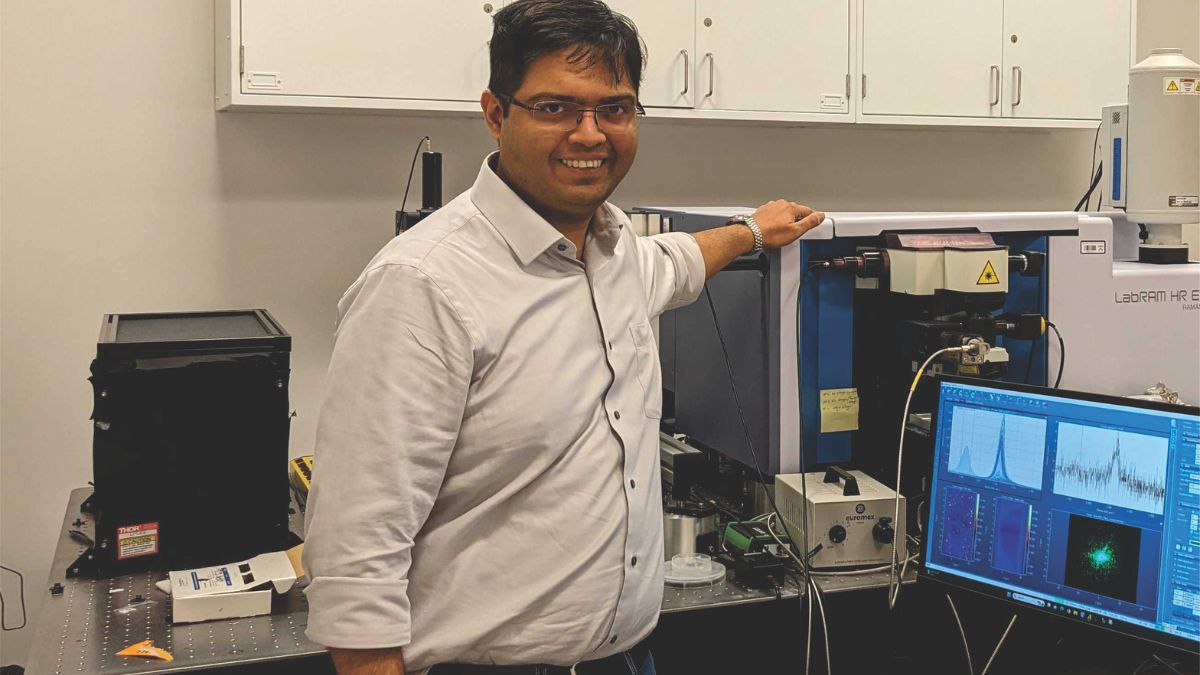
An Indian-origin scientist who co-founded a semiconductor startup working on next-generation memory chips for AI hardware and extreme environments has now landed one of America’s top quantum research appointments. In an exclusive conversation with financialexpress.com, Deep Jariwala said his journey from suburban Mumbai to the forefront of US science was shaped by curiosity, persistence and a willingness to take the less-travelled path.
Jariwala, known globally for his work in quantum materials, microelectronics and advanced computing technologies, was recently appointed Governor’s Chair for Quantum Devices by the University of Tennessee, Knoxville and Oak Ridge National Laboratory (ORNL). He will formally begin the role in January 2027.
But before the global recognition, startup success and major research titles, he was a child in Mumbai fascinated by how things worked. Born into a family from Valsad, Gujarat, and raised in suburban Mumbai, Jariwala said science drew him in early. “I developed a strong interest in science around the time I was in fifth grade,” he said.
Building Agni Semiconductor
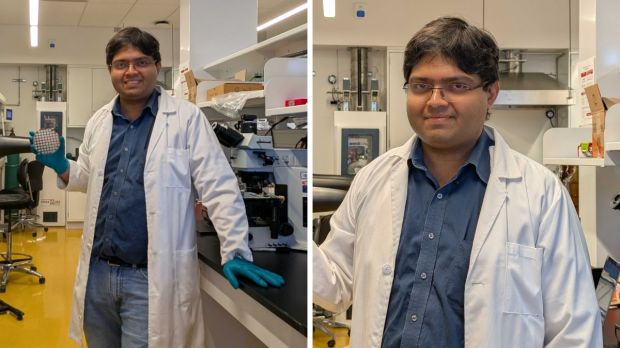
After later becoming a US citizen, Jariwala co-founded Agni Semiconductor with colleagues Eric Stach and Troy Olsson. The firm is focused on semiconductor products for AI hardware, edge computing and electronics designed for harsh environments. “I co-founded Agni Semiconductor with my colleagues Eric Stach and Troy Olsson to translate our ferroelectric memory research into scalable, commercial semiconductor products,” he told financialexpress.com.
According to him, the long-term immigration stability gave him the confidence to take entrepreneurial risks. “This stability allowed me to pursue that path without the restrictions that many international researchers face.”
Over the years, Jariwala has published more than 180 research papers, earned over 26,000 citations, and secured multiple patents. One of his standout achievements is a ferroelectric diode memory device based on aluminium scandium nitride (AlScN). The device is compatible with CMOS technology and can function at temperatures up to 600°C, something highly unusual for traditional memory systems.
Early work in this area won the 2022 Bell Labs Prize and helped launch Agni Semiconductor. “We believe it has the potential to become one of the world’s most advanced data storage and computing technologies,” he said.
The IIT years that shaped his mindset
Unsure of what career paths science could offer, his family watched as he pushed ahead, studying with friends for the IIT-JEE entrance exam. In 2006, he cracked and entered IIT-BHU to study metallurgical engineering.
“Nobody on my dad’s side of the family had pursued science or engineering, so they were unsure about potential career paths. But I persisted and surrounded myself with like-minded friends who studied together for the IIT-JEE. I successfully cracked the IIT-JEE in 2006 (a big deal at that time) and went to IIT-BHU for metallurgical engineering, knowing I wanted to study either materials or electronics,” Jariwala told financialexpress.com
Jariwala revealed how IIT-BHU helped build the mindset that later guided his career. Professors such as GVS Sastry and NK Mukhopadhyay taught him the value of strong basics, independent thinking, and not giving up when work gets difficult. “That taught me the value of persistence and self-initiated research,” he recalled, “and also that research capable of moving the needle on any front is inherently challenging.” Those lessons stayed with him.
A summer in America changed everything
In 2008, Jariwala got a summer internship at Rice University through support from one of his IIT mentors. That experience changed the direction of his life. At Rice, he worked with well-known nanomaterials expert Pulickel Ajayan. Until then, Jariwala had mostly worked on computational simulations. But in the US lab, he moved into hands-on experimental work using chemical vapour deposition.
He also co-authored a Nature Materials cover paper on hybridised boron nitride and graphene domains. The paper was widely cited and opened new doors for him. More importantly, it convinced him that a PhD was the next step.
Jariwala later joined Northwestern University for his doctorate in materials science and engineering. He arrived in the United States on a regular F-1 student visa.
He says the hardest part was not immigration paperwork, but adjusting to a completely different academic culture. Moving from the structured and intense life of Varanasi to the fast, independent environment of a top US university took time.
“The transition was fairly standard for an Indian student coming to the US for graduate studies. I arrived on an F-1 student visa, which is the typical route. The visa process at the time was straightforward, especially for students going to well-known PhD programs in STEM fields. The bigger adjustment was cultural, coming from the relatively sheltered environment of IIT-BHU in Varanasi to the fast-paced academic world of Northwestern in Chicago was a significant shift. “
Later, he received an EB-1 green card through premium processing, giving him permanent residency early in his career. That changed a lot for him. “Having permanent residency early on was a significant advantage,” Jariwala said.
It gave him freedom to apply for defence-related grants, travel internationally and take business risks without fear. “For academic researchers, green card status removes several practical constraints: it makes it easier to serve as a principal investigator on certain government grants, especially defence-related ones, eliminates the need for visa sponsorship when transitioning between institutions, simplifies international travel for conferences and provides the stability to think long-term about one’s career in the US,” Jariwala told financialexpress.com.
The difficult pandemic years
By 2018, Jariwala had joined the University of Pennsylvania, where he served as associate professor and Peter and Susanne Armstrong Distinguished Scholar in electrical and systems engineering and materials science and engineering.
Then came COVID-19. Just as his research group was gaining momentum, labs were shut down. He said keeping students and postdoctoral researchers motivated during that uncertain period was “very difficult.” But it also reminded him of one simple lesson: “never give up and always keep motivation high.” His team bounced back eventually, producing major publications and winning awards.
A major new role in Tennessee
On April 8, 2026, the University of Tennessee, Knoxville, and Oak Ridge National Laboratory (ORNL) announced that he had been appointed the UT-ORNL Governor’s Chair for Quantum Devices.
“I expect this will change my research approach in a few key ways. First, I will be able to tackle problems that require infrastructure at a scale beyond what universities can typically offer. Second, the national lab environment is closer to translational and applied research, which complements the more fundamental work we do in academia. Third, I envision a constant exchange of people and information between UT and ORNL to expose students and postdocs to both environments,” he said.
He continued, “Considering recent national priorities in the US and the global research landscape at the nexus of quantum materials, microelectronics and computing hardware, this is truly a once-in-a-generation opportunity, and I am excited to take it and see what we can do.”
Advice to young Indian researchers
For students in India dreaming of careers in semiconductors, quantum materials or advanced tech, Jariwala has a clear message: “Don’t be afraid to walk the road less travelled,” he said.
He also warned against chasing prestige through journal names, conference labels or academic metrics. “When AI can generate and analyse data at scale, the premium will shift from publishing to actually solving hard, consequential problems,” he said.
He believes India is at a major turning point thanks to initiatives such as the India Semiconductor Mission and National Quantum Mission, but says the country must build unique strengths rather than imitate established global leaders.