



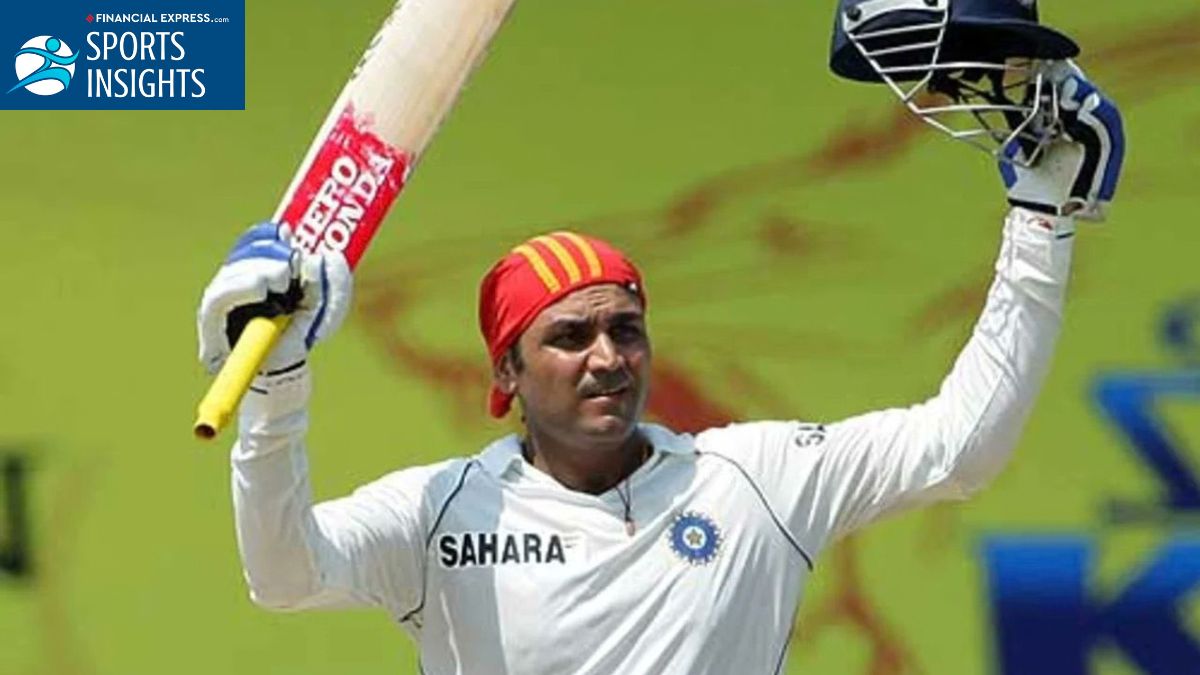
There is a particular kind of wisdom that comes from growing up in a place where people get killed over petty disputes. You learn to look at what is in front of you. Nothing more.
Virender Sehwag grew up in Najafgarh when it was still Delhi’s badlands. Gang wars were common. This was his classroom. Not the coaching manuals. Not the sports psychology books.
Just the hard lesson that you cannot control what happens outside the boundary rope. You can only control what you do with the ball that is bowled at you.
That lesson made him one of cricket’s greatest destroyers. It also made him one of India’s smartest athlete-entrepreneurs. His net worth sits somewhere between Rs 340 and Rs 350 crore. But the money is not the story.
The story is how a man who never believed in “MBA mindset”, who was called “Bholi” (the simpleton) by his first coach, who batted like he was in a hurry to catch a bus, built a business empire that spans education, sportswear, organic farming, and venture capital.
This is not a tale of transformation. Sehwag did not transform. He just kept being himself in different rooms.
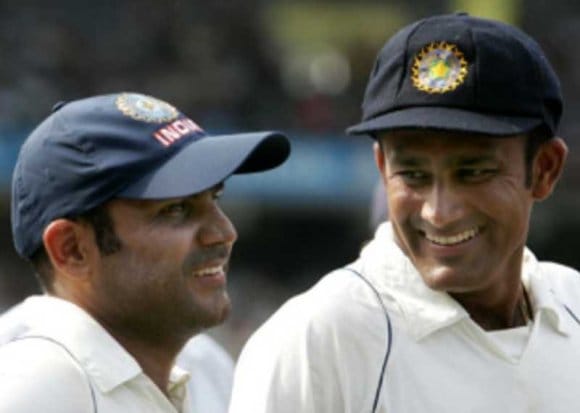
The Seed of Obsession and Early Obstacles
Sehwag was born in October 1978 into a joint family that ran a grain business. Sixteen people under one roof. Uncles, aunts, cousins, everyone eating together, fighting together, surviving together. His father Krishan sold grain. His mother Krishna managed the chaos of a large household.
The family was Jat. Practical people. People who believed in land, in hard work, in not showing off. These values stuck. Even now, living in a Rs 130 crore mansion in Hauz Khas, Sehwag starts his day with prayers and feeding his dogs. The flashiest batsman of his generation lives a life of deliberate routine.
His father gave him a toy bat when he was seven months old. By the time he could walk, he was swinging at things. At fourteen, he broke a tooth playing cricket. His father tried to stop him. Said it was too dangerous. Too distracting from studies. His mother intervened. She won. That intervention saved Indian cricket.
Sehwag was never good at school. Arora Vidya School and later Jamia Milia Islamia saw a boy who was present in body but elsewhere in mind. He was already playing serious cricket by then. Hitting grown men for sixes in local tournaments. Word spread about a thin kid from Najafgarh who did not respect bowling.
Then came the moment that defined everything. Sehwag’s father took him to AN Sharma’s academy in Vikaspuri. He carried a one-kilogram box of ladoos. He gave the coach eleven rupees. Then he gave him his son. “From today, he is your son,” he said.
Sharma understood something important. Sehwag could not be coached in the normal way. You could not tell him to keep his elbow high or his head still. He had to be allowed to hit. Sharma guided rather than corrected. This was rare in Indian cricket then. It remains rare now.
This was the Guru-Shishya tradition. Complete surrender to a teacher. Complete trust that the teacher would protect and guide. Sehwag has operated on this model ever since. He finds people he trusts. He gives them everything. He does not micromanage. He does not second-guess.
The Najafgarh Code: Learning to Trust What You See
At the academy, they called him Bholi because of his innocent face. But his batting was violent. In one school match, his team was chasing 150. The coach had to leave for another venue. By the time the coach’s taxi reached the second ground, Sehwag was already there.
He had finished the match alone. Bholi became Viru that day. The destroyer was born.
The Najafgarh streets taught him another thing. He played cricket with strangers. He did not ask their names. He did not ask their business. Later he would see their faces in newspaper photos. Wanted men. Dead men.
He learned not to judge by background. A man with a shady past could bowl a good ball. A respectable businessman could drop a catch. You played the ball, not the man.
This became his business philosophy. He evaluates founders by their energy and clarity, not their CVs. He looks at products by their utility, not their marketing. He stripped away the noise that confuses most investors.
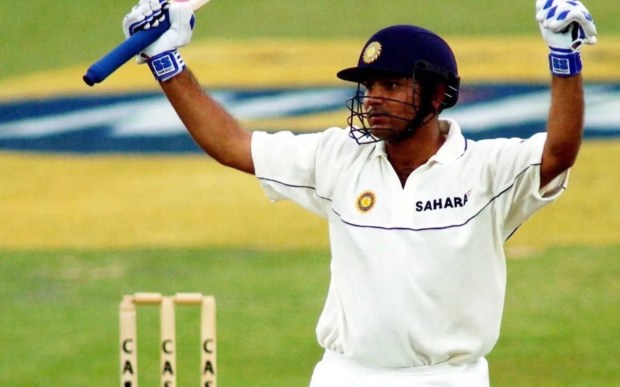
The Test Revolutionary: Why Complication Kills Performance
When Sehwag debuted for India in Tests in 2001, Test cricket was a conservative sport. Openers were supposed to see off the new ball. Survive the first hour. Wear down the bowlers. Sehwag did the opposite. He tried to hit the first ball for four. Sometimes he succeeded. Sometimes he got out. Either way, the bowler knew he was in a fight.
His numbers are absurd. 8,586 Test runs at nearly 50. A strike rate of 82 in an era when 50 was considered attacking. Two triple centuries. The first Indian to score a triple hundred in Tests. The highest score by an Indian in Tests – 319.
But statistics miss the point. The point was psychological. Sehwag made the bowler feel small. He simplified the contest to its essence. See ball. Hit ball. This sounds stupid when you write it down. It sounded stupid when he explained it to journalists. But it was actually a sophisticated mental strategy.
Cricket is a game of fear. Fear of the short ball. Fear of failure. Fear of letting your team down. Fear makes you defensive. Defence leads to wickets. Sehwag removed fear by removing thought. He did not worry about the last ball or the next ball. Only this ball. This moment.
He explained it simply. “Whether I score zero or 300, I remain happy. I look forward to the next match.” This is not natural temperament. This is trained resilience. He taught himself to disconnect self-worth from performance. This is what athletes now pay psychologists to learn. Sehwag figured it out in Najafgarh.
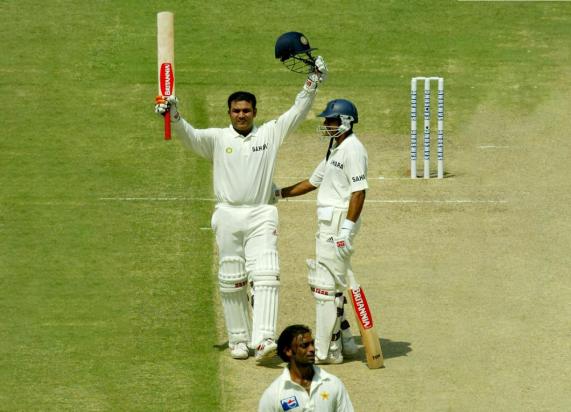
His famous moments reveal the method. In Multan in 2004, he was batting with Sachin Tendulkar on 295. Six runs needed for the triple century. Saqlain Mushtaq was bowling. Sehwag hit him for six. Tendulkar had advised him to take a single. Get there safely. Sehwag ignored him. Not from arrogance. From clarity. He saw the ball. He hit the ball. Why complicate it?
At Leicestershire, he faced Abdul Razzaq’s reverse swing. The ball was moving late in the air. Impossible to play. Sehwag hit it out of the stadium. Forced a ball change. New balls do not swing for twenty overs. He told his partner Jeremy Snape that they had two hours of easy batting now. Problem solved. Direct action beats analysis.
His Ranji Trophy partner Aakash Chopra noticed something deeper. Sehwag would deliberately miss balls early in his innings. Make the bowler think he was struggling. Lure him into bowling fuller. Then attack. This was calculation disguised as carelessness. The simpleton image was itself a tactic.
These skills transferred directly to business. The ability to read situations quickly. The willingness to act on instinct. The tolerance for failure. The disregard for conventional wisdom. Every startup founder he now backs benefits from this mental framework.
The Education Gambit: Building What He Did Not Have
Sehwag International School in Jhajjar, Haryana, opened in 2011. It sits on 23 acres given by the state government after his second triple century. He has put Rs 20 to Rs 30 crore of his own money into it. Taken loans. Risked his capital. For what?
For a promise. His father had watched him travel five hours daily for cricket training. School in Najafgarh. Practice in Vikaspuri. Back home at midnight. He asked Sehwag to build a place where children would not have to choose between books and sport. Where they could do both properly.
The school is not fancy in the Delhi private school sense. It is serious. International standard cricket grounds. Squash courts. Swimming pools. But strict rules. One ten-minute phone call per week for students. No mobile phones. No PSPs. No gadgets. Sehwag believes focus is a muscle that atrophies with distraction.
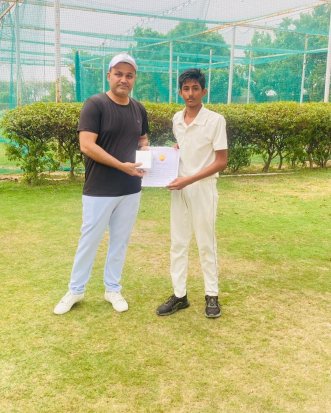
He designed the curriculum around seven attributes. He calls it the Power of 7. Resilience. Decision-making. Obstacle management. Humility. Ethics. Self-reliance. Constructive focus. Each attribute has behavioural implications. What you should do. What you should not do.
The “Sehwag Filter” is simple. Do not get paralysed by failure. Do not make blind decisions. Do not blame others. Do not try to score at others’ expense. Do not break commitments. Do not expect others to act for you. Do not procrastinate.
This is not business school language. This is Najafgarh language. Direct. Unadorned. True.
The school represents his largest personal investment of time and emotion. More than the money, he gives his reputation. His presence at events. His phone number to parents. His word that the institution will not compromise.
VS by Sehwag: Finding the Gap Everyone Missed
In 2020, Sehwag launched his sportswear brand. The market was crowded. Nike. Adidas. Puma. Decathlon. Local brands like HRX. Why add another?
Because he saw a gap. Quality sportswear in India was either expensive imported stuff or cheap local products that fell apart. The middle class, his core audience, compromised. They bought fakes or they bought basic. Sehwag decided to offer technical quality at 40-50 percent below global brands.
The price range is Rs 499 to Rs 1,099. The designs are simple. Solid colours mostly. No flashy logos. Sehwag himself prefers plain clothes. The brand reflects this. The loyalty programme is called UPR-CUT. Named after his signature shot. Emotional connection through memory.
He runs this through Viru Retail Pvt Ltd, a joint venture with Stitched Textiles. He is not just lending his name. He is involved in product decisions. Pricing strategy. Marketing angles. He leverages his Hindi-speaking fanbase in small towns. These are customers global brands struggle to reach. Sehwag speaks their language literally and figuratively.
The bet is that India’s fitness culture is growing but its wallet is not growing as fast. People want to look like they exercise. They need clothes that work for actual exercise but do not cost a month’s salary. VS by Sehwag fills this space.
The Venture Capitalist: Betting on People Who Remind Him of Himself
Sehwag’s investment strategy has evolved. He started with safe endorsements. Adidas, Boost, Hero Honda, Samsung, Zandu Balm, JK Cements. Brands that paid well and needed his face. He still does these.
As per estimated sources in 2020-21, His charges were around Rs 2.5 Crore per year for a deal. His annual endorsement income was estimated at Rs 30 Crore.
But the interesting money is going elsewhere now.
In April 2023, he invested in Two Brothers Organic Farms. TBOF is run by Satyajit and Ajinkya Hange. Bankers who quit to return to their village in Pune. Started organic farming. Built a brand around clean food and rural employment. Sehwag met them. Heard their story. Saw their operation. Invested.
Why? Partly because he owns a farmhouse in Haryana. He understands land. Partly because he believes in their mission. But mostly because they reminded him of himself. Two guys from nowhere who decided to do something differently. Who trusted their instinct over conventional career paths.
Then in August 2024, he put money into T9L QUBE. This is a venture builder. It incubates early-stage startups. Provides capital, mentorship, operational support.
Sehwag’s role is specific. He is not a passive investor. He acts as a “third co-founder.” He provides the psychological framework. The resilience training. The simplification methodology.
He compares it directly to his relationship with AN Sharma. Sharma saw something in a raw boy from Najafgarh. Backed him when others might have dismissed him as too unorthodox. T9L QUBE does the same for founders who do not fit the standard VC pattern.
Sehwag evaluates them personally. Looks for the same clarity he had. The same refusal to overcomplicate.
The portfolio includes Docquity, a platform for doctors, and NirogStreet, which works in traditional medicine. Real problems. Real solutions. No crypto nonsense. No metaverse hype. Just businesses that solve actual Indian problems.
The Commentary Economy: Authenticity as Asset
Sehwag’s post-playing career could have been quiet. Many retired cricketers fade. They become selectors or coaches or disappear. Sehwag became louder.
Broadcasters hired him because he spoke differently. Not the formal English of traditional commentators. Not the technical jargon of former players trying to sound expert. Just simple Hindi. Direct observations. Sometimes funny. Sometimes brutal. Always honest.
Viewers felt he was sitting with them. Chatting in their living room. This authenticity became valuable. In 2024, he reportedly earned Rs 24 crore just from social media. Instagram posts. Twitter content. YouTube collaborations. His following is massive. 21 million on X. 8 million on Instagram.
But the money follows the authenticity, not the other way around. He posts what he thinks. Cricket opinions. Jokes. Occasional political comments. He does not use a social media manager to sanitise everything. This risk pays off. Brands pay premium for access to an audience that trusts the messenger.
His commentary style mirrors his batting. No preparation. No notes. Just react to what happens. Sometimes he gets it wrong. He does not mind. The next ball is coming.
The Quiet Philanthropy: Impact Without Announcement
Sehwag runs the Virender Sehwag Foundation. It focuses on education, health, and grassroots sports. But he does not talk about it much. During COVID-19, he arranged free meals for patients in Delhi-NCR. Supplied oxygen concentrators. Did not issue press releases. Did not post constantly about his generosity.
This aligns with his father’s values. The Jat culture of doing your duty without shouting about it. His philanthropy is structured but low-key. Scholarships for poor students at his school. Medical camps in Haryana. Support for young cricketers who cannot afford equipment.
He tells his own sons something similar. Being Virender Sehwag’s sons gives them nothing. No advantage. No shortcut. They must find their own path. This sounds harsh. It is actually loving. He is protecting them from the pressure of his shadow. Teaching them self-reliance as his mother taught him.
Conclusion: The Uncluttered Empire
Sehwag’s business portfolio looks diverse. Schools. Sportswear. Organic farms. Tech startups. Commentary. Social media. But there is a single thread. Every venture reflects his core insight. Complexity is the enemy. Trust your eyes. Back people with clarity. Solve real problems simply.
He did not hire McKinsey to develop this strategy. He did not get an MBA. He just kept applying the Najafgarh code. See the ball. Hit the ball. Do not worry about the last ball. Do not fear the next ball.
In an era of over analysis, of data-driven paralysis, of consultants complicating simple truths, Sehwag’s approach looks revolutionary. It is not. It is ancient. It is how merchants in his father’s grain market operated. How farmers in Haryana still operate. Look at what is in front of you. Make a decision. Live with the result. Move on.
The Nawab of Najafgarh built a ₹350 crore empire not by becoming sophisticated but by refusing to. He stayed Bholi. The simpleton who sees things clearly while others get lost in detail. In cricket, this made him a genius. In business, it makes him something rarer. A wealthy man who still makes sense.
Editorial Note: This is an independent profile. Virender Sehwag and their representatives were contacted but did not respond prior to the time of publication. In the absence of direct comment, this article was reported using publicly available records and regulatory filings, where applicable. This content was produced in accordance with FinancialExpress.com’s editorial guidelines.