



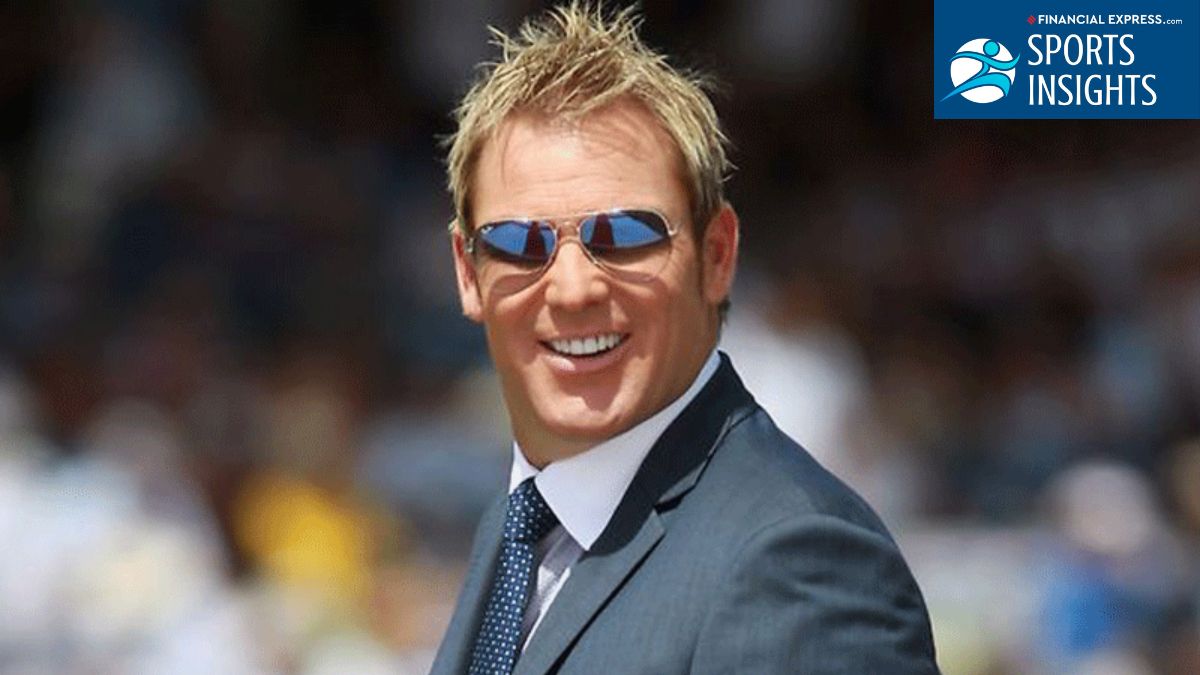
Shane Warne died owing money on his credit card. His credit card balance was AUD 17,537 (approximately ₹12 lakh). His estate was worth AUD 20 million (₹140 crores). And somewhere, in a franchise he had not played for in over a decade, sat a 3% stake that nobody fully understood yet.
That stake, by March 2026, was worth AUD 74 million (₹500 crores at current exchange rate). More than 3 times everything else he had ever earned, saved, or bought put together.
This is not a story about cricket. It is about what happens when a man who spent his whole career outwitting batsmen decides to do the same thing to a balance sheet.
The Auction Nobody Took Seriously
When the BCCI launched the IPL in 2008, nobody really knew what they had. The franchise model was American-style glamour wrapped in Indian chaos. Nobody had run a T20 league at this scale. Nobody knew if it would last 3 seasons or 30.
Shane Warne had retired from international cricket 12 months earlier. Australia had just beaten England 5-0. He had bowled himself into history and out of the game. At the player auction, the big franchises had bigger names to chase.
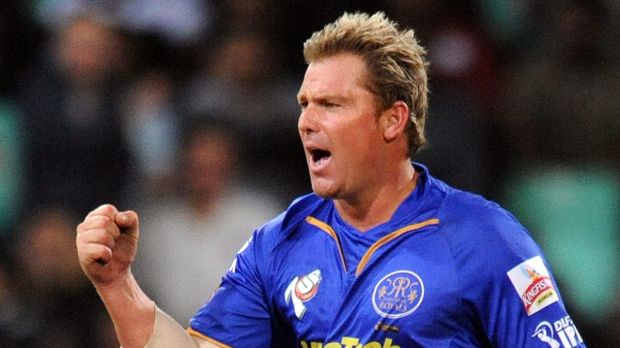
Warne was picked up by Rajasthan Royals, a small-budget franchise owned by a British-Indian businessman named Manoj Badale, for USD 657,000 (₹6.2 cr at current rates).
But here is where it gets interesting.
Warne did not just take the money and sign the form. He looked at this new, messy, unproven tournament and thought: what do these people actually need? They needed someone to run the whole cricket operation.
Captain, coach, selector, dressing room manager, press face. All of it. He offered to be all of that. And instead of asking for more cash, he asked for a slice.
0.75% of the franchise for every year he played. If he stayed 4 years, he would walk away owning 3% of the club.
In 2008, Emerging Media bought the Rajasthan Royals for USD 67 million. Warne’s 3% at that moment was worth roughly USD 2 million. Decent, but not extraordinary. What Warne had actually done was buy himself a seat on a rocket before anyone knew the rocket could fly.
The Dressing Room in Jaipur
The Royals lost their first match by 9 wickets. Delhi thumped them.
When Warne walked into the dressing room, some of the young Indian players were crying. These were boys from small towns who had made it to the IPL and were now staring at a crushing defeat. Warne looked at them and said, roughly: has someone died? We lost a cricket match. We have 13 more.
Then he handed each of them a piece of paper. On it was a title and a description. Not a job description in the corporate sense. More like a role in a film.
Mohammad Kaif was “The Guiding Light.” Ravindra Jadeja, barely 20 years old, was “The Natural.” Munaf Patel was “The Pace Setter.” Each player knew exactly what was expected of them. Not in a boardroom way. In a dressing room way.
And for anyone who was late to the bus? They had to carry a large pink doll everywhere. Through hotel lobbies. Through airports. Through cricket stadiums. Embarrassing enough to never be late again. Simple enough to laugh about.
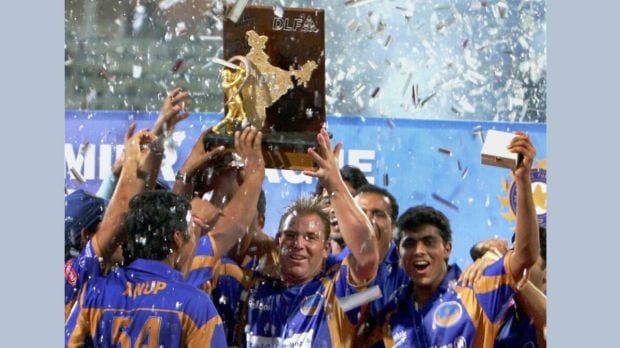
That Rajasthan Royals team won the inaugural IPL. The lowest-budget squad, with the most foreign players that anyone had written off, won the whole thing.
What Warne understood about that team, he also understood about his own career. You cannot win from the outside. You have to own a stake in the outcome.
The Magician’s Trick
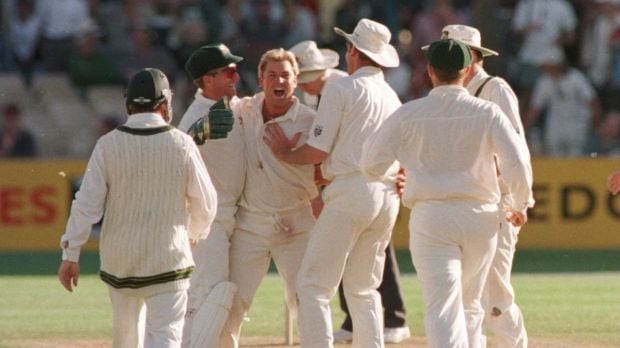
There is a story about Warne at the SCG against Pakistan in 1995. Basit Ali was batting cautiously, just trying to survive to the end of the day. Warne walked over to wicketkeeper Ian Healy and they had a long, slow conversation at mid-pitch.
Broadcasters speculated about leg-side fields and complex plans. What were they actually discussing? Nothing. Warne was keeping Ali standing in the heat for 4 extra minutes. Building pressure in the batsman’s head without bowling a single ball.
Healy walked back and said two words: “rip a leggy.” Warne bowled a sharp leg-break outside leg stump. Ali, tired and mentally fried, got clean bowled through his legs.
The trick was never the ball. The trick was everything that came before the ball.
In the IPL negotiation, the trick was also never the money. The trick was what Warne offered that nobody else was offering.
Total control, total accountability, in exchange for a fraction of ownership. The franchise got a captain-coach-director all at once. Warne got a percentage of something that had nowhere to go but up.
When the Equity Outlives the Man
Warne died in Thailand on March 4, 2022. He was 52.
The gin brand he had co-founded stopped production within weeks. SevenZeroEight Gin, named after his 708 Test wickets, had been winning awards.
It had nationwide distribution in Australia. Without Warne’s face on it, his energy behind it, his willingness to show up at launches and talk about it, it was just liquid in a bottle.
By September 2022, the company was in administration. It owed AUD 2.6 million to 21 creditors. It had nearly AUD 1 million worth of gin sitting in a warehouse that nobody was buying fast enough.
The Rajasthan Royals stake? That continued to grow.
Warne’s estate, as valued in the Victoria probate documents, came to AUD 20.7 million (₹141.75 crore) . A house in Portsea worth AUD 6.5 million (₹44.51 crore) . AUD 5 million (₹34.24 crore) in bank accounts. Share portfolios. Personal items. A Mercedes worth AUD 350,000 that went to his son Jackson. Credit card debt of AUD 17,537.
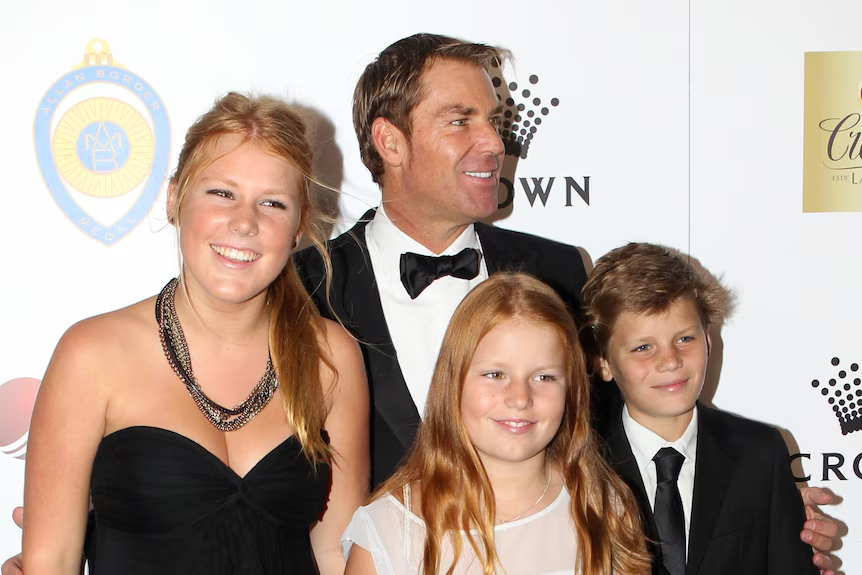
Three children: Jackson, Brooke, Summer. Each received 31% of the estate. His brother Jason got 2%. His niece and nephew shared 5%.
Good money. Not generational money.
Then March 2026 arrives. A US-based consortium led by entrepreneur Kal Somani buys the Rajasthan Royals for USD 1.63 billion. Warne’s 3% stake, frozen at the moment he retired from playing in 2011, is now worth USD 48.9 million. Roughly AUD 74 million. Roughly ₹ 450 crore.
His three children, the ones he bequeathed 31% each of a AUD 20 million estate, now stand to receive a share of something that is worth more than 3 times what their father accumulated in an entire lifetime of playing cricket, advertising things, running businesses, and investing money.
The equity did not need him to show up. It did not need him to be alive. It just needed time.
The Difference Between a Fee and a Stake
Warne’s cricket career made him comfortable. By 1996, at 27, he was earning AUD 875,000 (₹2.5 crore) a year. His Nike deal alone dwarfed his cricket board contract. He was in the Official All Star Cafe with Tiger Woods and Andre Agassi.
In 1997, English county clubs offered him up to £1 million (₹5.4 crore) to play. Later, the Melbourne Stars paid him USD 500,000 for just 9 BBL matches. That is USD 3,000 per ball.
He was one of the most commercially valuable cricketers in the world.
But all of that required him to perform. Every endorsement, every appearance, every speaking fee was attached to the man who was alive and active and interesting. The moment he retired or, worse, the moment he died, those income streams dried up.
The IPL stake was different. It was not attached to his performance. It was attached to the performance of the league itself. And the league, as it turned out, became one of the most valuable sports properties on the planet.
By 2019, Warne was already publicly noting that his 3% of a USD 400 million franchise was “all right.” That was a gentle understatement from a man who had accepted USD 657,000 in salary 11 years earlier. By 2026, the understatement had grown into something historic.
What the Pink Doll Actually Taught
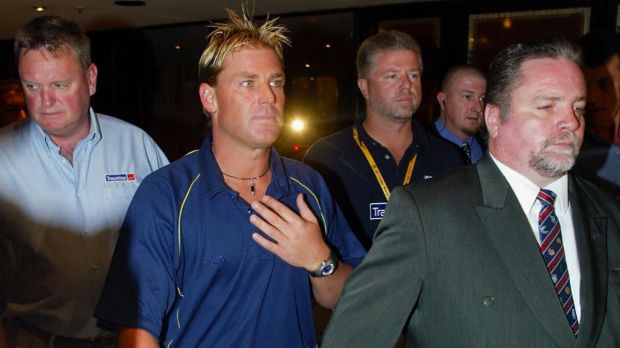
There is a version of Warne that the tabloids preferred. The one with the scandals, the bookmaker payments, the drug ban, the failed marriages, the love affairs. All of that was real.
He accepted AUD payments from a bookmaker in Sri Lanka for weather and pitch information, lost the money at a casino, and set off one of the biggest controversies in Australian cricket. He was banned for 12 months in 2003 for taking a diuretic.
He was not a saint. He never claimed to be.
But the man who told crying teenagers in Jaipur that nobody had died, who gave Ravindra Jadeja a piece of paper telling him he was a natural before Jadeja had proved it to the world, who sat down in 2008 and asked for a fraction of ownership instead of a safer, bigger salary: that man understood something that most professional athletes never quite grasp.
A salary is what you earn today. Equity is what you build for tomorrow.
The pink doll was embarrassing enough to change behaviour. The 3% stake was small enough to seem reasonable. Both were designed to do the same thing: make people show up fully and stay accountable.
What Actually Lasts
Shane Warne was many things. A larrikin. A fool. A genius. A father who missed too much. A gambler who sometimes did not know when to stop. But above all, he was patient in the ways that mattered. He waited 18 years for one contract to mature. He waited 4 minutes in the Sydney heat to break one batsman’s mind. He waited through 4 balls of nonsense at the Gabba to bowl one flipper.
Most athletes sell their time. Warne bought a share of the future. When the Somani deal closes and the money moves to Melbourne, Jackson, Brooke, and Summer will collect what their father saw coming before anyone else did. He will not be there. But the deal will be.
That is not immortality in wickets or highlights. That is immortality in wisdom. A blonde bloke from St Kilda walked into a room full of strangers in 2008 and asked for 3% of nothing. Today that nothing is worth $1.63 billion.
He was a man who understood that the best delivery you ever bowl is the one the batsman does not see coming. He bowled that delivery in a boardroom in 2008, and his children will be cashing the cheque in 2026.
That is the real magic. Not the ball that turned. The mind that waited.
Editorial Note:This is a retrospective profile of Shane Warne. As the subject is deceased, this article was reported using historical archives, personal memoirs, and past interviews, alongside publicly available records. This content was produced in accordance with FinancialExpress.com’s editorial guidelines.