



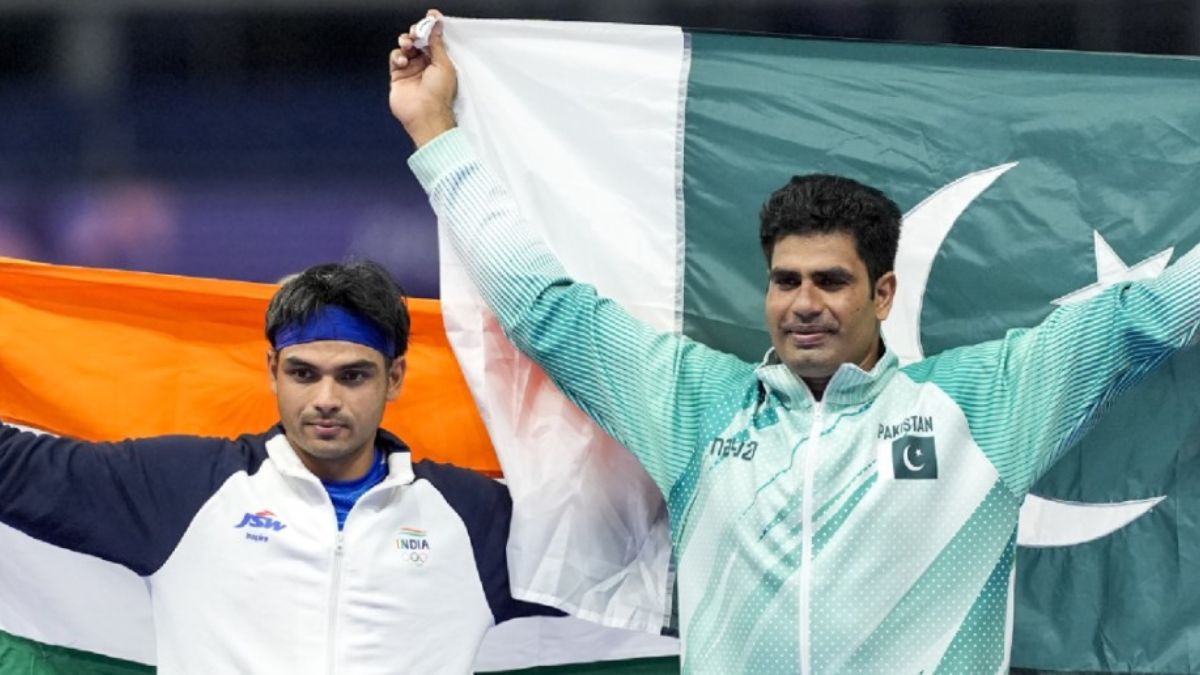
With India’s Olympic champion Neeraj Chopra and Pakistan’s Commonwealth Games champion Arshad Nadeem expected to cross paths again in Glasgow, there’s buzz whether Indian athletes will greet or shake hands with Pakistani competitors during the Commonwealth Games 2026.
According to a Times of India report, Indian contingent officials have not issued any blanket directive preventing interactions between athletes from the two countries. However, they have drawn a clear line on one issue: Indian athletes have been told not to accept gifts or presents from Pakistani sportspersons.
Indian, Pakistani athletes staying in same hotel in Glasgow
The guidance comes as Indian and Pakistani athletes are staying in close proximity under Glasgow 2026’s zone-based accommodation system, where competitors from multiple nations are housed in designated hotels rather than a traditional Commonwealth Games village. In athletics, Chopra and Nadeem are reportedly staying at the same hotel in Zone 3, making interactions between the two javelin stars almost inevitable before their event.
Unlike bilateral sporting ties between India and Pakistan, which remain suspended, athletes from both countries continue to compete against each other at multinational events such as the Olympics, Asian Games, Commonwealth Games and world championships.
The report says the issue was discussed internally by Indian sports officials in Glasgow before the Games. While accepting gifts has been prohibited, the decision on handshakes or exchanging pleasantries has been left to the judgement of individual athletes, with some national sports federations also offering their own guidance.
Neeraj Chopra vs Arshad Nadeem expected in Men’s Javelin Throw final
Different sports appear to be following different approaches. Lawn bowls officials, according to the report, have informed Indian players that routine sporting gestures such as handshakes, high-fives and brief greetings are acceptable when facing Pakistani opponents. Similar advice has reportedly been shared by a few other federations.
The question has attracted particular attention because of Chopra and Nadeem’s high-profile sporting rivalry. The two have shared podiums at the Olympics and World Championships, and their interactions have often drawn public attention amid heightened political tensions between India and Pakistan.
India and Pakistani players have avoided handshakes in cricket
Sporting protocol between the two countries has varied in recent years. In cricket, Indian and Pakistani players have largely avoided the customary pre-match and post-match handshakes during ICC tournaments.
Following the Pahalgam terror attack in Jammu and Kashmir in April 2026, in which dozens of civilians were killed, relations between India and Pakistan deteriorated sharply. The Indian government responded with a series of diplomatic and strategic measures, while public sentiment hardened across the country.
Against that backdrop, Indian cricketers opted not to participate in the customary pre-match and post-match handshakes with Pakistan players during international tournaments. Although there was no publicly announced ICC directive or formal BCCI rule mandating the move, the gesture reflected the prevailing national mood and was widely seen as a mark of respect for the victims of the attack rather than a comment on individual Pakistani players. Despite the absence of handshakes, matches continued under normal sporting protocols, with both teams competing within the framework of multinational tournaments.
In other sports, however, athletes have continued to exchange routine sporting courtesies. At the Sultan of Johor Cup, for example, India’s and Pakistan’s junior hockey players greeted each other with high-fives after their match.
For now, India’s approach at Glasgow appears to be one of personal discretion rather than blanket prohibition, allowing athletes to decide how they conduct themselves on the field while maintaining restrictions on exchanges beyond competition.