



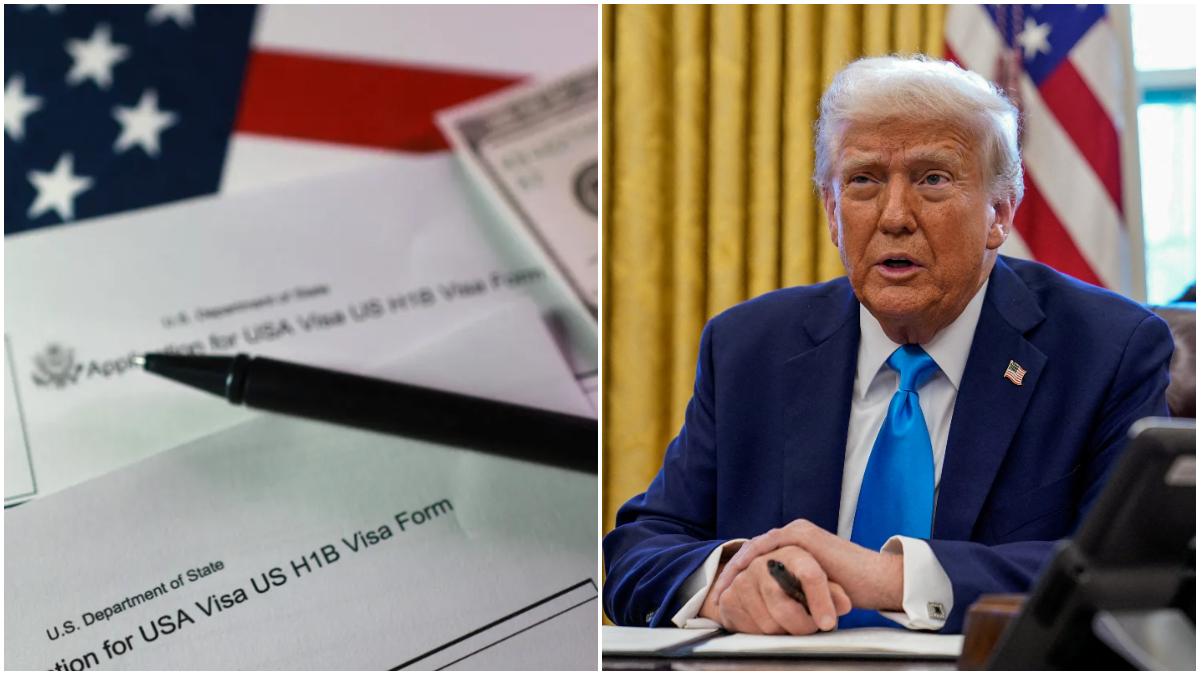
In another setback for the Donald Trump administration, a federal appeals court in the United States dismissed the current government’s efforts to block a ruling that held back officials from imposing an additional $100,000 fee on new H-1B visas. Last month, a lower court judge branded the fee an unconstitutional tax Congress never authorised in a major ruling addressing a lawsuit filed by 20 Democratic states attorneys general. Friday’s decision simply upholds the previous order.
Subsequently, Judge Leo Sorokin of the US District Court for the District of Massachusetts agreed to grant the request to pause the order until the First Circuit weighed in on the Trump administration’s request for an emergency stay.
Here’s what this means for the Trump administration.
Another setback for Trump’s H-1B controversial fee rule
Friday’s order saw a three-judge panel at the Boston-based 1st US Circuit Court of Appeals assert that the Trump government failed to show it was likely to succeed in appealing the previous district court’s decision that the fee imposition went far beyond the president’s authority.
Amid the Republican-led backlash against the H-1B visa program, which recruits highly skilled foreign workers, Trump has already set an aggressive precedent for immigration crackdowns in his second term.
After introducing back-to-back policy revisions to clamp down on even legal pathways allowing foreign national entry to the country, he issued a proclamation in September that raised the cost of acquiring H-1B visas. The overhaul measure acted as a major deterrent for international workers and tech companies in the US that largely rely on foreign employees.
The decades-old visa program’s annual cap is set at 65,000, in addition to another 20,000 visas reserved for those with advanced degrees. Before Trump’s imposition of the $100,000 fee, foreign workers had to pay about $2,000 to $5,000 in fees.
The Trump administration has long accused companies of exploiting the H-1B visa program to replace American workers with lower-paid workers.
It remains to be seen how many H-1B petitioners and those who have already paid the fee will be affected by the latest order.
In the meantime, several Republican lawmakers have proposed various bills to put an end to the H-1B visa program, keeping in line with Trump’s ‘America First’ approach. Among these legislations, one of the most recently introduced House Resolutions backed by Senator Tim Sheehy is called the “End H-1B Abuse Act.”
Having introduced the bill in the US House just earlier this week, he stated, “The H-1B program was created to address workforce shortages for specialized, difficult-to-fill positions – not to displace qualified, hardworking Americans with cheaper, foreign labor. We shouldn’t be issuing work permits that make it easier to undercut American workers when we have the talent right here at home.”
He added, “My legislation, the End H-1B Abuse Act, restores the program to its original intent and puts American workers first by closing loopholes that incentivise abuse, strengthening guardrails and prioritizing our national security interests.”
In recent years, official USCIS data has shown Indians dominating the ‘specialty occupations’ work visa program, as Indian nationals have landed over 70% of the approved H-1B visas. In part, these figures have also triggered vitriolic anti-Indian rhetoric in the US.
Disclaimer: This article is for general informational purposes only and does not constitute legal, immigration, or tax advice. Immigration laws and government policies are subject to frequent change without notice. While we strive to provide accurate updates, readers are strongly advised to verify the latest requirements with the official embassy, consulate, or government portal of the respective country. Financial Express is not responsible for any decisions made based on this information. For personalised guidance, please consult a qualified immigration attorney or a certified professional advisor.