



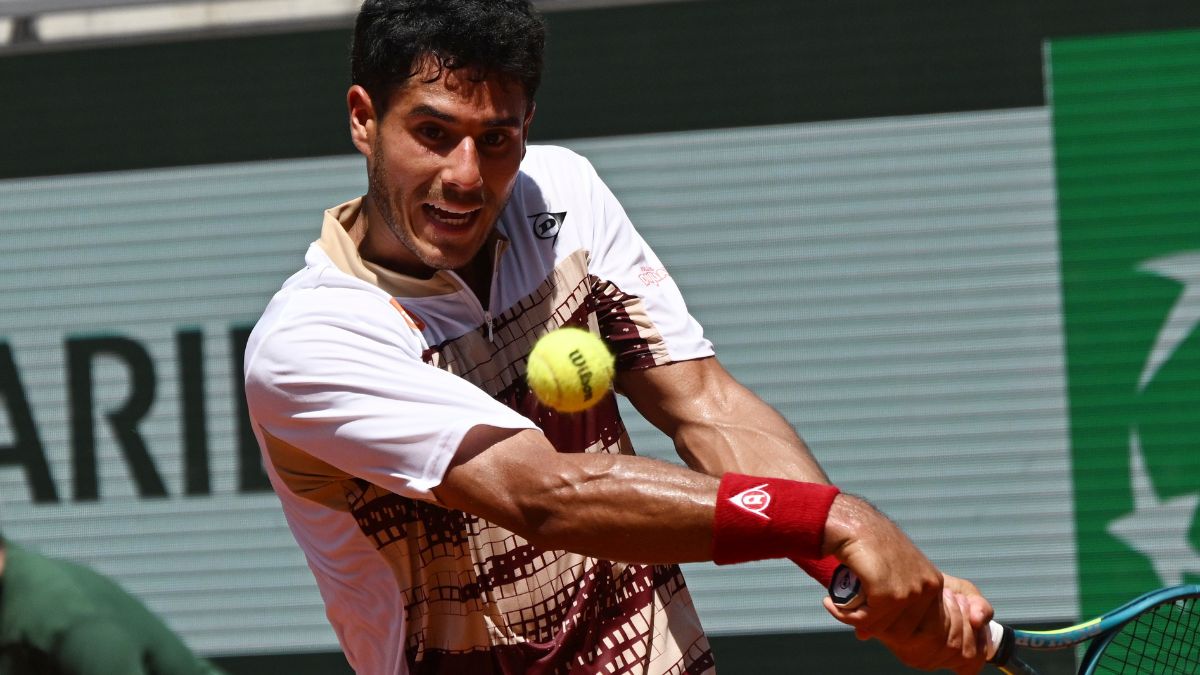
Paraguayan tennis player Adolfo Daniel Vallejo was fined €65,000 ($76,000 or over ₹72 lakh cash prize) by the French Open after making sexist remarks questioning the suitability of a female chair umpire following his second-round defeat at Roland Garros.
Tournament director Amelie Mauresmo confirmed the sanction on Monday, stating the penalty represents roughly half of Vallejo’s prize money for reaching the second round. Players at that stage of the tournament earn €130,000.
“This is clearly unacceptable,” Mauresmo said. “Such remarks have no place here.”
What exactly happened?
Vallejo, who lost a gruelling five-set match to French teenager Moise Kouame, reportedly told media after the match that he believed high-intensity contests “should be umpired by a man.”
He also suggested that umpire Ana Carvalho of Brazil struggled to manage crowd behaviour during the nearly five-hour encounter.
“It’s very difficult for a woman to do it,” Vallejo said, adding that the atmosphere required “a lot of strength to go against the crowd.”
Match context and player reactions
The second-round clash was marked by extended rallies, physical exhaustion and a highly charged crowd supporting the French teenager. Vallejo later complained that Kouame frequently slowed play and that the crowd’s sustained noise affected match conditions.
However, his remarks shifted focus away from the on-court contest and toward officiating standards and gender bias in sport.
Tournament response
Roland Garros officials moved quickly to distance the tournament from the comments, reiterating their stance on equality in officiating and zero tolerance for discriminatory statements.
Mauresmo, a former Grand Slam champion and one of the most prominent figures in women’s tennis, has previously emphasised the importance of inclusion and professionalism across all officiating roles at the French Open.
Scrutiny in professional sports over player conduct
The incident adds to ongoing scrutiny in professional sports over crowd management, officiating pressure, and player conduct in emotionally charged matches. Even in tournaments like the Indian Premier League (IPL), players are fined for breaching the code of conduct.
While Vallejo’s complaints included references to match tempo and spectator behaviour, the governing response centred firmly on his comments about gender, which officials deemed incompatible with the sport’s standards.