



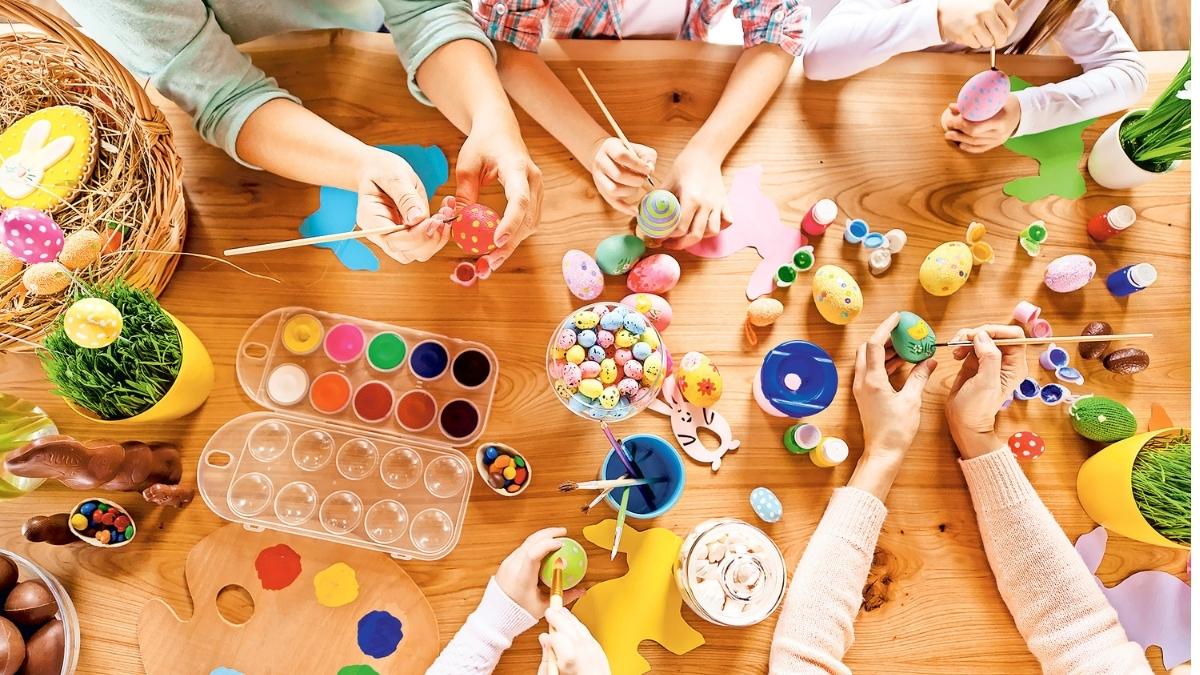
Fingers usually tapping away on screens are increasingly clicking knitting needles, sculpting clay vases on a wheel, embroidering tiny flowers on a table cloth or filling pages with sloped calligraphy. The Gen Z, termed the ‘snowflake generation’ for being consumed by screens and fooled by algorithms, are turning to analogue hobbies, also dubbed the ‘grandmacore’ movement due to its focus on handiwork, opting for activities that involve creating, making or playing with one’s hands.
Like Bengaluru-based Shefali Singh, a 26-year-old corporate sales manager. “I attended a sip and paint session on a whim with my friend one day and have been to two more since then. Being able to chat with my friends over a coffee, and go home with a tiny canvas that we painted ourselves was a refreshing change from exchanging memes,” she says. These sessions are typically held in cafes and resto bars that allow patrons to order a coffee or a drink, and make paintings on the side, with stationary supplies provided by the organisers.
Easing access further, organisers leverage social media for publicity, and tap ticketing platforms like BookMyShow and District for pottery, knitting, crochet, embroidery, journalling, gardening, film photography and calligraphy workshops and events, typically priced Rs 499 onward.
Rise of Tactile Spaces
Tulika Chaturvedi (29), a researcher based in Delhi, attended a clay sculpting workshop after coming across an Instagram post. She went in with zero experience, and came out with an ashtray she sculpted for her friend’s birthday. “I didn’t know what to expect since I had never attended one before. The ashtray might look wonky, but I was pretty proud of my first attempt,” she says, “And my friend still uses the gift, so it was a win-win.”
Indore-based Kalakaksh Pottery Studio, completing a year this month, conducts regular classes and workshops in pottery, with sessions priced as low as Rs 99. Chandana Bhargava, founder of Kalakaksh, says, “Our takers have almost doubled since last year.” High school students and college graduates make up most of the customers. “Initially interest was slow, but now we get calls from several groups asking about upcoming workshops.”
These workshops and classes have popped up across Delhi/NCR, Mumbai, Bengaluru, Pune, Indore, Kochi and more, providing not just relaxed respite from the screen, but entrepreneurship opportunities as well.
Manya Jindal (26), founder of The Irenic Store in Delhi, has almost doubled her customer base and attendance in a matter of a year. She founded her online store for journalling accessories in 2025, and has conducted multiple workshops across Delhi since. “I started out with five or six people attending each session, and now that number has nearly doubled, and sometimes spikes higher. I got a lot of takers for my Taylor Swift themed journalling workshop,” she shares, adding, “It is as much a crafting experience as it is a mental health exercise.”
The Creativity Trends Report of 2026, released by Michaels, a leading retail company in North America, showed that searches for analogue hobbies on craft sites jumped by more than 136% in the past six months.
Doomscrolling Antidote
The concept of the ‘analogue bag’ has also been a significant milestone in this phenomenon. Ironically coined and popularised on social media, California-based TikTok user Sierra Campbell shared how she keeps a bag in her living room filled with knitting needles, journalling accessories and other tools for creative hobbies. This allows her to choose crafting over doomscrolling at any given time, acting as a physical, easy-to-access reminder to detach digitally while at home.
The impact of crafting and handiwork on mental health is evidenced in many studies, though absolute statistics are few. A 2024 UK survey researchers found that the impact of crafting on mental health was bigger than the impact of being in employment.