



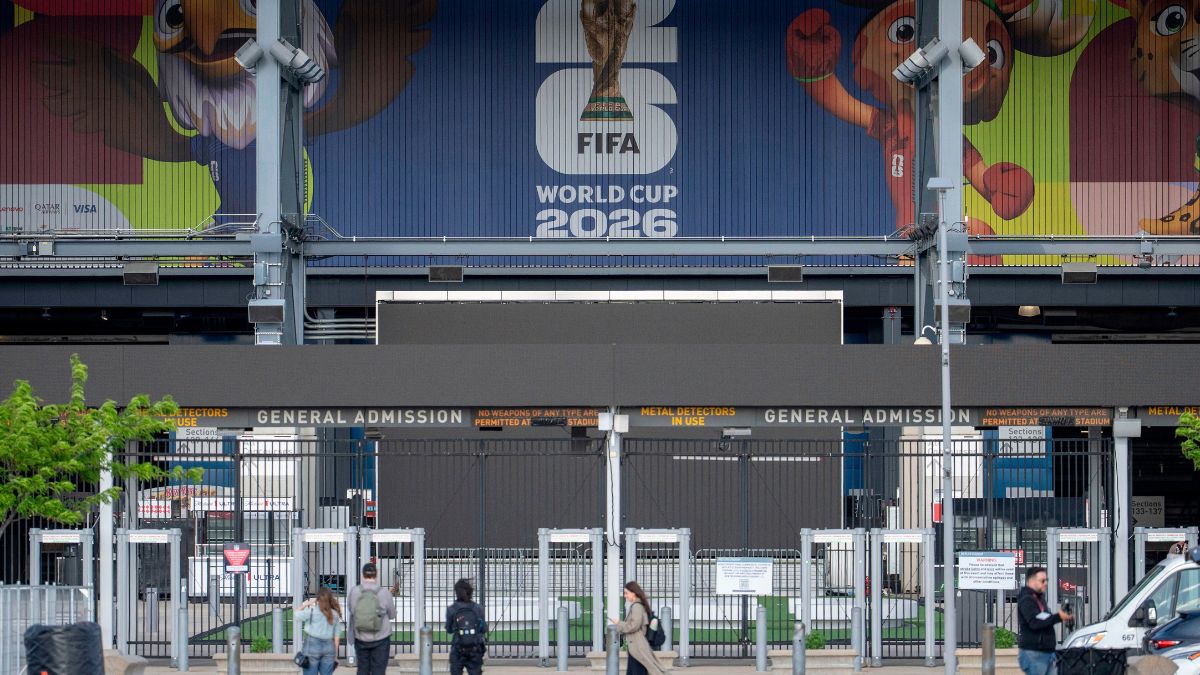
The headline figure grabbing attention ahead of the FIFA World Cup 2026 is the record-breaking prize pool.
The tournament’s direct prize money has jumped to $655 million, up nearly 50% from the $440 million distributed during the Qatar World Cup in 2022. When preparation grants, qualification payments and additional team subsidies are included, FIFA’s total distribution to participating nations will reach an unprecedented $871 million.
Most discussions naturally focus on the champions’ reward. The winner of the 2026 World Cup will receive $50 million, while runners-up and semifinalists will also walk away with record payouts.
But the biggest financial story of the expanded 48-team tournament may have little to do with lifting the trophy.
Instead, FIFA is effectively transforming the World Cup into one of the largest wealth redistribution programmes in global sport.
The real jackpot is qualification
For football’s traditional powerhouses, World Cup prize money is a welcome bonus rather than a transformational event.
National associations in countries such as England, Germany, France, Spain and Brazil already benefit from lucrative broadcasting deals, sponsorship agreements and established football ecosystems worth hundreds of millions annually.
For many emerging football nations, however, the economics look entirely different. Under FIFA’s revised distribution structure, every qualified nation is guaranteed at least $10 million in qualification payments, alongside $2.5 million in preparation funding before a ball is kicked. Group-stage participation earnings further boost that figure.
In practical terms, simply qualifying for the World Cup can now generate more revenue than years of regional competitions, sponsorship deals and development programmes combined.
For federations operating on modest annual budgets, a single World Cup appearance can reshape financial planning for an entire four-year cycle.
The expanded 48-team format means 16 additional countries will access this financial ecosystem for the first time. That is where FIFA’s biggest strategic shift becomes visible.
From prize money to football development capital
Traditionally, sporting prize pools reward excellence. The deeper a team progresses, the larger the payout.
While that principle still exists, FIFA’s 2026 model increasingly resembles an investment vehicle designed to strengthen football infrastructure across a broader range of countries. The guaranteed payments significantly reduce financial inequality between football’s elite and developing nations.
A federation from Africa, Asia, Oceania or the Caribbean that qualifies for the World Cup can suddenly secure resources for coaching programmes, youth academies, grassroots facilities and women’s football initiatives that would otherwise take years to fund.
Viewed through that lens, the tournament is no longer just a sporting competition. It has become a capital allocation platform.
The expansion from 32 to 48 teams effectively widens access to FIFA’s financial engine, allowing more federations to benefit from the commercial success generated by global broadcasters, sponsors and fans.
For FIFA, the strategy is also politically significant.
Every additional nation receiving meaningful financial support strengthens FIFA’s influence across its 211 member associations while reinforcing the organisation’s argument that football’s revenues should be distributed more broadly rather than concentrated among a handful of elite federations.
A World Cup where participation is increasingly profitable
The 2026 tournament will undoubtedly create new sporting heroes. One nation will lift the trophy and claim the largest winner’s cheque in World Cup history.
Yet the broader financial legacy may be something entirely different. For dozens of participating countries, the most important victory may occur long before the final whistle in New York, New Jersey.
It will come the moment qualification is secured. Because in the economics of the expanded FIFA World Cup, reaching the tournament is no longer merely an achievement. It is a financial event capable of reshaping the future of a national football federation.