



Rivalry is often an overused, and misused, world in a sporting context. Two players or teams facing each other frequently or in high-profile contests doesn’t constitute a rivalry, especially if the match-up is a one-sided one.
Roger Federer and Andy Roddick were two of the top tennis players in the first decade of this century, but the American won just three of their 24 contests. The time gap between the first and second was almost five years while that between the second and third was four years. The two faced off in eight Grand Slam matches over their careers with the Swiss legend coming out on top on each occasion. It can hardly be called a rivalry in a real sense.
Neither can the cricketing one between India and Pakistan. The administrators, broadcasters, sponsors and various media outlets may hype these matches – now restricted to multilateral tournaments – but there is a huge gap in the level of both teams.
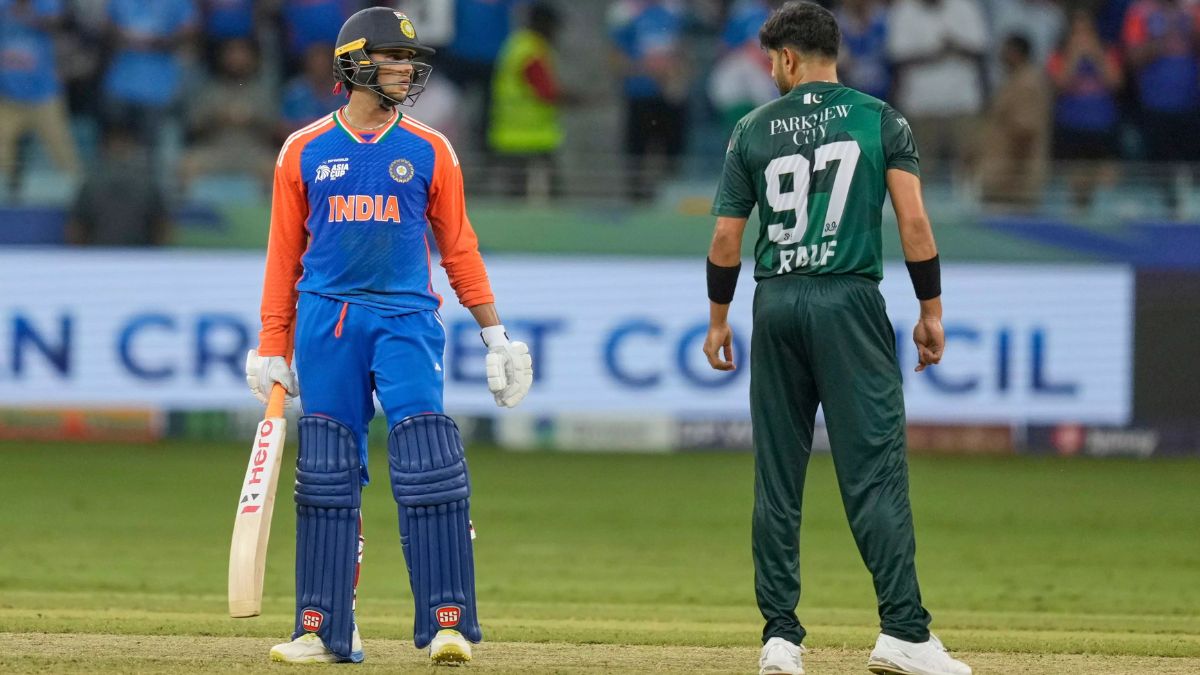
Last Sunday’s routine rout of Pakistan brought the bilateral head-to-head in the T20 World Cup to 8-1. In the 50-over showpiece, it stands at 8-0 in the favour of the Indian side. The three matches at last year’s Asia Cup all provided the same result. In fact, the bad blood and jingoism on the field and off it grabbed more headlines than any cricketing prowess displayed, and is what attracts eyeballs and social media chatter.
Things have come to a stage where the former cricketers and analysts across the border have resigned to these drubbings, conceding that there’s a huge gulf in quality between the two teams, and they are spot on.
There aren’t more than a couple of names from the current Pakistan line-up that would slip off the tongues of cricket lovers outside their own country, and those that are recognised are largely due to what they have achieved in the past rather than any time recently. The places of stalwarts like Babar Azam and Shaeen Shah Afridi are also questioned on a regular basis. There’s a widespread lament that players are often hyped up after performances against smaller teams or depleted outfits representing top sides.
That Pakistan, with a rich history in pace bowling – having produced legends like Imran Khan, Wasim Akram, Waqar Younis and Shoaib Akhtar – is now relying on spinners, that too of moderate quality, to bowl at least 80 percent of their overs at a T20 World Cup, is a pertinent indication and mirrors the downfall in West Indies cricket in the 21st century.
In the ongoing tournament, ‘mystery’ spinner Usman Tariq was considered their trump card and received a lot of attention before the game against India, but the only mystery in his bowling is the pause before delivery. Once the ball leaves his hand, there’s nothing extraordinary happening in the air or off the surface, and the Indians didn’t have too many problems against him.
Names like Saim Ayub, Khawaja Nafay, Sahibzada Farhan, Usman Khan and Salman Mirza aren’t going to cause sleepless nights among quality teams. Captain Salman Ali Agha is also not above reproach. Even experienced players like Shadab Khan, Mohammad Nawaz, Abrar Ahmed and Faheem Ashraf have hardly made a telling contribution in recent times when it counts against major opposition.
There was a time in the 1980s and 90s when Indians used to look with envy and admiration towards Pakistan’s cricketing riches. The tables have turned since and there are no signs that things are going to move the other way anytime soon.
Happy with status quo
Hence, the rigging of draws from every big tournament to ensure that India and Pakistan play each other at least one can only be explained by the political implications and attempts at one-upmanship attributed to these contests. Cricket and its administrators have painted themselves into a corner assuming that there’s no financial future without the India-Pakistan ‘contest’, even when the actual game is anything but.
It indicates a laziness on the part of the stakeholders in being content to keep milking the cash cow rather than widening the horizons and making cricket more of a global game. Even when cricket has become part of the programme for the 2028 Los Angeles Olympics, those in charge of the sport are not looking beyond the Indian market and the diaspora around the world for financial sustenance.
TV rights are sold for astronomical amounts, the Indian Premier League’s valuation keeps growing, sponsorship amounts go up, and television viewership records are broken. But all this is based on the dominance of the Indian market in the global cricketing ecosystem, which in turn explains the country’s asymmetrical influence in the affairs of the sport.
Come to think of it, cricket used to thrive even in an era before sponsorship money and TV rights made it a commercial behemoth riding on the population and passion of one country. There are many sports which survive, and even thrive, with much less money at their disposal. Their stakeholders’ eyes are not transfixed only on the balance sheet but look to grow the game.
Italy and the Netherlands were part of this T20 World Cup and acquitted themselves admirably. How about trying to make cricket more popular in mainland Europe, taking it beyond just the population with roots in the subcontinent? How about gaining a foothold in South America, making it the second- biggest team sport after football? Why not take the game to East Asia? The ongoing marquee tournament started with 20 teams, seven of which were from Asia (eight before Bangladesh were excluded). In addition, teams like the United States, UAE, Oman and Canada were almost entirely made up of expatriates from this part of the world.
Think long term
More countries playing the game may not affect the on-field dominance of the traditional powers, at least in the relatively short term, but it will broad-base the game and may make it less financially dependent on one or two markets. Of course, that can only happen if the bigger cricketing powers are prepared to relinquish some powers.
Cricket is considered the second-most popular sport in the world, after football, but its footprint rests on just a few geographical regions. Brazil has won five FIFA World Cups while the English Premier League is the biggest domestic competition in the world. But neither of these countries has any disproportionate say in footballing matters. England has missed out on World Cups and European Championships in the past, but that didn’t affect the financial viability of these tournaments.
It’s time to make cricket a truly global game, rather than an Indian party where friends, relatives and well-wishers are invited to make polite appearances and leave at predetermined times.