



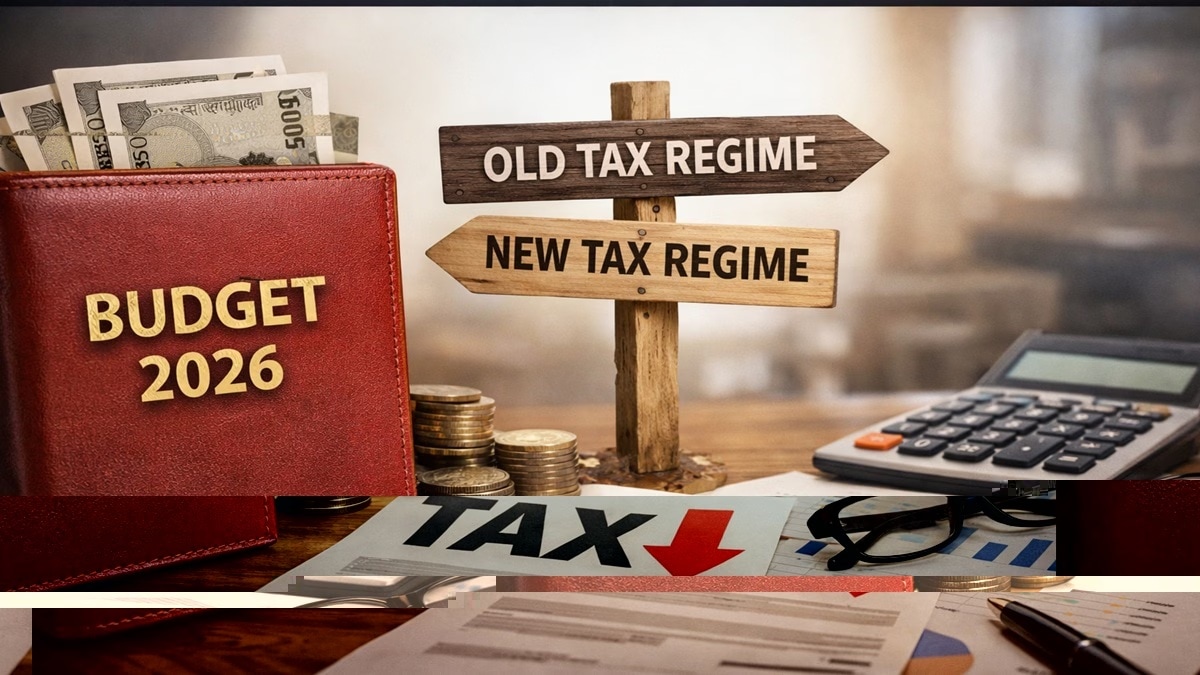
Finance Minister Nirmala Sitharaman will present her ninth straight Union Budget on February 1 in Parliament. As with every Budget, expectations from taxpayers are high. Many are hoping for income tax rate cuts, slab rationalisation and a possible expansion of deductions under the old tax regime. However, the broader direction of tax policy over the past few years suggests that major relief for the old regime may not be on the government’s priority list.
Over the years, the Centre has largely kept deductions and exemptions under the old tax regime unchanged, while consistently nudging taxpayers towards the new tax regime. Official data indicates that more than 80% of taxpayers have already shifted to the new regime. Despite this, salaried taxpayers who continue under the old regime are still hoping for some relief, especially to bridge the growing gap between the two systems.
That said, the government’s intent has been clear over the last six Budgets. The focus has been on creating a simpler, less complex tax structure with fewer exemptions and easier compliance. Given this approach, any significant revival of deductions under the old tax regime appears unlikely in Budget 2026-27.
What changed in the new tax regime last year
The Union Budget last year brought several big changes to make the new tax regime more attractive. The basic exemption limit was raised to Rs 4 lakh from Rs 3 lakh. The Section 87A tax rebate was increased sharply to Rs 60,000 from Rs 25,000, effectively making income up to Rs 12 lakh tax-free under the new regime. The standard deduction for salaried taxpayers was also enhanced to Rs 75,000 from Rs 50,000. Because of these significant changes, expectations of another round of major slab restructuring this year are relatively muted.
Expert view on slab changes in Budget 2026-27
CA Dr Suresh Surana believes that expectations of sweeping changes should be tempered.
“In light of the comprehensive restructuring of the personal income-tax framework effected in the preceding Budget, expectations of any further substantive revision to tax slabs in the Union Budget 2026–27 appear limited. The legislative and policy emphasis is expected to be on stability, continuity, and consolidation, particularly given that the Income-tax Act, 2025 is scheduled to be fully operational with effect from 1 April 2026.”
He adds that while taxpayers may see some relief, it is unlikely to be dramatic.
“That said, taxpayers may still see some targeted relief measures. These could include an increase in the standard deduction or simplification of rebate provisions. However, such changes, if any, are expected to be modest and carefully designed, rather than a complete overhaul of the tax slab structure.”
Joint filing: a proposal to watch
One proposal that could gain attention in Budget 2026-27 is the option of joint tax filing for married couples.
“However, one important proposal currently being expected is allowing married couples to file income-tax returns jointly, as an optional choice. At present, the tax system treats each individual separately, which benefits households where both spouses earn, but results in a higher tax burden for families with only one earning member.”
According to Surana, a joint filing option with a higher basic exemption could better reflect household income realities, reduce the burden on single-income families, and improve fairness in the tax system.
Overall, while taxpayers may hope for slab tweaks, Budget 2026-27 is more likely to focus on fine-tuning the new tax regime rather than announcing any major overhaul.